Skip to content
Menu Close

How to Choose Ultra Flex Welding Cable in 2026?

Choosing ultra flex welding cable in 2026 means balancing flexibility with electrical capacity, durability, and fit for the job. A cable may bend easily on a showroom floor yet feel stiff after a cold morning outside. Small details matter.

Welding leads are dragged over concrete, looped around carts, and repeatedly connected to machines. These conditions make conductor size, insulation, and connector compatibility more than brochure details. Before comparing products, note your welder’s output, duty cycle, cable length, and working environment. Then check the manufacturer’s specifications for current capacity, voltage rating, temperature range, and resistance to abrasion, oil, or weather exposure. Requirements vary by cable design and use.

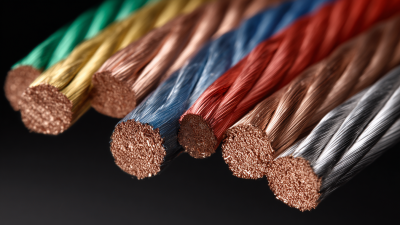
Look closely at the construction. Fine-stranded copper can support greater flexibility, while the jacket protects against everyday wear. Still, “ultra flex” alone does not prove a cable suits your setup. Neither does a thick-looking jacket. Compare documented ratings, inspect the cable and connectors, and follow the equipment maker’s guidance and applicable safety requirements. If key specifications are missing, ask the supplier before buying.

There is no universal best choice. A short indoor lead and a long cable used on a busy jobsite face different demands. This guide explains how to assess those trade-offs, compare products, and avoid relying on feel or marketing claims alone. Even experienced buyers can miss a specification. Check it twice.
How to Choose Ultra Flex Welding Cable in 2026?

Confirm Welding Process, Maximum Output Current, and Duty Cycle

How to Choose Ultra Flex Welding Cable in 2026?

Confirm the welding process, maximum output current, and duty cycle before choosing cable. Stick, MIG, and TIG welding can create different current demands and work patterns. Check the machine’s manual for its rated output and duty-cycle figures. A duty cycle is often expressed as the percentage of a ten-minute period that the machine can weld at a specified current. Higher current or longer welding periods may require a larger cable size. Small details matter.

Tips: Measure the full cable route, including the return lead. A longer run can increase voltage drop, so check a cable-sizing chart for the length and current you need. Keep the machine’s rated limits in view.

Ultra-flex cable is easier to handle around a workbench, but flexibility alone does not determine safe capacity. Check the cable’s current rating, insulation temperature rating, and connector compatibility. Also consider heat, tight bends, and how the lead will be stored. I would recheck the sizing after measuring the actual route; estimates are easy to get wrong. Avoid choosing a cable by appearance or matching only the machine’s maximum output.

How to Choose Ultra-Flexible Welding Cable in 2026

Confirm the welding process, maximum output current, and duty cycle before selecting a cable.

For a 300 A welding output, the chart shows the thermal RMS-equivalent current at each duty cycle, calculated as output current × √(duty cycle). This illustrates duty-cycle effects; it is not a cable ampacity rating. Choose cable using the applicable standards and manufacturer ratings, accounting for process, cable length, installation conditions, and insulation temperature rating.

Apply NEC 630.11(A): a 60% duty cycle uses a 0.78 sizing factor

Choosing ultra-flex welding cable starts with the welder’s actual output, cable length, and working conditions. Fine-stranded copper bends easily around a cart and resists fatigue from repeated movement. Check the cable’s temperature rating, insulation condition, and compatibility with the connectors. Small details matter.

For supply conductors, NEC 630.11(A) applies a 0.78 factor at a 60% duty cycle. Multiply the welder’s rated primary current by 0.78 to determine the required conductor ampacity, then select a conductor that meets or exceeds that value under applicable conditions. For example, a 50-amp rated primary current gives a calculated ampacity of 39 amps. Do not automatically use this factor to size the secondary welding leads. Their current, length, and voltage drop need separate consideration.

Measure the full route, including the return lead. A long run can cause noticeable voltage drop, even when the cable feels substantial in your hand. Inspect the lead where it bends near the work clamp; that section often sees rough handling. Check the equipment instructions and have a qualified professional verify the installation. The calculation is useful, but it can miss real-world heat or damage. That deserves a second look.

Select Copper Gauge by Ampacity, Cable Length, and Voltage Drop

How to Choose Ultra Flex Welding Cable in 2026?
Select Copper Gauge by Ampacity, Cable Length, and Voltage Drop

Choose a gauge for the welding current, duty cycle, and full cable length—not flexibility alone. NEMA’s EW-1 portable-welder cable standard provides a useful reference for cable construction and ratings. Still, ampacity depends on the cable’s specified duty cycle and operating conditions. Check its rating before selecting a conductor size. A machine’s maximum output is not a complete sizing guide.

Length changes the decision. Copper Development Association resistance tables list 2 AWG copper at about 0.156 ohm per 1,000 feet at 20°C. A 50-foot lead creates a 100-foot circuit, out and back. At 200 amps, that resistance produces roughly 3.1 volts of drop, before accounting for heating. That is not trivial. Compare the drop with your equipment’s acceptable operating voltage, then consider a larger gauge if the lead is long. Higher temperatures increase resistance.

In practice, measure the actual route, including the return lead. Coiled or bundled cable can also retain heat, so avoid treating a brief test as proof of safe continuous operation. I still double-check the duty-cycle rating; it is easy to overlook. Use the cable maker’s ampacity data for the intended conditions, then verify voltage drop separately. Flexibility helps routing, but it does not cancel resistance.

Check Fine-Strand Construction, Insulation, and Temperature Rating

How to Choose Ultra Flex Welding Cable in 2026?
Check Fine-Strand Construction, Insulation, and Temperature Rating

Fine strands help a welding lead bend around a cart, bench, or tight corner without fighting the operator. IEC 60228 distinguishes Class 5 flexible conductors from Class 6 extra-flexible conductors; Class 6 uses finer strands. That classification describes conductor construction, not the cable’s full performance. Check the cable’s stated conductor class and cross-sectional area, then flex a sample by hand. Feel the difference. A very soft lead can still kink if handled carelessly.

Insulation deserves equal attention. Look for clear specifications covering abrasion, oil, moisture, and resistance to weld spatter, rather than relying on a generic “heavy-duty” label. A worn jacket near the stinger can expose copper, especially where the cable repeatedly drags across concrete or a sharp table edge. Small details matter. Inspect the cable markings and confirm they match the work environment.

Temperature ratings need context. IEC 60502-1 gives maximum normal-service conductor temperatures of 70°C for PVC insulation and 90°C for XLPE insulation. These are standard-based reference values, not a substitute for the welding cable’s own rating. Follow the manufacturer’s marked limit, and account for ambient heat, current, duty cycle, and bundled runs. A rating is easy to overlook. I’d still verify it twice before choosing a cable for a hot, crowded work area.

How to Choose Ultra Flex Welding Cable in 2026? — Check Fine-Strand Construction, Insulation, and Temperature Rating

Selection Factor What to Check Practical Guidance Why It Matters
Conductor material Confirm the conductor material and whether it is stranded copper. Flexible welding cables commonly use stranded copper conductors. Check the product specification rather than assuming material from appearance alone. Conductor material affects electrical resistance, weight, and suitability for the intended welding circuit.
Fine-strand construction Look for the strand count, individual strand size, and stated conductor construction. In general, more and finer strands can make a cable easier to bend than a comparable coarser-stranded cable. Compare construction details as well as the word “flexible.” Flexibility is important when the cable is frequently moved, routed around equipment, or used in confined work areas.
Cable size and current capacity Match conductor size to welding current, cable length, duty cycle, and installation conditions. Use the manufacturer’s ampacity guidance for the exact cable and application. Do not select a size based on current alone; longer runs and installation conditions can affect voltage drop and heating. Correct sizing helps limit excessive voltage drop and conductor temperature rise.
Insulation and jacket Check the insulation material, abrasion resistance, oil or chemical resistance, and environmental-use notes. Choose a jacket suited to the worksite. Verify suitability for exposure to abrasion, moisture, oils, sparks, or other expected hazards in the product documentation. The outer covering helps protect the conductor from damage; resistance varies by cable design and material.
Temperature rating Read the stated conductor temperature rating and the conditions under which it applies. Welding cables are available with different temperature ratings, commonly including 90°C and higher-rated options. Treat these as examples, not a universal specification, and follow the cable datasheet and applicable electrical requirements. The rating indicates the maximum permitted conductor temperature under specified conditions; it is not an ambient-temperature rating.
Voltage rating and intended use Verify the marked voltage rating and that the cable is intended for the equipment and circuit. Use cable rated for the application and follow the welding-machine and installation instructions. Do not infer a voltage rating from cable appearance or flexibility. Correct voltage and application ratings help ensure the cable is used within its designed limits.
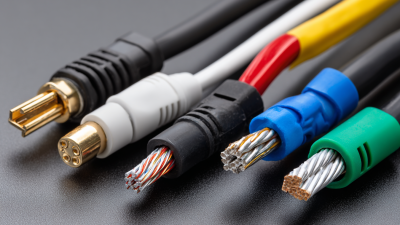
Connectors and termination Check that the conductor size and cable construction are compatible with the selected lugs or welding connectors. Use terminations designed for the cable and install them using the connector manufacturer’s specified method and tooling. A suitable, correctly installed connection helps reduce loose joints, local heating, and mechanical strain.
Inspection and handling Review the cable for cuts, crushed areas, exposed conductor, damaged connectors, or signs of overheating. Inspect before use and remove damaged cable from service according to workplace procedures. Avoid sharp bends, crushing, and pulling the cable by its connector. Routine inspection and careful handling can help identify damage before it creates an electrical or operational hazard.

Selection note: Cable ratings and flexibility depend on the specific construction and conditions of use. Confirm all dimensions, ratings, and installation requirements against the product datasheet and applicable local codes.

Verify Connectors and Cable Condition Against OSHA 29 CFR 1910.254

How to Choose Ultra Flex Welding Cable in 2026?

Before choosing a highly flexible welding cable, check its connectors and condition against the equipment’s requirements and OSHA 29 CFR 1910.254. The standard addresses arc-welding equipment, including connector capacity and insulation. A connector should handle the welding machine’s maximum output and remain fully insulated. Flexibility alone proves little. Check that fittings seat firmly, lock as intended, and show no cracks, loose parts, or heat discoloration. A connector that feels warm after use deserves attention, not a quick shrug.

Inspect the cable along its full length under good light. Look for cuts, flattened sections, exposed copper, brittle spots, and repairs that may not be suitable for welding service. Pay extra attention near the connector ends, where repeated bending can stress the jacket. Confirm the cable’s rated capacity suits the current, duty cycle, length, and work environment; do not guess from thickness alone. If damage or overheating appears, stop using the lead and follow your workplace’s repair or replacement procedure. Keep the cable clear of sharp edges and hot metal during use. A careful check can miss things. That is why consistent inspection matters.

Site Feedback
Close