Skip to content
Menu Close

What Is the Best Generator Cable Type in 2026?

Choosing the best generator cable in 2026 is not simply a matter of buying the thickest conductor. The right choice depends on current, cable length, voltage drop, insulation, flexibility, weather exposure, and connection quality. A 25-foot cable running across dry concrete faces different risks from one passing through rain, mud, or repeated vehicle traffic.

Recent industry research supports this wider view. MarketsandMarkets’ generator market analysis identifies growing demand for reliable backup power across data centers, healthcare facilities, construction sites, and remote operations. Grand View Research also links generator adoption with rising expectations for dependable, mobile power systems. However, these reports do not isolate generator cable sales in detail. That limitation matters. Cable decisions still require engineering judgment.

IEC 60228 classifies conductor construction, while NFPA 70 provides essential requirements for safe electrical installations in the United States. Mike Holt, a widely recognized electrical training authority, states, “The conductor is part of the complete electrical system, not an accessory.” That principle remains practical in 2026. A flexible copper generator cable may perform well during frequent deployment, but it can still fail when undersized, poorly terminated, or exposed beyond its rating.

No single cable wins every application. A contractor powering a 12-kilowatt generator may prioritize flexibility and abrasion resistance. A permanent standby installation may require different insulation and termination methods. This guide compares common generator cable types, explains the data behind their selection, and examines where popular assumptions fall short. That is important, because a cable that looks suitable on a warehouse floor may become unsafe under heat, distance, or continuous load.
What Is the Best Generator Cable Type in 2026?

Generator Cable Types and Their Core Functions

What Is the Best Generator Cable Type in 2026?

Generator cables do not serve one identical purpose. A flexible portable generator cord connects the outlet to temporary equipment. It must tolerate repeated bending, outdoor moisture, and moderate abrasion. Heavy-duty flexible cable suits larger loads and longer runs, but its diameter increases quickly. Cable size should match the generator’s current, voltage, distance, and duty cycle.

For permanent or semi-permanent installations, insulated conductors inside approved conduit offer stronger mechanical protection. They work well near transfer equipment and distribution panels. However, they require careful routing, secure terminations, and compliance with local electrical codes. Welding-style cable may appear flexible and durable, yet it is not automatically suitable for generator distribution. The insulation rating and connector compatibility matter more than appearance.

Core functions remain simple: carry current, resist heat, protect against contact, and maintain a dependable grounding path. Outdoor cables need insulation rated for sunlight, water, and temperature changes. Locking connectors can reduce accidental separation under vibration. Never select a cable by thickness alone. Check its ampacity and voltage-drop performance.

A practical installation lesson is easy to miss: the shortest safe route is often better than an oversized cable. Long runs waste voltage and create heat at weak connections. I would still allow extra capacity when future loads are likely. That choice can feel excessive today. It may prevent a costly redesign later. Inspect cuts, flattened sections, loose plugs, and warm terminals before every serious use.
Key Factors for Choosing a Generator Cable in 2026

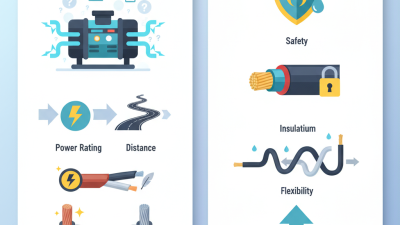
Choosing the best generator cable in 2026 starts with the generator’s output, not a trendy cable label. A cable must safely carry the rated current without excessive heating. Check the manual, outlet type, and continuous wattage before buying. Copper conductors usually provide predictable conductivity and easier handling in portable setups. Still, conductor size matters more than appearance. A thin cable can feel convenient. It may also create voltage drop.

Measure the full distance from the generator to the equipment, including vertical runs and slack. Longer runs need larger conductors to keep voltage stable under load. For outdoor use, choose a cable with a weather-resistant jacket, strong strain relief, and insulation suited to expected temperatures. Oil, sunlight, moisture, and repeated coiling can weaken unsuitable insulation. I have seen cables fail near the plug because users pulled the cord instead of the connector. Small detail. Important detail.

Match every connector to the generator and load, and avoid improvised adapters. Grounding and protection devices should follow the equipment instructions and local electrical requirements. A locking connector can reduce accidental separation around vibration or wet ground. Look for clear ratings, durable molded ends, and credible safety testing. These markings are not decoration. They are evidence. I once chose extra length without checking storage space. The cable worked, but it became awkward and more likely to kink. Review it after each season for cuts, flattened sections, loose plugs, or discoloration. If the load is near the cable’s limit, ask a qualified electrician to verify the selection.

Comparing Copper, Aluminum, and Hybrid Cable Options

What Is the Best Generator Cable Type in 2026?

Copper remains the safest choice when space, heat, and voltage drop matter. Its conductivity is rated at 100% IACS, while aluminum is near 61% IACS at 20°C, according to ASTM B193 reference values. Copper also tolerates repeated flexing better during field setup. That matters when cables cross wet grass, gravel, or temporary ramps. The weakness is weight. Copper weighs about 8.96 g/cm³, compared with aluminum at roughly 2.70 g/cm³, according to engineering data published by The Aluminum Association.

Aluminum can reduce handling weight and material cost, especially for long, fixed generator feeders. However, it needs larger cross-sectional sizing for similar ampacity. Connections require careful preparation, suitable lugs, and torque verification. The National Electrical Code emphasizes listed equipment, proper terminations, and temperature-based ampacity calculations. A loose aluminum termination can create a hot spot. I have seen this become obvious only after hours of continuous load.

Hybrid options, including copper-clad aluminum conductors, reduce weight while retaining a copper surface. Their performance depends heavily on construction quality and connector compatibility. The International Energy Agency’s Electricity Grids and Secure Energy Transitions report projects substantial grid expansion through 2040, reinforcing demand for efficient conductor materials. Yet field practice should remain cautious. Some hybrid cables feel economical, but their real installation savings may disappear after larger sizing and specialized terminations. Load current, cable length, ambient temperature, flexibility, and local standards should decide the final selection.

Selecting Cable Size, Length, and Connector Configuration

What Is the Best Generator Cable Type in 2026?

Cable size, length, and connector configuration matter more than appearance. For a 120-volt, 15-amp load, 12 AWG copper cable is a practical baseline. At 100 feet, however, its approximate 4% voltage drop can affect motor starting. A 10 AWG cable reduces that drop to about 2.5%. These estimates follow resistance values in IEEE 141 guidance. NFPA 70, 2023 Edition, also identifies 3% branch-circuit voltage drop as a widely used design target. Local code requirements may differ, and that detail is easy to overlook.

Length should stay as short as practical. Every extra foot adds resistance, heat, and voltage loss. Choose three conductors for single-phase equipment, including a grounding conductor. Match the connector to the generator receptacle and load rating. A 30-amp twist-lock configuration is not interchangeable with a 15-amp household plug. Never use an adapter to bypass a lower-rated outlet. The U.S. Department of Labor’s electrical safety guidance emphasizes approved equipment, grounding, and protection from damaged insulation. That sounds obvious. Field mistakes still happen.

Tips: Check the cable jacket for outdoor and oil resistance. Inspect both ends before every use. Keep connectors dry and fully seated. For distances above 100 feet, calculate voltage drop instead of guessing. A heavier cable costs more and feels less convenient, but undersizing creates the greater risk. I would also confirm the generator’s manual and local electrical rules before selecting a final configuration.

What Is the Best Generator Cable Type in 2026?

For a 120 V generator supplying 20 A through a 50 ft one-way copper cable, larger conductors significantly reduce voltage drop. The values below are calculated from standard copper conductor resistance at 20°C and a 100 ft total circuit length.

In practical installations, select a flexible, outdoor-rated cable with a connector configuration that matches the generator receptacle and the equipment plug. Use locking connectors where vibration or accidental unplugging is a concern, and verify the cable ampacity, connector rating, grounding method, and local electrical requirements before use.

Safety Standards and Future Trends in Generator Cables

What Is the Best Generator Cable Type in 2026?

Safety now matters more than choosing the thickest cable. NFPA 70, Articles 400 and 445, emphasize flexible-cord suitability, grounding, overcurrent protection, and generator connections. IEC 60364 also requires careful attention to installation conditions, voltage drop, and protection against electric shock. In practice, a cable should match the generator’s continuous load, starting current, environment, and connector system. Nameplate wattage alone is not enough.

Field inspections often reveal avoidable problems. Cables lie across hot surfaces, collect water, or bend sharply near plugs. These details can damage insulation before the conductor appears overloaded. Outdoor installations usually need oil-resistant, weather-resistant, flexible insulation and reliable grounding. Where project rules require reduced smoke and halogen-free materials, those cables can improve emergency visibility. They are not automatically safer in every application.

Future systems will be less predictable. The IEA’s Electricity 2024 report projects global electricity demand to grow by about 3.4% annually through 2026. More temporary power systems will likely combine generators, batteries, and renewable sources. That shift may favor cables with higher flexibility, stronger abrasion resistance, clearer thermal ratings, and improved monitoring. Digital temperature sensors could help, but they cannot replace inspection. A single “best” cable remains an incomplete answer. The uncomfortable part is human error. Even a standards-compliant cable can fail when routing, storage, or load calculations are careless.

Site Feedback
Close