2026 Top Load Bank for Generator Which Type Is Best?
A generator can look ready while carrying almost no real load. That gap matters in hospitals, data centers, construction sites, and backup-power systems where failure has a visible cost. The International Energy Agency’s Electricity 2024 report estimated that data centers used about 460 terawatt-hours worldwide in 2022. It projected consumption could exceed 1,000 terawatt-hours by 2026. As critical loads grow, proving generator performance becomes more than a commissioning checkbox.
A load bank for generator testing creates a controlled electrical demand without relying on a building’s live equipment. The right type depends on what the test must prove. Resistive models suit basic engine and generator checks. Reactive models assess power-factor performance. Resistive-reactive units can test both real and reactive power, but they usually require more capacity, space, and budget. Air-cooled units are portable and practical for many field tests. Larger systems may need liquid cooling or permanent installation.
There is no universal winner. Not quite.
For this article, we compare the leading load-bank types by test objective, capacity, portability, cooling, and operating cost. We also examine where each choice can fall short. A verified, named load-bank industry expert quotation was not supplied, so no quotation is invented here. That restraint matters: a confident claim is not useful if its source cannot be checked. The best choice is the one that reproduces the generator’s expected duty accurately, with safe connections, suitable controls, and clear test records.
What a Load Bank Does in Generator Testing
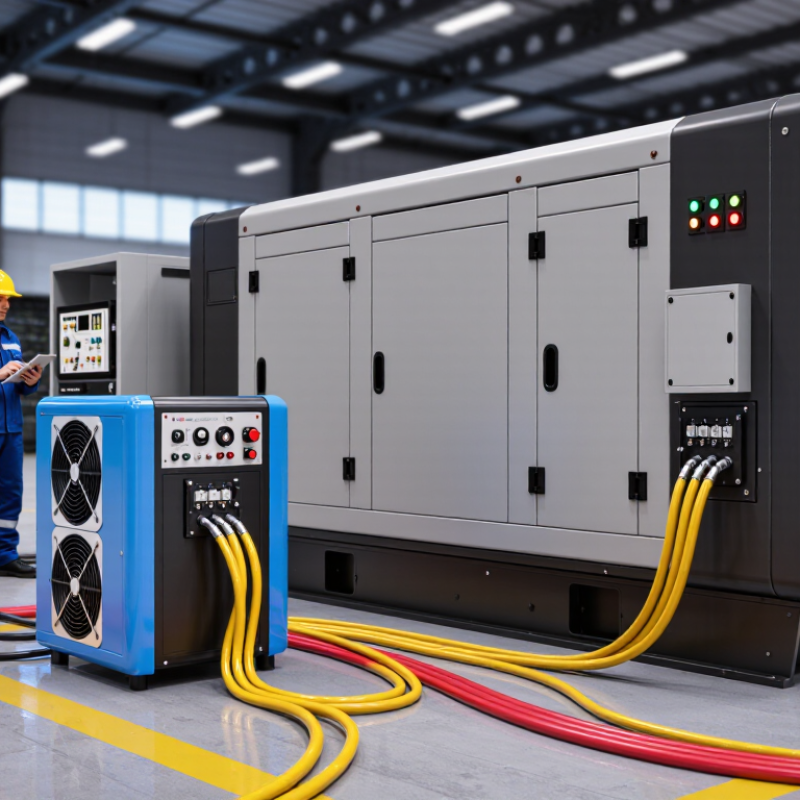
A load bank gives a generator a controlled electrical demand without relying on building equipment. It converts that power into heat, which is released through cooling elements. This lets technicians check whether the generator can carry a stated load, rather than merely start and run without a real challenge.
That difference matters.
During a test, the load is usually increased in measured steps. Technicians monitor voltage, frequency, current, and temperature at each stage. A resistive load bank suits many basic checks, while a reactive unit can better represent motors and other inductive equipment. The right choice depends on the generator’s intended duty, not just its kilowatt rating.
Watch the readings closely. A brief test may reveal unstable frequency, excessive heat, or poor voltage regulation, but it cannot prove performance in every operating condition. Test duration, ambient temperature, fuel supply, and connection quality all affect results. Keep the unit outdoors or in a properly ventilated test area, and use cables rated for the expected current.
One detail is easy to overlook: a tidy report can still hide an unrealistic test setup. Record the load steps and operating conditions so later comparisons mean something.
The Main Types of Load Banks for Generators
A resistive load bank is the simplest way to test a generator’s real-power output. It converts electrical energy into heat, often discharged through guarded vents or a cooling system. Technicians can apply stepped loads and check whether voltage and frequency remain stable. It is useful for routine commissioning and maintenance. Simple, but incomplete. A resistive test alone may not reveal how the alternator behaves with motors or other inductive equipment.
A reactive load bank adds an inductive or capacitive component, creating a power factor similar to real operating conditions. Inductive loads are commonly used to assess alternator performance under lagging power factor. A combined resistive-reactive load bank tests both real and reactive power, giving a more representative picture of generator capability. The trade-off is added size, cost, and setup complexity. Choose the type based on the generator rating, expected loads, and test purpose—not capacity alone. Check connection ratings, ventilation, and manufacturer guidance before testing. Real sites are rarely as tidy as test plans suggest.
2026 Top Load Bank for Generator: Which Type Is Best?
The main types of load banks differ in the kind of electrical load they apply. This chart compares typical power-factor behavior, not equipment ratings.
Resistive banks test real-power output at approximately 1.0 power factor. Reactive banks apply reactive load, often near 0 power factor when used alone. Combined resistive-reactive banks can test real and reactive output together; 0.8 lagging is a common generator test point. Actual configurations vary by equipment.
How Resistive, Reactive, and Combined Types Differ
Resistive, reactive, and combined load banks answer different testing questions. A resistive bank converts generator output into heat, usually vented through hot-air ducts. It checks kilowatt capacity and basic engine response, but it does not fully reproduce motor-starting loads. Think heaters and lighting, not a pump kicking on.
Reactive banks add inductive or capacitive load, testing kilovolt-amperes and power factor. Inductive testing matters when a generator serves motors, transformers, or other equipment that draws current out of phase. ISO 8528-1 uses 0.8 lagging power factor as a common rating basis for generator sets, though actual site loads should guide selection. Combined banks apply resistive and reactive loads together, giving a closer picture of real operating conditions. More representative, but also more complex to size and operate. NFPA 110’s 2022 edition sets a monthly, 30-minute exercise benchmark for emergency power systems; the required loading depends on the system and applicable provisions. I would not treat that duration as proof of full-load capability. Match the bank’s kW, kVA, and power-factor range to the generator’s nameplate and the site’s heaviest loads. A little caution helps.
Key Factors for Choosing a Load Bank in 2026
Choosing a generator load bank in 2026 starts with the generator’s real operating demands, not its nameplate rating alone. Confirm rated output, voltage, phase, frequency, and the load range you need to test. A bank with adjustable load steps can reveal performance at several operating points, while coarse steps may miss useful detail. Small steps matter.
Choose the load type to match the test. Resistive load banks are suitable for checking engine output and basic generator performance. If the generator serves motors, transformers, or other inductive equipment, a reactive or combined resistive-reactive bank may provide a more representative test. Check the required power factor before selecting capacity. Heat is real. Confirm the bank’s cooling method and airflow clearances, especially for indoor installations or hot environments.
Practical details shape day-to-day use. Verify cable length, connector compatibility, control options, portability, and whether the unit can run for the planned test duration. Record test readings, and check that measurement equipment is maintained and calibrated. Remote monitoring can help, but it does not replace an operator watching temperatures, connections, and alarms. I would still leave capacity for future needs; however, oversizing can make low-load testing less precise. The right balance depends on the generator and the actual test plan.
Which Load Bank Type Best Fits Each Generator Application
Choosing a load bank starts with the generator’s duty, not a product label. A resistive load bank fits routine commissioning and maintenance when you need to check real-power output, measured in kilowatts, and engine response. It turns electrical energy into heat. Allow for hot-air discharge and keep it clear of the generator’s cooling-air intake. Small details matter.
Generators serving pumps, compressors, or other motor loads may need reactive testing. A resistive-reactive load bank applies both real and reactive power, helping assess voltage regulation and performance at a specified power factor. This can better represent demanding site conditions than a resistive test alone. Still, matching the test profile to actual equipment matters; a complicated setup is not automatically a more useful one.
For frequent tests or changing load profiles, an electronic load bank can offer controlled steps and repeatable readings. Portable units may suit temporary or remote testing, while permanently installed systems can support regular facility checks. Before selecting a type, confirm the generator’s voltage, phase, frequency, rated kilowatts, and required power factor. Also check cooling, connection points, and available space. A tidy selection chart can mislead if those site details are missing.