For global buyers, selecting a power distribution box is not just a price comparison. It is a decision about safety, reliability, and how well equipment fits a site’s actual electrical needs. Enclosures may look similar in a catalog, yet differ in materials, rated current, ingress protection, wiring space, and available documentation. Those details matter in a dusty workshop, a humid plant room, or a sun-exposed utility area. Small differences can become expensive later.
Electrical educator Mike Holt’s safety guidance can be summarized this way: “Protect people and property before comparing product features.” This is a paraphrase, not a verbatim quotation. It offers a useful lens for comparing manufacturers. Buyers should check product specifications, quality controls, testing information, customization options, and the supplier’s ability to provide clear technical support. They should also confirm that ratings and documentation suit the installation and destination market; requirements vary, and a product description alone is not proof of suitability. Look closely. Ask direct questions. A polished brochure can leave gaps. This guide introduces leading power distribution box manufacturers for global buyers and considers the factors that help distinguish dependable suppliers from merely familiar names. No single ranking fits every project. That is worth remembering. A careful comparison, backed by verifiable product information, is a stronger starting point than a confident sales promise.
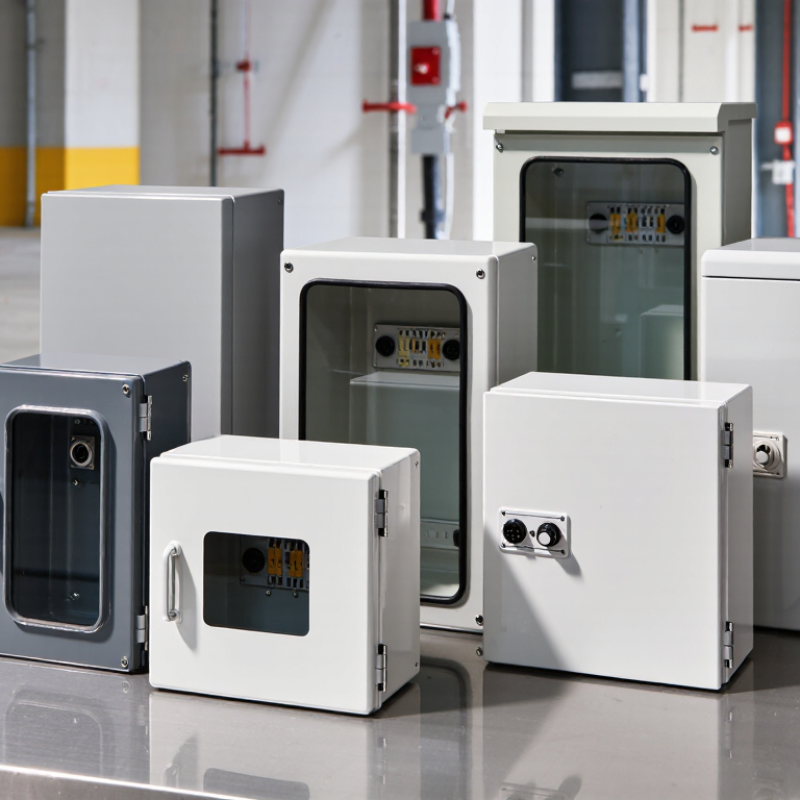
Power distribution boxes range from main distribution assemblies serving an entire facility to smaller sub-distribution and final-circuit units near equipment. Their layout depends on load, fault level, environment, and maintenance access. A workshop box may need space for motor protection and cable entries; a corridor unit may prioritize compact dimensions and clear circuit labels. Small details matter.
IEC 61439-1:2020 covers low-voltage switchgear and controlgear assemblies with rated voltages up to 1,000 V AC or 1,500 V DC. The AC ceiling is a scope boundary, not a promise that every box below it is suitable. Assemblies also require design verification and routine verification, including checks relevant to temperature rise, dielectric properties, and protective circuits. Real installation conditions can change the result. Dust, heat, and crowded cable ducts are easy to underestimate.
The need for dependable distribution is growing. The International Energy Agency’s 2023 report, Electricity Grids and Secure Energy Transitions, estimates that 80 million kilometres of grids must be added or refurbished by 2040. That figure concerns grids broadly, not distribution boxes alone, but it highlights the scale of infrastructure work. Buyers should compare documented ratings, verification records, enclosure protection, and the intended installation conditions—not just the number of outgoing circuits. A neat label is useful. It is not evidence of compliance.
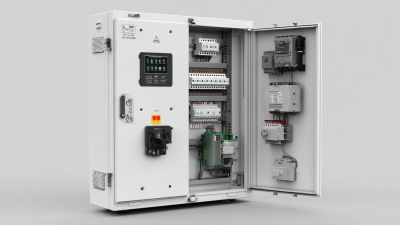
IEC 61439 applies to low-voltage switchgear and controlgear assemblies with a rated voltage not exceeding 1,000 V AC or 1,500 V DC. These values define the standard’s voltage scope; they are not recommended operating voltages for every power distribution box.
An IEC 60529 IP rating helps buyers compare how well a power distribution box resists dust and water. The first digit measures protection against solid objects, from 0 to 6. The second rates water protection, from 0 to 9. An IP6X enclosure is dust-tight under specified test conditions. An IPX5 rating means it resists water jets. They are not interchangeable.
Choose the rating for the box’s actual location. A sheltered indoor panel may face fine dust but little direct water. An outdoor unit near washdown equipment may need stronger water protection. IPX7 covers temporary immersion under defined conditions, but it does not automatically confirm resistance to every water jet. Check the test scope. Details matter.
A rating applies to the tested enclosure, not every installation. Cable glands, door seals, and unused openings can weaken protection if fitted poorly. Look for clear test documentation, stated mounting conditions, and guidance on replacement seals. Then inspect the box after installation, especially around cable entries. A number alone is not enough. I’ve seen specifications look reassuring on paper, while a small gap at a gland changes the real result. That part deserves a second look.
Manufacturer profiles are more useful when they explain which standard applies to each power distribution box. IEC 61439 addresses low-voltage switchgear and controlgear assemblies. UL 508A covers industrial control panels, including construction and evaluation requirements. They are not interchangeable labels. Buyers should ask for the exact assembly scope, not just a certificate image.
For IEC 61439, look for documented design verification and routine verification details. Ask how the manufacturer controls temperature rise, short-circuit withstand, clearances, and protective circuits. For UL 508A, check panel markings, component suitability, wiring methods, and the stated short-circuit current rating.
Small details matter. A rating must match the intended installation. Profiles should also identify the facility and product range covered by the documentation; a certificate for one location may not cover another. I would ask for sample test records and nameplate details before comparing suppliers. A polished brochure can leave gaps. That is easy to miss.
Also confirm whether the supplied enclosure, busbars, and assembled configuration match the evaluated design. Requirements can vary by project and destination, so buyers should verify acceptance with the relevant project authority rather than assume one standard meets every need.
Global buyers should evaluate power distribution box manufacturers with evidence, not brochure claims.
The International Energy Agency’s Electricity 2024 report projected global electricity demand growth of about 4% in both 2024 and 2025.
That growth makes dependable equipment and realistic delivery schedules increasingly important. Compare supplier ratings for rated current, voltage, short-circuit withstand, and enclosure protection. Check that test records match the exact configuration you plan to order.
For low-voltage assemblies, request applicable IEC 61439 verification documents, plus routine test records and traceable component lists. A high rating alone proves little.
Ask how the supplier tests temperature rise, insulation, and mechanical fit. Request sample reports, not just a list of capabilities. Customization should cover dimensions, busbar layout, cable entry, labeling, and environmental conditions.
Confirm drawing approval dates and clarify what changes restart production. Small details matter. A cable gland moved by a few centimeters can affect installation time.
Lead-time quotes should separate engineering, material procurement, assembly, inspection, and shipping. Ask which parts are long-lead items and how delays are communicated.
Supplier ratings can be useful, but they may hide uneven project performance. I would compare recent references and order records where possible; even careful checks cannot remove every uncertainty.
Top Power Distribution Box Manufacturers for Global Buyers
A reliable selection starts with the installation, not the catalog. Match the box’s rated voltage to the supply and connected equipment. Check the nameplate, phase, and frequency. For current, use the expected load and account for continuous operation, motor starting, and future additions. A larger rating is not automatically safer; protective devices and conductors must remain properly coordinated.
IP rating should reflect real exposure. A dusty workshop, a washdown area, and a sheltered indoor panel need different levels of protection. The first digit indicates protection against solids; the second covers water ingress. Also check temperature, ventilation, cable entry points, and mounting position. Heat matters too. An enclosure rating alone does not guarantee that internal components will stay within their operating limits.
Tips: Write down supply voltage, calculated load, environment, and cable-entry direction before requesting quotes. Ask for test documentation and installation limits. If conditions are uncertain, verify them on site; estimates can miss an awkward detail. Have a qualified electrical professional confirm the final selection.
Use this planning guide to compare distribution-box specifications with the installation environment. Voltage systems and current classes below are indicative examples, not a substitute for a project-specific electrical design.
| Installation Scenario | Typical Supply Voltage Examples | Indicative Current Class | Suggested Starting IP Rating | Key Buyer Checks |
|---|---|---|---|---|
| Indoor commercial building, dry electrical room | 230/400 V AC, 50 Hz; or 120/208 V AC, 60 Hz, depending on the local supply system | About 63–250 A for many sub-distribution applications; verify actual calculated load and protective-device ratings | IP30 or higher where the enclosure is indoors and protected from water and dust | Confirm system voltage and frequency, incoming and outgoing feeder ratings, available fault current, enclosure dimensions, cable entry, and local wiring-code requirements. |
| Indoor workshop or light industrial area with dust | Commonly 230/400 V AC or 120/208 V AC; confirm the site’s phase and earthing arrangement | About 100–400 A as an initial comparison range; size busbars and devices for the design load and installation conditions | IP54 as a starting point for dust-protected locations without direct water jets | Check dust exposure, ventilation and heat dissipation, short-circuit withstand rating, gland compatibility, and whether filters or cooling openings affect the required enclosure protection. |
| Outdoor installation under a canopy or sheltered location | Use the local nominal system, such as 230/400 V AC or 120/240 V AC | About 63–250 A for many feeder or branch-distribution uses; application-specific | IP54 may suit sheltered exposure; consider IP65 where dust or water jets are expected | Assess wind-driven rain, sunlight, condensation, temperature range, corrosion, mounting orientation, and cable-entry seals. IP rating alone does not establish UV or corrosion resistance. |
| Outdoor plant area exposed to dust and rain | Confirm local voltage, frequency, phase configuration, and system earthing before selecting equipment | About 100–630 A is a broad comparison range; confirm load, fault level, and thermal derating | IP65 is a common starting point for dust-tight enclosures exposed to water jets | Verify the complete assembled enclosure rating, door seals, glands, unused-entry plugs, corrosion protection, condensation control, and manufacturer’s ambient-temperature limits. |
| Washdown area with frequent water cleaning | As required by the facility supply; check equipment voltage and control-circuit voltage separately | Determine from connected loads and starting currents; motor loads may require additional checks | IP66 may be appropriate where powerful water jets are part of the cleaning conditions | Confirm cleaning method, water pressure and temperature, chemical exposure, seal materials, drainage, and installation details. A stated IP rating does not by itself certify suitability for every washdown or chemical environment. |
| Location subject to temporary immersion risk | Specify the site system and ensure the complete assembly is rated for its electrical duty | Set by the project load and protective-device coordination; do not select by enclosure IP rating | IP67 may apply where temporary immersion under specified test conditions is relevant | Check immersion depth and duration against the enclosure documentation. IP67 does not automatically mean protection against continuous immersion, water jets, or all installation conditions. |
| Control or distribution panel with heat-producing devices | Match incoming supply and internal device ratings to the site voltage and frequency | Calculate continuous load and internal heat; account for ambient temperature and grouping | Select the IP rating required by the environment, then verify that cooling measures preserve it | Request temperature-rise or thermal design information. Fans, vents, and heat exchangers can change the enclosure’s ingress-protection performance. |
Important: IP codes classify protection against access to hazardous parts and ingress of solid objects and water under defined test conditions (IEC 60529). Final selection and installation must follow applicable local electrical codes and be verified by a qualified electrical professional. Confirm rated operational voltage, rated current, frequency, short-circuit rating, conductor size, protective-device coordination, ambient conditions, and the IP rating of the complete assembled box.