Why Choose a Digital Watch for Everyday Use?
Why choose a Digital Watch for everyday use? Because useful information should be easy to read at a glance. A clear screen can show the time, date, and alarm without a phone unlocking ritual. Some models add a stopwatch, timer, backlight, or activity tracking. These features suit real routines: timing pasta, catching an early bus, or checking the hour in a dim hallway. Simple can be enough.
There is also a wider market signal. Grand View Research’s Smartwatch Market Size, Share & Trends Analysis Report estimated the global smartwatch market at $33.58 billion in 2023, with projected growth through 2030. That figure describes smartwatches, not every Digital Watch, and market growth alone does not prove daily usefulness. Still, it shows sustained consumer interest in wrist-worn technology. Apple CEO Tim Cook described Apple Watch as “the most personal device we’ve ever created” at its 2014 launch. The quote reflects one company’s view, not a universal verdict. For everyday use, comfort, readable digits, dependable battery life, and buttons that work with damp fingers may matter more than a long feature list. Small things matter. A bright display can help outdoors, yet drain power faster. And not everyone wants notifications on their wrist. This outline explores the practical trade-offs, so readers can decide whether a Digital Watch fits their own day.
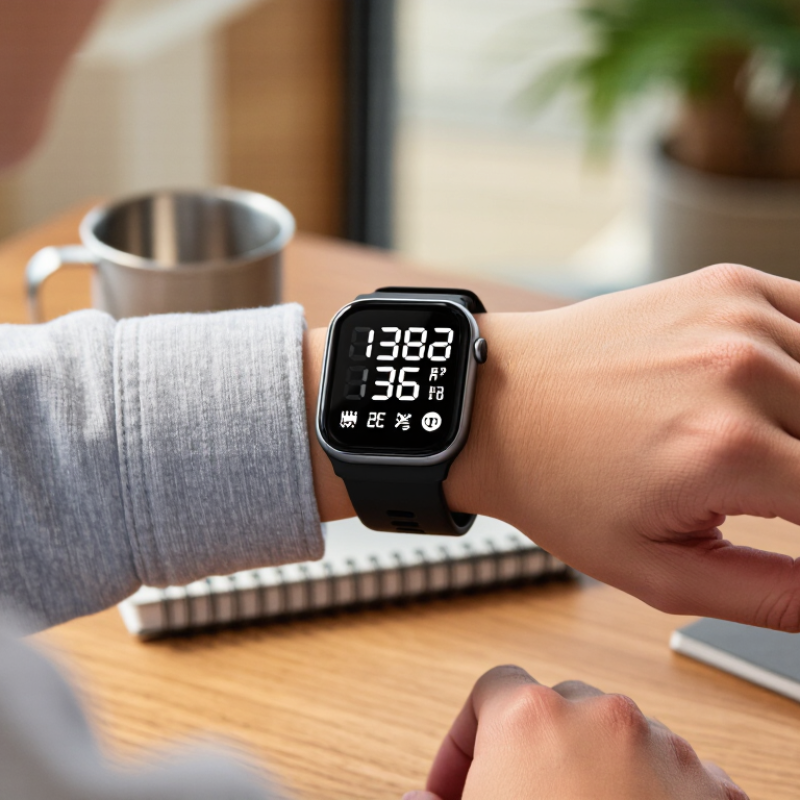
What Defines a Digital Watch?
A digital watch is defined by how it presents time: numerals appear on an electronic display rather than through moving hands. Most use a quartz timekeeping circuit and a battery, with an LCD or LED screen showing hours and minutes. Buttons often control alarms, a stopwatch, or a backlight. Simple, but useful.
Not every digital watch is a smartwatch. A basic model can keep time without connecting to a phone or running apps; a smartwatch adds software and connected features. That distinction matters. Grand View Research estimated the global smartwatch market at USD 44.6 billion in 2023, showing strong interest in connected wrist devices, but that figure does not describe all digital watches. For everyday wear, the essential definition is simpler: electronic timekeeping, a numeric display, and controls suited to the functions included.
In practice, the display is easy to read at a glance, especially when checking the time with wet hands or in a dim hallway. Yet screen contrast and button layout vary, and a bright backlight can feel harsh at night. There is no perfect format. I’d check the display in daylight and test the buttons before choosing one.
How Digital Watches Display and Keep Time
A digital watch keeps time by counting electrical pulses, not by watching moving hands. Many quartz models use a crystal vibrating at 32,768 times per second. A small circuit halves that frequency 15 times, producing one pulse each second. The display then updates its digits, often using a liquid-crystal screen that draws little power. Quiet work, inside the case.
The second itself has a precise scientific definition: the BIPM’s International System of Units defines it using 9,192,631,770 cycles of radiation from a caesium atom. A watch does not contain that laboratory standard; its quartz oscillator is a practical timekeeper. Temperature, crystal variation, and a weakening battery can still shift its pace. The readout looks exact, but the mechanism has limits.
For everyday use, this matters when seconds count: a clear display makes it easy to check the time at a glance, while the pulse-counting circuit steadily advances it. Some watches also receive radio or satellite signals to correct their clocks. Without that correction, small errors can accumulate. A useful detail, often overlooked. A digital display shows the result; the oscillator does the patient work.
Everyday Features and Their Practical Uses
A digital watch earns its place through small, useful details. Clear numerals are easy to read while walking or carrying groceries. A backlight helps at a dim bus stop, though it can feel too bright in a dark room. That helps.
An alarm can mark a medication time, a meeting, or the moment to leave home. A stopwatch is handy for tracking a short run or timing a tea steep. The countdown timer is especially practical in the kitchen, where checking a phone with wet hands is inconvenient. Small detail. Multiple alarms may help with changing schedules, but setting them can take a few extra steps.
Water resistance is useful for handwashing and rain, but it does not mean every watch is suitable for swimming. Check the stated rating and care instructions. Battery life also matters: a simple display may need less attention than frequent light or alarm use, though actual life varies. I still sometimes forget to reset a timer after using it. Convenience has limits, and a watch works best when its features are simple enough to use without fuss.
Why Choose a Digital Watch for Everyday Use?
Everyday Features and Their Practical Uses
Water resistance is useful for daily activities, from handling splashes to swimming. The chart shows common pressure ratings: the meter markings are test-rating equivalents, not guaranteed safe diving depths. Check the watch manual for recommended use.
Comfort, Durability, and Care
A digital watch is comfortable only when its fit suits the day. The case should sit flat without digging into the wrist, and the strap should leave enough room for a fingertip. On hot afternoons, a slightly looser fit can reduce trapped sweat. A soft strap may feel pleasant, but it can still irritate sensitive skin. Small details matter. Try the watch during a normal walk, not just at a store counter.
Durability depends on more than a rugged-looking case. Repeated knocks against desk edges can scratch the display, while grit under a strap may rub the skin. After exercise, wipe the watch with a soft, damp cloth and dry it before putting it away. Avoid harsh cleaners. Water resistance varies, so check the watch’s instructions before swimming or pressing buttons near water. “Water-resistant” does not mean indestructible.
Care takes little time, but habits are easy to neglect. I used to keep a watch on too tightly, assuming it would stay in place better; it mostly left a mark. Now I check the fit after long wear and clean the strap when sweat or dust builds up. If the display dims or the buttons behave oddly, consult the manual before opening the case. A simple battery change may be enough, but a damaged seal deserves proper attention.
Why Choose a Digital Watch for Everyday Use? - Comfort, Durability, and Care
| Factor | What to Look For | Everyday Advantage | Care Tip |
| Comfort and fit | A lightweight case, a strap that can be adjusted, and a case size suited to your wrist. | A good fit can feel less intrusive during work, errands, and other daily activities. | Keep the strap snug but not tight, and clean it according to its material. |
| Easy-to-read display | Clear digits, useful contrast, and a backlight if you often check the time in dim settings. | Digital numerals make the time quick to read at a glance. | Wipe the display with a soft, clean cloth; avoid abrasive cleaners. |
| Useful functions | Choose only features you will use, such as an alarm, stopwatch, timer, or date display. | Built-in timing tools can be handy for routines, appointments, and exercise. | Check the instructions to learn how to set functions and conserve battery life. |
| Water resistance | Check the stated water-resistance rating and the manufacturer’s guidance for specific activities. | A suitable rating can help protect a watch from exposure within its stated limits. | Water resistance is not permanent or the same as being waterproof. Avoid pressing buttons underwater unless the instructions allow it. |
| Case and strap durability | Consider the case and strap materials, construction, and whether they suit your daily activities. | A well-chosen design can handle ordinary wear while remaining comfortable to use. | Avoid hard impacts and prolonged exposure to chemicals, extreme heat, or direct sunlight. |
| Routine maintenance | Follow the care and battery-replacement guidance provided with the watch. | Simple upkeep helps keep the display, strap, and buttons in good condition. | Rinse off salt or sweat with fresh water only when the watch’s rating and instructions permit it, then dry it thoroughly. |
Factors to Consider When Choosing a Digital Watch
Why Choose a Digital Watch for Everyday Use?
Factors to Consider When Choosing a Digital Watch
A digital watch can make everyday tasks easier with a clear time display, timer, and alarm. Before choosing one, consider when and where you will wear it. A bright screen helps outdoors, while a backlight is useful in a dim hallway or early morning. Try reading the display at a glance, not just under shop lighting.
Small detail.
Battery life matters if you do not want frequent charging or battery changes. Check the stated life and what features affect it, such as alarms or backlighting. Water resistance also deserves a close look. A rating may cover splashes but not swimming, so check the watch’s instructions rather than guessing.
Worth checking.
Fit and controls shape daily comfort. A bulky case can catch on a jacket cuff, and stiff buttons may be awkward with gloves. Look for a strap that adjusts securely without pinching. I sometimes focus too much on extra functions; in practice, a timer I can set quickly is more useful than features I rarely open. Try the controls before deciding.