Skip to content
Menu Close

What Is a Centrifuge Tube Used For?

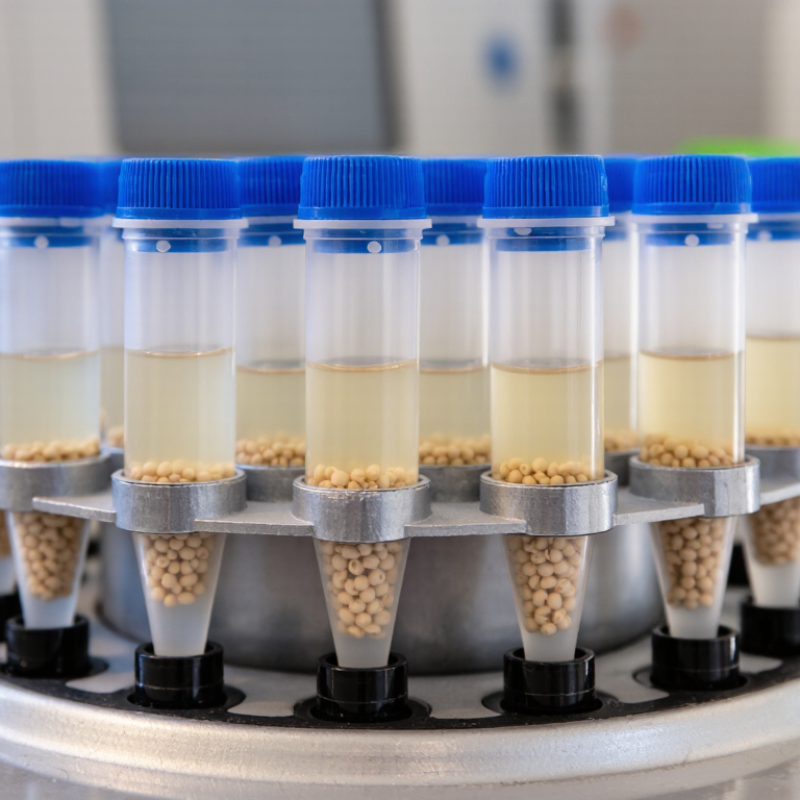
What Is a Centrifuge Tube Used For? The answer begins with separation. A Centrifuge Tube holds liquid samples while centrifugal force separates components by density. Blood, urine, cell suspensions, proteins, and environmental extracts commonly require this process. After spinning, heavier particles collect at the bottom, forming a visible pellet. The remaining liquid becomes the supernatant.

Laboratories choose tubes according to volume, speed, temperature, chemical exposure, and rotor design. Polypropylene tubes usually tolerate demanding centrifugation and many laboratory chemicals. Polycarbonate tubes may offer useful clarity but require careful compatibility checks. A 15 mL tube suits routine clinical or research samples. A 50 mL tube handles larger preparations. Small microcentrifuge tubes support DNA, RNA, and protein workflows.

MarketsandMarkets’ global centrifuge market report identifies clinical diagnostics, biotechnology, and pharmaceutical research as important demand areas. Grand View Research also links laboratory centrifugation growth with expanding life-science testing. These reports describe market direction, not permission to ignore laboratory procedures. Manufacturer ratings remain essential.

John M. Graham, author of Biological Centrifugation, states, “The tube is part of the centrifugation system, not merely a container.” That reminder matters. A mismatched tube can deform, leak, or fail under high force. Always check the rated RCF, not only RPM. Balance tubes by mass and inspect them for scratches before use. It sounds simple. It is often missed.

A good tube protects the sample, the rotor, and the technician. Yet no tube solves poor technique. Correct labeling, sealed caps, controlled temperature, and documented handling still determine reliable results. Consult the manufacturer’s instructions and applicable laboratory quality standards before every unfamiliar application.
What Is a Centrifuge Tube Used For?

Definition and Basic Purpose of a Centrifuge Tube

A centrifuge tube is a laboratory container designed to hold liquid samples during centrifugation. A centrifuge spins the tube at high speed, creating centrifugal force. This force separates materials according to density. Heavier particles usually move toward the bottom, while lighter liquid remains above them. The tube provides a controlled space for this separation.

The basic purpose is safe sample handling before, during, and after spinning. Tubes commonly hold blood components, cell suspensions, chemical mixtures, or prepared laboratory samples. Their shape helps fit the centrifuge rotor and supports even force distribution. A secure cap can reduce leaks, evaporation, and accidental contamination. Small details matter. The tube must match the sample volume, rotor design, and spinning conditions. Overfilling can cause leakage or poor separation. An unbalanced rotor can damage equipment and disturb results.

Material selection also matters. Some tubes tolerate strong centrifugal force, temperature changes, or specific chemicals better than others. A clear wall helps users observe layers, pellets, or cloudy mixtures. This definition is useful, but not complete. A centrifuge tube is more than a small container; it is part of a controlled testing process. Even so, tube choice cannot correct an unsuitable sample or incorrect operating settings. Careful labeling, balanced placement, and inspection for cracks remain essential in routine laboratory work.

How Centrifuge Tubes Separate Samples by Spinning

What Is a Centrifuge Tube Used For?

A centrifuge tube holds a sample while centrifugal force separates its components. During spinning, denser particles move toward the bottom. Lighter liquids remain above them. At a rotor radius of 10 centimeters, 3,000 rpm produces about 1,007 × g. That force can separate cells, precipitates, proteins, or soil particles from liquid samples. The result is often a visible pellet and a clearer supernatant.

Tube performance depends on more than speed. The CLSI GP44-A4 guideline emphasizes controlling centrifugation conditions, including relative centrifugal force, time, temperature, and tube compatibility. Rpm alone can mislead. The same speed creates different forces in different rotors. A 15-minute spin may also produce different results at 4°C and room temperature. Small changes matter. I would recheck the rotor radius before copying a published protocol.

The WHO Laboratory Biosafety Manual, 4th edition, advises using sealed systems when spinning may generate aerosols. Tubes should match the sample volume and tolerate the stated force. Overfilling can weaken separation and increase leakage risk. Underfilling may disturb the balance. A practical laboratory report should record tube type, fill volume, RCF, duration, and temperature. Clear documentation supports ISO 15189:2022 requirements for traceable, reliable testing. Yet even a careful protocol can fail when the sample is old, viscous, or poorly mixed. That limitation deserves attention.

What Is a Centrifuge Tube Used For?

Centrifuge tubes hold liquid samples while a centrifuge spins them at high speed. Spinning creates relative centrifugal force (RCF), causing components with different densities to separate into layers or a compact pellet.

Chart: Calculated relative centrifugal force at a fixed rotor radius of 10 cm. Higher speeds produce much greater force, improving the separation of cells, particles, precipitates, and other sample components.

Common Laboratory Uses of Centrifuge Tubes

What Is a Centrifuge Tube Used For?

Centrifuge tubes hold liquid samples during spinning, separation, storage, and transport. Common laboratory uses include separating blood plasma, serum, urine sediment, cells, proteins, and DNA extracts. A rotating centrifuge creates force that moves dense particles toward the tube bottom. The clearer liquid remains above. In routine workflows, technicians may transfer the upper layer with a pipette. The tube becomes a small, visible map of the sample.

Tube capacity matters. Smaller tubes suit microvolume DNA work and quick reactions. Larger tubes support cell washing, buffer exchange, and clinical sample preparation. Many laboratories use 15 mL or 50 mL formats for culture work and sediment collection. The 2024 WHO Laboratory Biosafety Manual stresses secure closures, balanced loads, and suitable containment. The CDC and NIH BMBL, 6th edition, also advises allowing aerosols to settle after centrifugation before opening containers. That detail is easy to overlook. I have seen small handling errors create avoidable delays.

Tips: Match the tube material to the solvent and temperature. Check the rated centrifugal force, not only revolutions per minute. Balance opposing tubes by weight, rather than appearance. Inspect each tube for cracks, cloudy plastic, or loose caps. A 2023 laboratory market analysis by Grand View Research reported continuing growth in centrifuge demand, partly due to expanding clinical and life-science testing. More equipment does not remove human judgment. Record sample identity, rotor position, speed, time, and any unusual layer formation.

What Is a Centrifuge Tube Used For? - Common Laboratory Uses of Centrifuge Tubes
Common Use What the Tube Does Typical Samples Common Tube Format Typical Result Important Considerations
Pelleting cells Holds a suspension while centrifugal force separates cells from the surrounding liquid. Bacterial cultures, mammalian cells, yeast, algae, and other cell suspensions. Conical tubes, commonly 15 mL or 50 mL; smaller samples may use microcentrifuge tubes. A compact cell pellet at the bottom of the tube and a liquid supernatant above it. Resuspend the pellet gently when cell damage or clumping could affect the experiment.
Clarifying liquids Separates suspended particles, cell debris, or precipitates from a liquid sample. Cell lysates, tissue homogenates, culture media, and chemical solutions. Microcentrifuge tubes for small volumes or conical tubes for larger volumes. A clearer supernatant with unwanted solid material concentrated at the bottom. Tube material must be compatible with the sample solvent, temperature, and centrifugal force.
Separating phases Uses differences in density to separate immiscible liquid layers or solid and liquid phases. Organic extraction mixtures, blood components, and multiphase laboratory samples. Conical tubes or specialized tubes with suitable chemical resistance. Distinct layers or an interface that can be transferred separately. Allow the layers to settle and use care when removing the desired phase to avoid cross-contamination.
Nucleic acid extraction Supports lysis, binding, washing, and elution steps during DNA or RNA purification. Blood, saliva, cultured cells, plant tissue, bacteria, and purified nucleic acids. Usually 1.5 mL or 2.0 mL microcentrifuge tubes; larger starting volumes may require conical tubes. Purified DNA or RNA collected in a small final liquid volume. Use nuclease-free tubes when required and avoid disturbing the pellet or purification membrane.
Washing precipitates Retains a solid precipitate while the liquid wash is removed after centrifugation. Precipitated proteins, nucleic acids, salts, and other laboratory precipitates. Microcentrifuge tubes or conical tubes, depending on sample volume. A washed pellet with reduced residual contaminants. Balance tubes carefully and remove the wash liquid without loosening the pellet.
Density-gradient separation Holds layered solutions while particles migrate to positions determined by density. Organelles, viruses, lipoproteins, nucleic acids, and subcellular particles. Specialized thin-wall or ultracentrifuge tubes selected for the rotor and gradient medium. Separated bands or layers containing particles with different densities. Tube type, fill volume, sealing method, and rotor compatibility must match the centrifuge protocol.
Protein precipitation Contains a sample while centrifugation collects proteins or removes insoluble material. Cell extracts, serum, plasma, and purified protein solutions. Microcentrifuge tubes for routine small-scale workflows; larger conical tubes for bulk samples. A protein pellet or a clarified protein-containing supernatant. Temperature control may be important because protein solubility and stability can change with temperature.
Blood component separation Separates blood cells from plasma or serum and can support further fractionation. Whole blood, plasma, serum, and prepared blood fractions. Tube size and additives depend on the collection and testing procedure. Separated cellular and liquid fractions, often visible as distinct layers. Follow the required collection, anticoagulant, clotting, time, and handling procedures for the test.
Sample storage after processing Provides a closed container for temporary or long-term storage of separated fractions. Cell pellets, supernatants, extracted DNA or RNA, proteins, and prepared aliquots. Sealable microcentrifuge tubes or conical tubes with appropriate temperature ratings. Organized aliquots that can be retrieved without repeatedly exposing the entire sample. Check leak resistance, low-temperature suitability, chemical compatibility, and labeling requirements.

Types and Materials of Centrifuge Tubes

What Is a Centrifuge Tube Used For?

A centrifuge tube holds liquid samples during high-speed spinning. Centrifugal force separates components by density, creating layers or a compact pellet. Conical-bottom tubes help collect pellets at the tip. They are useful for cell suspensions, precipitated proteins, and small particles. Round-bottom tubes support gentle mixing and reduce pellet loss during washing. Microcentrifuge tubes suit small volumes, while larger tubes handle bulkier samples. The correct shape depends on volume, rotor design, and separation goals.

Types and Materials of Centrifuge Tubes

Polypropylene tubes are common because they resist impact, many chemicals, and repeated temperature changes. They work well for routine biological samples. Polystyrene tubes are clear and economical, but they are more brittle and less suitable for harsh solvents or high heat. Glass tubes tolerate some solvents and provide strong chemical stability, yet they can break during spinning. That risk is easy to underestimate. Some applications require sterile, low-binding, or light-protective tubes. These features matter when samples are sensitive or easily lost on the tube wall.

Always check the tube’s maximum speed and rated relative centrifugal force. These values are not interchangeable. A tube may fit the rotor but still be unsafe at full speed. Inspect it for cracks, cloudiness, and damaged threads before use. Balance opposing tubes by mass, not just volume, especially when liquids have different densities. I have found that selection is rarely automatic; temperature, solvent exposure, and sealing requirements can change the safest choice. Manufacturer compatibility data and laboratory procedures should guide the final decision.

How to Select and Handle a Centrifuge Tube Safely

What Is a Centrifuge Tube Used For?

How to Select and Handle a Centrifuge Tube Safely

A centrifuge tube holds liquid samples during spinning, allowing particles to separate by density. In daily laboratory work, the tube must match the rotor, sample volume, and required centrifugal force. Check the rated RCF, not only the RPM. Two centrifuges can produce different forces at the same speed.

Select a tube made for your sample’s chemicals, temperature, and storage conditions. Polypropylene often suits routine laboratory work, while other materials may resist stronger solvents or heat. Confirm the working volume and leave space for expansion. A secure cap matters. It reduces leakage and protects the sample from contamination. Sterile work also requires individually sealed, certified tubes.

Inspect every tube before use. Do not use one with cracks, cloudiness, damaged threads, or a loose lid. Load opposing tubes with equal masses, not merely equal volumes. Small density differences can affect balance. I have seen apparently matched tubes vibrate because one contained a denser solution. That mistake is easy to overlook. Place tubes fully into compatible rotor wells, close the lid, and follow the equipment’s operating limits. Wear suitable eye and hand protection. Never open the centrifuge while the rotor moves. Wait for a complete stop. Clean spills promptly using a procedure approved for the sample. When unsure, pause and check the tube and rotor instructions. Safety slows the work slightly. It also prevents avoidable damage.

Site Feedback
Close