Who Are the Top ZWX Gear Motor Manufacturers in China?
China’s gear-motor market serves factories, packaging lines, conveyors, and many other applications. Yet “ZWX Gear Motor” does not, by itself, define one universal specification. Buyers should compare each manufacturer’s actual model data, not rely on a label or a polished catalogue.
The International Energy Agency’s 2011 report, Energy-Efficiency Policy Opportunities for Electric Motor-Driven Systems, estimates that “electric motor systems account for about 45% of global electricity consumption.” Paul Waide, a co-author of the report and an energy-efficiency specialist, helped document why motor-system performance matters beyond the motor alone. The finding is broader than gear motors, so it should not be mistaken for a ZWX-specific market statistic.
Small details matter. For a shortlist of Chinese manufacturers, check rated torque, speed range, gear ratio, duty cycle, thermal limits, noise data, and test conditions. Ask for model-specific datasheets and traceable quality documentation. A stainless nameplate, a smooth-running sample, and a prompt technical reply are useful signals, but none proves long-term reliability alone. This comparison examines manufacturers through product range, engineering support, customization, and evidence behind performance claims. Rankings can still miss important context: a strong supplier for a conveyor may not suit a compact packaging machine. That is worth keeping in mind.
What ZWX Gear Motors Are and How They Work
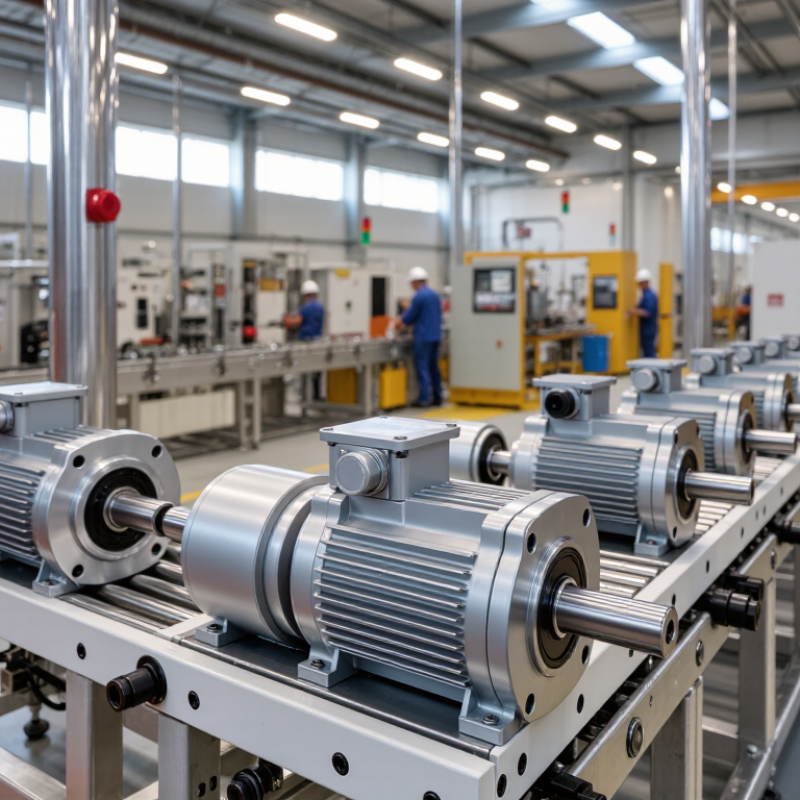
A ZWX gear motor combines an electric motor with a gearbox in one drive unit. The motor creates rotation, while the gearbox adjusts speed and torque. This makes the assembly useful in conveyors, mixers, compact lifting systems, and other equipment that needs controlled movement. The exact meaning of “ZWX” can vary by supplier, so check the product drawing and specifications before comparing units.
Inside the gearbox, meshing gears transfer motion from the motor shaft to the output shaft. A higher reduction ratio usually lowers output speed and increases available torque, though efficiency and heat also matter. For example, a slow conveyor carrying loaded cartons may need more output torque than a small fan. Mounting position, duty cycle, voltage, and operating environment affect selection. Small details matter.
Tips: Match the rated output torque to the real load, not just the motor’s nominal power. Check shaft dimensions and mounting holes against your machine. Leave room for ventilation, and monitor temperature during initial operation. A quick specification check can prevent a frustrating fit problem.
Who Are the Top ZWX Gear Motor Manufacturers in China? - What ZWX Gear Motors Are and How They Work
ZWX is not a universally standardized gear-motor category. Product specifications and naming can vary by supplier, so compare manufacturers using verified technical documents rather than assuming that the designation refers to one fixed design.
| Comparison dimension | What to check | How it relates to a gear motor |
| Motor type | Confirm whether the unit uses an AC induction, brushed DC, or brushless DC motor, and check its rated voltage and power. | The motor supplies rotational power. Its electrical design affects controls, speed regulation, maintenance, and compatibility with the power source. |
| Gearbox type | Identify the gearbox arrangement, such as spur, helical, worm, or planetary, and request the relevant performance data. | Gears reduce speed and increase available output torque. Design, efficiency, noise, and allowable loads vary by gearbox type and construction. |
| Reduction ratio and output speed | Check the stated gear ratio and rated output speed, and verify that both correspond to the selected motor speed and operating frequency or controller settings. | For a given input speed, a higher reduction ratio generally produces a lower output speed. Actual output speed also depends on the motor and operating conditions. |
| Rated torque and duty | Compare rated output torque with the application load. Ask for duty-cycle limits, allowable starting frequency, and any service-factor assumptions. | A gear motor must handle both the required torque and the duration and frequency of operation. A short-term peak rating is not the same as a continuous rating. |
| Mounting and output shaft | Confirm mounting orientation, flange or foot dimensions, shaft diameter, keyway or other shaft details, and permitted radial and axial loads. | Correct mechanical interfaces help ensure that the motor can be installed and that external loads remain within the gearbox’s specified limits. |
| Efficiency, heat, and lubrication | Request efficiency or thermal data where available, and check lubrication type, maintenance requirements, ambient-temperature limits, and permitted installation positions. | Gear losses generate heat. Lubrication and installation position can affect operating temperature, service life, and whether maintenance is required. |
| Protection and compliance | Check the enclosure protection rating and request applicable test reports or conformity documents for the destination market and intended environment. | Protection and compliance needs depend on exposure, installation, and market requirements; a rating or certificate should be verified for the exact model. |
| Manufacturer evaluation | Compare complete datasheets, sample consistency, quality-control documentation, customization capability, traceability, lead times, and after-sales support. | These checks provide a practical basis for comparing suppliers without relying on an unverified “top manufacturer” ranking or a product label alone. |
Key Specifications and Applications of ZWX Gear Motors
A ZWX gear motor should be selected by output torque, speed, reduction ratio, and duty cycle—not motor power alone. The U.S. Department of Energy’s 2014 industry sourcebook estimates that motor-driven systems use about 70% of electricity in U.S. industry, making operating efficiency a practical concern. Compare efficiency at the expected load, since a motor may run far below its rated capacity. Check the service factor, allowable radial load, mounting position, and enclosure rating too. Small details matter. For a conveyor moving cartons, for example, frequent starts can demand more torque than steady running. Catalog data may not reflect that real duty.
Applications shape the specification. Packaging lines often need controlled output speed and repeated starts; mixers may require sustained torque and adequate thermal capacity. Confirm the gear ratio against the required shaft speed, then check whether the stated torque applies continuously or only briefly. Verify protection against dust or washdown exposure, plus ambient temperature and available installation space. A supplier’s test report can help confirm noise, temperature rise, and efficiency under defined conditions. Ask for the test conditions. One caveat: published figures are easy to compare, but they can hide differences in load profile and measurement method. A selection based only on headline torque may need rethinking.
How to Identify Leading ZWX Gear Motor Manufacturers in China
Identifying a capable ZWX gear motor manufacturer starts with the duty cycle, not the catalogue. Share the required output torque, speed, operating hours, mounting position, and ambient temperature. Then compare suppliers against the same specification. Ask for drawings, gear ratio tolerances, efficiency figures, and rated-load test records. A polished brochure is not proof.
The International Energy Agency’s 2011 report, Energy-Efficiency Policy Opportunities for Electric Motor-Driven Systems, estimates that motor-driven systems use about 69% of industrial electricity. That makes verified efficiency and thermal performance meaningful selection criteria. Check whether test conditions match your application, since unloaded readings can hide losses under real load. Ask how noise and vibration are measured, too.
Look for traceable material records, documented machining and assembly checks, and clear warranty terms. Request a sample unit or an on-site audit when order size justifies it. Inspect the gearbox for smooth rotation, oil leakage, and abnormal heat after a sustained run. Small details matter. Compare lead times and spare-parts support in writing.
One caveat: a supplier may meet every listed standard yet still be a poor fit for an unusual duty cycle. Ask for evidence from comparable applications, not promises.
Comparing Manufacturers by Quality, Customization, and Service
Comparing ZWX gear motor manufacturers starts with evidence, not catalog claims. The U.S. Department of Energy’s 2014 motor-systems assessment estimates that motor-driven systems use about 54% of electricity in American manufacturing. The IEA’s 2011 report on electric motor-driven systems places their share near 45% worldwide. These figures are not gear-motor test results, but they show why efficiency and heat management matter. Request measured efficiency, temperature-rise, noise, and load-test records for the model you plan to buy. Check that test conditions match your operating speed and duty cycle.
Customization should be specific. Ask whether the factory can adapt the gear ratio, shaft dimensions, mounting face, brake, or connector without changing the approved motor design unexpectedly. A useful quotation lists tolerances, materials, lead time, and sample-testing steps. Vague promises are hard to compare. Request a drawing and a sample unit before approving a production run, especially when equipment has tight installation clearances.
Service quality appears in the details after delivery. Compare response times, spare-parts availability, warranty terms, and access to technical staff who can read test data. Ask for a written troubleshooting process, not just a sales contact. One limitation in this comparison: factory certificates alone cannot prove consistent performance across every batch. Review recent inspection records and, if possible, test a sample under your own load conditions. I would still verify the numbers independently.
How to Select a ZWX Gear Motor Supplier for Your Needs
Who Are the Top ZWX Gear Motor Manufacturers in China?
Selecting a ZWX gear motor supplier starts with your operating conditions, not a catalog headline. Define the required output speed, torque, duty cycle, supply voltage, and mounting position. A motor driving a slow conveyor faces different demands from one used in a compact packaging unit. Share a drawing or clear installation measurements when possible. Small differences in shaft size can cause avoidable delays.
Tips: Ask suppliers for performance curves, dimensional drawings, and written test criteria. Check whether their proposed model matches your actual load, including startup and occasional overloads. Request a sample if the application is sensitive. Measure temperature, noise, and current during a realistic trial. Keep the test conditions consistent. A neat datasheet helps, but it cannot reproduce every installation.
Review production consistency and communication, too. Ask how incoming materials, assembly steps, and final inspections are recorded. Confirm lead times, spare-part availability, and how design changes are handled. Compare quotations on the same specifications; a lower price may omit useful testing or documentation. Be candid about uncertainty. If your load varies, say so, and ask the supplier to explain its assumptions before you approve a design.