China has become an important sourcing destination for Ultrapure Water Equipment, serving laboratories, hospitals, semiconductor plants, and pharmaceutical facilities. However, a polished website does not prove manufacturing strength. Buyers should examine design experience, purification performance, documentation, validation support, and after-sales service.
Peter Cartwright, a respected water-treatment consultant and author, has stated, “The best water treatment system is the one that consistently produces water to specification.” That principle matters in every supplier comparison. A reliable manufacturer should explain its pretreatment stages, reverse osmosis performance, electrodeionization process, ultraviolet treatment, ultrafiltration, and final polishing. It should also provide measurable data for resistivity, total organic carbon, microbial control, and endotoxin risk. Numbers matter.
Real equipment shows practical details. Stainless-steel piping should be cleanly welded. Control panels should display pressure, conductivity, temperature, and alarm history. Consumables should have clear replacement intervals. Engineers should understand ASTM D5127, ISO 3696, USP, or applicable regional requirements. Installation records and factory acceptance tests add confidence.
Still, ranking China’s top manufacturers is not perfectly simple. Company capabilities may vary between models, factories, and local distributors. Some suppliers excel at laboratory systems but lack pharmaceutical validation experience. Others offer strong engineering but weak documentation. This guide therefore evaluates manufacturers through evidence, not advertising alone. Factory visits, reference projects, sample water reports, and service-response records can reveal more than brochures. A careful comparison reduces technical risk and supports dependable daily operation.
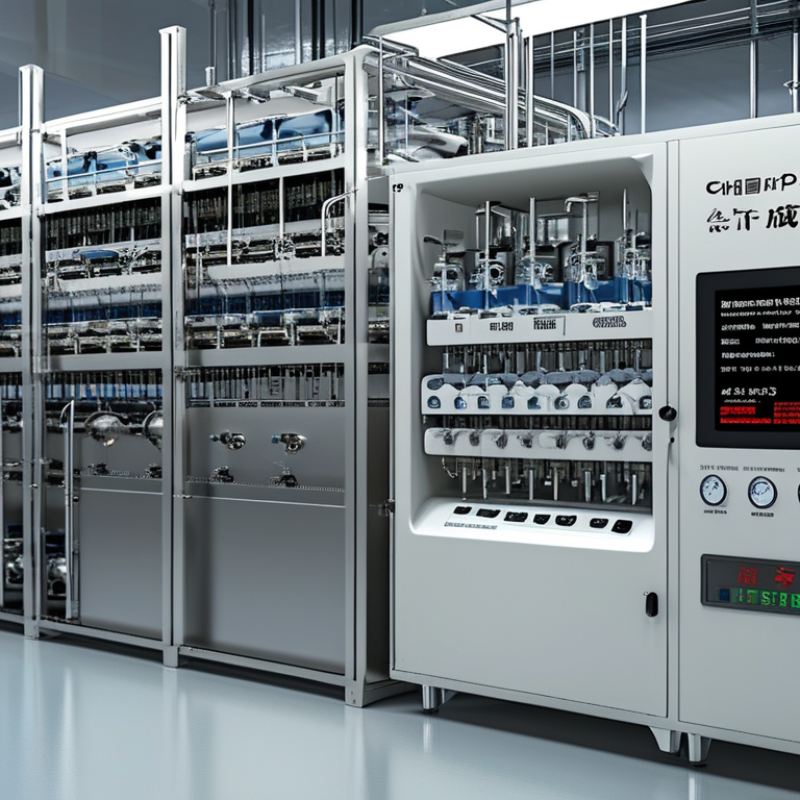
Ultrapure water equipment refers to integrated systems that remove particles, ions, microorganisms, and organic residues from feedwater. Typical stages include pretreatment, reverse osmosis, electrodeionization, ultraviolet oxidation, and final filtration. The target is not simply “clean water.” It is water with tightly controlled resistivity, total organic carbon, silica, and bacterial levels.
In China, this equipment supports semiconductor fabrication, pharmaceutical production, laboratories, and advanced battery manufacturing. A small ionic residue can damage a wafer surface or affect a sensitive formulation. Operators therefore monitor resistivity online, often near 18.2 megohm-centimeters at 25°C. SEMI technical standards and ASTM D5127 provide widely used guidance for electronic-grade water quality. These standards improve consistency, but they do not replace site-specific validation.
The China Water Resources Bulletin 2023 reported national water use of about 590.7 billion cubic meters. This figure makes recovery and stable operation important, especially in water-intensive factories. Modern systems can recycle concentrated reject water, although recovery rates depend on feedwater chemistry and maintenance. A 2024 Grand View Research analysis valued the global ultrapure water market in the multi-billion-dollar range, with Asia-Pacific showing strong demand. Market estimates vary noticeably. That is worth questioning. Equipment selection should consider real influent data, energy use, cleaning frequency, and verified performance records, not only advertised purity.
Chinese ultrapure water equipment manufacturers increasingly combine several purification technologies in one controlled system. Reverse osmosis removes most dissolved salts, particles, and organic matter. Ultrafiltration then reduces colloids, endotoxins, and large molecular contaminants. These stages protect later polishing units and extend their service life.
Electrodeionization uses electricity and ion-exchange media to reduce ionic impurities continuously. It avoids frequent chemical regeneration, although stable feedwater remains essential. Ultraviolet treatment can control microorganisms and lower total organic carbon. Some systems also use ozone or ultraviolet oxidation for storage-loop sanitation. Final filtration, often through membranes below 0.22 micrometers, provides another physical barrier.
The strongest equipment designs include online resistivity, conductivity, TOC, temperature, and flow monitoring. Data records help operators identify gradual membrane fouling before quality declines. Automated control systems can manage flushing, alarms, and recirculation, but sensors still require calibration. No process is perfect. Poor piping design can recontaminate highly purified water after treatment. Practical manufacturers therefore focus on hygienic materials, smooth welds, dead-leg reduction, and validated cleaning procedures. Factory testing is useful, but site acceptance testing reveals real problems, including unstable pressure, changing feedwater, and operator errors. These details often decide whether a system performs reliably beyond the brochure.
Representative resistivity targets across common ultrapure water treatment stages at 25°C. Higher resistivity indicates lower ionic contamination.
Reverse osmosis provides the primary dissolved-solids reduction, electrodeionization performs continuous ionic polishing, and final polishing units can produce water approaching the theoretical ultrapure-water limit of 18.2 MΩ·cm. Actual values vary with feed-water quality, system configuration, temperature, and operating conditions.
Ultrapure water systems support industries where tiny contaminants can damage products, equipment, or test results. In China, experienced equipment manufacturers commonly design systems for semiconductor plants, pharmaceutical facilities, laboratories, and power stations. Each application requires different control levels, flow rates, and validation procedures.
Semiconductor production uses ultrapure water to rinse wafers after chemical processing. Even small particles or dissolved ions may reduce yield. Pharmaceutical plants use it for formulation, equipment cleaning, and injectable product preparation. These systems often combine pretreatment, reverse osmosis, electrodeionization, ultraviolet treatment, and final filtration. Monitoring matters. Operators should check resistivity, total organic carbon, microbial levels, and pressure changes.
Power stations use treated water in boilers and cooling systems. Low mineral content helps limit scaling and corrosion inside expensive equipment. Research laboratories also depend on ultrapure water for chromatography, molecular testing, and analytical instruments. A single contaminated container can distort a result.
Food, battery, and medical-device factories use these systems in more specialized ways. Engineers must match water quality with the process, rather than selecting the highest specification automatically. That approach can reduce energy use and maintenance. Yet no system is perfect. Membranes age, sensors drift, and poor storage can quickly reduce water quality. Regular sanitation, documented testing, and trained operators remain essential. An overlooked detail can become a costly production problem.
China’s strongest ultrapure water equipment manufacturers should prove performance, not merely display impressive brochures. Check production records, laboratory references, and commissioning experience in semiconductor, pharmaceutical, or research facilities. A 2024 Grand View Research report estimates the global ultrapure water market will expand at about 8% annually through 2030. That growth increases competition, but it also makes verification more important.
Request recent water-quality reports from independent laboratories. Product water should approach 18.2 megohm-centimeters at 25°C, with consistently low total organic carbon. Ask how the system controls particles, bacteria, endotoxins, and silica. Confirm whether measurements follow ASTM, ISO, or equivalent testing methods. Energy use matters too. The International Energy Agency’s 2023 energy-efficiency analysis highlights the growing importance of industrial water and energy optimization. A supplier should provide recovery rate, electricity consumption, membrane replacement intervals, and wastewater figures. Some vendors provide excellent first samples, yet weaker long-term data. That is worth questioning.
Tips: Visit a running installation, not only a showroom. Inspect tubing, sensor calibration records, alarms, and maintenance logs. Ask for a 12-month operating-cost estimate. Compare total cost, not the lowest quotation. Also check technician response times and spare-part availability. A beautiful specification sheet can still hide an inconvenient service gap.
China Top Ultrapure Water Equipment Manufacturers?
Reliable ultrapure water equipment starts with measurable standards, not attractive brochures. ASTM D5127 describes laboratory water quality by resistivity, organic carbon, particles, and microorganisms. For Type I water, users commonly expect 18.2 megohm-centimeter resistivity and very low TOC. The 2024 MarketsandMarkets Ultrapure Water Market report forecasts high-single-digit annual growth through 2029. That growth raises supplier competition, but it does not guarantee equal engineering quality. Buyers should request factory test records, calibration certificates, and documented cleanroom procedures.
Customization matters when feedwater changes across Chinese regions. A capable manufacturer can combine pretreatment, reverse osmosis, electrodeionization, UV, ultrafiltration, and final polishing. The design should match flow rate, peak demand, laboratory sensitivity, and available floor space. It should also record conductivity, TOC, pressure, temperature, and alarm history. I have seen specifications that looked complete but ignored seasonal hardness. That oversight can shorten membrane life. A pilot test using the customer’s actual feedwater is safer than relying on a standard configuration. After-sales support deserves equal scrutiny. Ask about spare-parts availability, remote diagnostics, response time, operator training, and preventive maintenance schedules. A low purchase price becomes expensive when one pump stops production.
Tips: Compare at least three technical proposals. Check data logs, not promises. Require acceptance testing at rated flow. Confirm service coverage in writing. Also ask who owns the operating data; this detail is often missed.
| Evaluation Area | Recognized Industry Standard or Reference | Reliable Manufacturer Benchmark | Evidence Buyers Should Request | Importance for Project Selection |
|---|---|---|---|---|
| Product Water Quality | ISO 3696 Grade 1 is commonly used as a laboratory reference for high-purity water. Semiconductor and pharmaceutical projects may require tighter internal specifications. | Configured systems should be capable of producing water near 18.2 MΩ·cm resistivity at 25°C when the complete purification process and feed-water conditions are suitable. | Factory acceptance test, calibrated resistivity meter records, conductivity data, TOC test results, and a clearly defined water-quality guarantee. | Determines whether the system is suitable for analytical laboratories, electronics, biotechnology, or pharmaceutical use. |
| Purification Process | A typical ultrapure-water train may include pretreatment, activated carbon, softening or antiscalant dosing, reverse osmosis, electrodeionization, ultraviolet treatment, ultrafiltration, and a final polishing unit. | The process should be selected according to feed-water analysis, required flow rate, product-water quality, recovery target, and contamination risk. | Process-flow diagram, membrane and resin specifications, design calculations, feed-water assumptions, and component certificates. | A correctly engineered process normally has greater impact on reliability than the number of treatment stages alone. |
| Manufacturing and Quality Control | ISO 9001 is widely used as a quality-management reference. Materials and fabrication practices should also match the application and applicable local regulations. | Documented incoming inspection, pressure testing, electrical testing, cleaning procedures, traceability, and final performance testing should be available. | Quality certificate, inspection and test plan, pressure-test record, electrical safety report, serial-number traceability, and factory test report. | Reduces installation defects, commissioning delays, leakage risks, and inconsistent water quality. |
| Material Selection and Hygiene | 316L stainless steel, suitable engineering plastics, sanitary fittings, and low-extractable materials are commonly considered for demanding applications. | Wetted materials should be selected for chemical compatibility, low particle shedding, corrosion resistance, cleanability, and the required sanitization method. | Material certificates, surface-finish information where applicable, elastomer compatibility data, weld documentation, and cleaning or passivation procedures. | Poor material selection can introduce metals, organics, particles, or microbial contamination into the distribution loop. |
| Customization Capability | Customization should follow the project user requirement specification, applicable electrical codes, local water conditions, and the required validation approach. | A capable supplier can adapt flow rate, recovery, tank volume, loop configuration, control philosophy, materials, pretreatment, sanitization, and communication protocols. | Approved general arrangement drawing, P&ID, electrical schematic, control narrative, equipment datasheet, and change-control records. | Proper customization prevents oversizing, unstable operation, excessive water waste, and integration problems with existing utilities. |
| Automation and Monitoring | Industrial control systems should provide appropriate alarm management, data recording, access control, and electrical protection for the installation environment. | Useful monitoring points include conductivity or resistivity, TOC where required, pressure, flow, temperature, tank level, leakage, UV status, and filter or membrane condition. | Instrument calibration certificates, alarm list, data-logging screenshots, communication protocol details, user-access matrix, and backup procedures. | Clear monitoring and historical data make deviations easier to detect, investigate, and document. |
| Installation and Validation Support | Validation packages commonly include design qualification, installation qualification, operational qualification, and performance qualification where regulated applications require them. | The supplier should provide installation guidance, commissioning assistance, operating procedures, maintenance procedures, training, and performance-test support. | Commissioning checklist, qualification templates, calibration plan, operating manual, maintenance schedule, training record, and punch-list closeout. | Documentation quality is essential for regulated facilities and for consistent operation after handover. |
| After-Sales Service | Service obligations should be defined contractually, including response time, spare-parts availability, remote assistance, field support, and warranty exclusions. | A strong service program normally includes remote troubleshooting, preventive-maintenance planning, consumables management, operator retraining, and documented corrective actions. | Written service-level agreement, escalation contacts, spare-parts list, warranty terms, maintenance records, and references for comparable installations. | Service quality affects uptime, replacement cost, compliance, and the long-term total cost of ownership. |
| Operating Cost and Sustainability | Important operating factors include water recovery, electricity consumption, consumable replacement frequency, reject-water handling, and chemical use. | The proposal should state expected recovery, power demand, replacement intervals, cleaning frequency, wastewater volume, and recommended operating conditions. | Mass-balance calculation, energy estimate, consumables forecast, membrane and resin replacement plan, and lifecycle-cost model. | The lowest purchase price may not provide the lowest cost over the equipment’s operating life. |
| Procurement Due Diligence | Supplier evaluation should be based on technical compliance, documented test results, project references, production capacity, financial stability, and service coverage. | A suitable supplier should provide a complete technical proposal rather than relying only on catalogue specifications or generalized product claims. | Technical compliance matrix, project references, production and testing photographs, delivery schedule, warranty conditions, and signed performance guarantees. | A structured comparison helps distinguish verified engineering capability from unsupported marketing claims. |
Note: The benchmarks above are general procurement references. Final specifications should be confirmed through the project user requirement specification, feed-water analysis, applicable regulations, and a signed technical agreement.