China’s manufacturing scale makes it a major sourcing base for enclosures, equipment panels, and protective covers. World Steel Association’s World Steel in Figures 2024 reports that China produced 1,019.1 million tonnes of crude steel in 2023. This is useful context, not a measure of Sheet Metal Top Cover output. Buyers still need to verify each supplier’s capabilities.
A reliable comparison should look beyond polished product photos. Ask for material specifications, drawing reviews, sample parts, and documented inspection records. Check how suppliers control cutting, bending, welding, coating, and dimensional tolerances. A cover may look simple, yet a misaligned mounting hole or rough edge can delay assembly. Small details matter. So does clear communication when a design changes.
W. Edwards Deming, a leading quality-management expert, wrote, “Quality comes not from inspection, but from improvement of the production process.” His principle is relevant when assessing a Sheet Metal Top Cover supplier: inspect the process, not only the finished part. There is no single public dataset that ranks China’s suppliers by quality or capacity, so a confident shortlist should rest on comparable evidence. Request recent inspection results and confirm that quoted materials and finishes match the intended application. A supplier may be a strong fit for one project, but not another. That distinction is easy to miss.
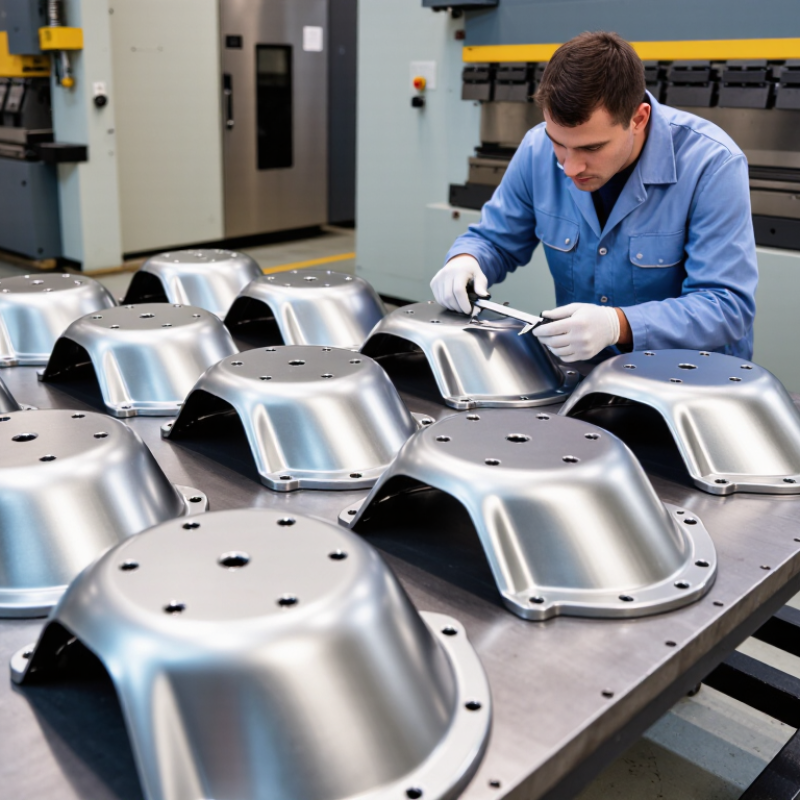
A sheet metal top cover is a formed panel that closes the upper side of an enclosure or machine. It is commonly made from steel or aluminum, then cut, bent, and finished to match the equipment. Depending on the design, it may include screw holes, ventilation slots, raised edges, or small flanges. These features help control fit, airflow, and access during maintenance. Small details matter. A cover that sits unevenly can leave gaps, rattle under vibration, or make installation frustrating.
These covers appear on electrical cabinets, industrial machinery, instrument housings, and outdoor equipment. In a control cabinet, the panel can help shield internal components from dust and accidental contact. On a machine, it may also guide airflow or protect moving parts from debris. Outdoor applications often need coatings suited to moisture and changing temperatures, though no finish is maintenance-free. Designers should check the material thickness, bend positions, mounting pattern, and edge treatment against the actual enclosure. A sample fit can reveal problems that a drawing misses. It is easy to focus on appearance; service access and drainage deserve equal attention.
A sheet metal top cover is a formed panel that protects the upper side of an enclosure, machine, or equipment assembly. The table below summarizes common cover applications and practical capabilities to check when comparing suppliers. Material and thickness ranges are indicative; final specifications depend on design, load, environment, and applicable standards.
| Cover Type / Application | Common Materials | Indicative Thickness | Typical Uses | Processes to Confirm | Supplier Checks |
|---|---|---|---|---|---|
| Electrical enclosure top panel | Painted or galvanized carbon steel; stainless steel for corrosive environments | About 0.8–2.0 mm | Control cabinets, distribution enclosures, and industrial electrical boxes | Laser cutting or punching, press-brake forming, hardware insertion, coating | Confirm cutout accuracy, bonding points, edge finishing, coating specification, and fit with the enclosure body. |
| Industrial machine cover | Carbon steel, stainless steel, or aluminum sheet | About 1.0–3.0 mm | Machine frames, production equipment, and maintenance access areas | Cutting, bending, welding where required, deburring, surface finishing | Review formed-part samples, dimensional inspection methods, weld quality, and protection against sharp edges. |
| Outdoor equipment top cover | Galvanized steel, coated carbon steel, or stainless steel | About 0.8–2.5 mm | Outdoor cabinets, telecom equipment housings, and utility equipment | Forming, seam or joint fabrication, drainage-feature forming, coating | Check material traceability, coating system, corrosion test requirements, and design provisions for water management. |
| Ventilated electronics cover | Aluminum, galvanized steel, or cold-rolled steel | About 0.8–2.0 mm | Electronics housings, power equipment, and devices requiring airflow | Laser cutting or punching, louver forming, bending, finishing | Verify opening dimensions, burr control, airflow requirements, and protection of edges around perforations. |
| Food or washdown equipment cover | Stainless steel, commonly selected according to cleaning and corrosion conditions | About 0.8–2.0 mm | Food-processing equipment and machinery exposed to frequent cleaning | Cutting, forming, TIG or laser welding where required, polishing or passivation as specified | Confirm stainless grade, surface finish, weld treatment, and cleaning-chemical compatibility with the design requirements. |
| Lightweight transport or instrument cover | Aluminum sheet or thin-gauge steel | About 0.8–2.0 mm | Instrument housings, vehicle equipment, and portable machinery | Precision cutting, bending, fastening, and anodizing or painting when specified | Assess dimensional consistency, appearance standards, assembly fit, and packaging protection against scratches or deformation. |
| General-purpose sheet metal top cover | Cold-rolled steel, galvanized steel, aluminum, or stainless steel | About 0.8–3.0 mm | Custom enclosures, equipment housings, and fabricated assemblies | CNC cutting, punching, bending, hardware installation, finishing, and assembly | Request a drawing review, first-article inspection, agreed tolerances, production schedule, and documented quality controls. |
Supplier selection note: Compare documented manufacturing capability, drawing and tolerance review, sample quality, material records, finishing controls, inspection plans, and delivery performance. No supplier ranking is implied by this application-based comparison.