Skip to content
Menu Close

What Are the Top Modern Wall Light Suppliers in China?

Choosing a reliable Modern Wall Light supplier in China requires more than comparing catalog prices. Buyers must examine design quality, electrical safety, production consistency, and communication. A beautiful fixture can still fail if its driver overheats, its finish scratches easily, or its mounting plate feels weak.

Lighting educator Randall Whitehead observes, “The best lighting is the lighting you don’t notice.” This idea matters when evaluating Chinese manufacturers. A well-designed wall light should create a calm pool of illumination, not harsh glare across a hotel corridor or living room. It should also match practical requirements, including color temperature, CRI, beam angle, dimming compatibility, IP rating, and regional voltage.

This guide explores leading Modern Wall Light suppliers in China and the strengths that distinguish them. Some suppliers focus on architectural projects. Others specialize in decorative brass fixtures, minimalist aluminum bodies, or custom hospitality lighting. Their factory scale, sample process, certifications, minimum order quantities, and export experience can vary considerably.

No supplier is perfect. A polished website does not prove reliable production. A low quote may hide limited testing or weak after-sales support. We therefore consider evidence that buyers can verify, such as factory audits, product samples, test reports, packaging details, and project references. Small details matter. Check the screw finish. Touch the powder coating. Ask how replacement drivers are supplied.

The final choice still depends on your project. That is the uncomfortable part. A supplier suitable for a boutique hotel may not suit a residential brand. Use this overview as a practical starting point, not as a permanent ranking.
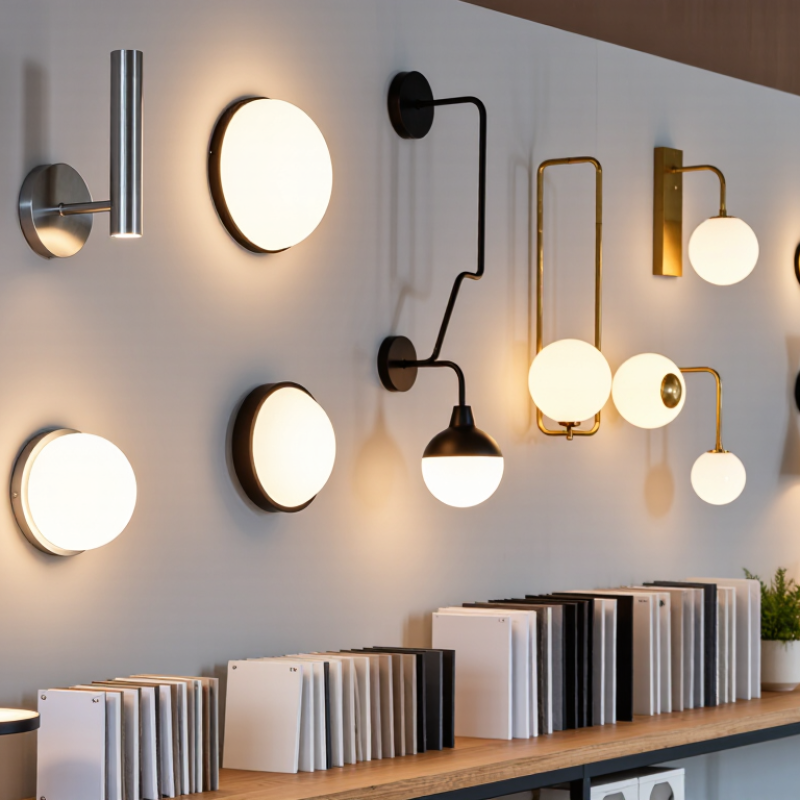
What Are the Top Modern Wall Light Suppliers in China?

Definition and Role of Modern Wall Light Suppliers in China

Modern wall light suppliers in China are manufacturers, exporters, or sourcing partners for contemporary wall-mounted lighting. They connect design concepts with practical production. Their work may include product development, material selection, testing, packaging, and shipping coordination.

A capable supplier does more than offer attractive fixtures. It should understand aluminum finishes, glass quality, LED performance, color temperature, and heat management. In project work, suppliers often adapt dimensions, mounting plates, cable exits, and surface colors. They also provide drawings, samples, test documents, and production updates. These details help architects, distributors, and contractors reduce installation risks.

Experience still matters. I have found that clear specifications prevent many avoidable mistakes. Yet no supplier is perfect. A polished sample may not reveal every production weakness. Ask about inspection methods, batch consistency, warranty handling, and replacement procedures. Independent verification remains sensible when project quantities are large.

Tips:

Request a physical sample before confirming mass production. Check light distribution on an actual wall, not only in product photos. Confirm voltage, dimming compatibility, ingress protection, and installation instructions. Compare response quality, not only unit price. A supplier that answers technical questions clearly is usually easier to manage. Keep approved drawings and finish samples for future checks. Also, allow time for corrections. Rushed decisions often create expensive surprises.

Key Criteria for Evaluating Chinese Wall Light Suppliers

When evaluating modern wall light suppliers in China, look beyond polished catalogues and attractive prices. A dependable supplier should explain its production process clearly, from aluminum casting and powder coating to wiring and final assembly. Ask whether materials are traceable and whether production follows documented quality procedures.

Ask for recent product samples, not only digital images. Check the fixture’s weight, surface finish, switch response, cable quality, and mounting strength. For outdoor or bathroom models, request verified water and dust protection results. Independent laboratory reports are more useful than vague claims. Confirm that electrical testing matches your target market’s requirements, including voltage, insulation, grounding, and temperature performance. Ask for evidence.

Communication also reveals operational maturity. A capable supplier should provide precise drawings, photometric data, packaging details, and a realistic production schedule. Clarify how defects are recorded, replaced, and investigated. Request a sample approval process before mass production. Keep written records of every specification.

Pricing deserves careful interpretation. The lowest quotation may exclude testing, stronger packaging, or stable components. That gap matters. In my experience, small details often create the largest delays, especially revised hole positions or incomplete installation instructions. No supplier is perfect, and early samples may expose weaknesses. What matters is whether the factory responds with measurements, corrective actions, and updated documentation. A site audit or independent inspection can further confirm equipment, worker training, storage conditions, and actual production capacity.

Leading Categories of Modern Wall Light Manufacturers

What Are the Top Modern Wall Light Suppliers in China?

Leading Categories of Modern Wall Light Manufacturers

China’s modern wall light suppliers usually specialize in distinct product categories. Decorative manufacturers create slim sconces, fluted glass shades, and warm bedside fixtures. Architectural suppliers focus on corridor lights, stair lighting, and recessed wall washers. Smart-lighting manufacturers add dimming, sensors, app control, and voice integration. Outdoor specialists produce IP-rated fixtures for balconies, gardens, and hotel façades. The boundaries can be messy.

Market data supports this expansion. According to MarketsandMarkets, the global smart lighting market was valued at about USD 15.9 billion in 2023 and may reach USD 46.9 billion by 2028. The report identifies connected controls and energy efficiency as major growth factors. The International Energy Agency also reports that LED lighting has become dominant in many markets, reducing electricity demand compared with older technologies. These figures explain the growing demand for efficient Chinese wall light production.

From practical sourcing experience, the best supplier category depends on the installation scene. A hotel corridor needs consistent beam angles, low glare, and stable color temperature. A residential project may value fabric shades, brass finishes, and compact drivers. Buyers should inspect photometric files, aluminum thickness, driver testing, IP ratings, and sample consistency. Certifications matter, but paperwork alone is not proof of quality. I would not treat every factory claim as final truth. Requesting a small pilot order can reveal uneven coating, weak packaging, or visible color differences. That caution matters.

How to Compare Products, Quality, Pricing, and Certifications

What Are the Top Modern Wall Light Suppliers in China?

Comparing modern wall light suppliers requires more than browsing attractive product photos. Start with construction details. Check the housing material, LED brand, color rendering index, beam angle, and available color temperatures. Ask for installation drawings and photometric files. These documents reveal performance more clearly than polished catalog images.

Quality should be tested through samples, not promises. Inspect surface finishing, cable connections, diffuser uniformity, and driver noise. Request aging-test records and a clear warranty policy. A factory audit can also verify equipment, inspection procedures, and production capacity. Certifications deserve careful review. Confirm whether CE, RoHS, CCC, or other approvals match your destination market and exact model. A certificate for one product may not cover another. Small detail. It matters.

Pricing comparisons should include the complete landed cost. Review unit price, minimum order quantity, tooling, packaging, shipping, spare parts, and payment terms. Ask whether prices change with aluminum thickness or LED specifications. A low quotation can hide weaker drivers or shorter warranties. I have found that the cheapest sample is rarely the cheapest long-term choice. Still, quality claims can be overstated too. Keep written records, compare identical specifications, and use independent testing when the project is large. No checklist is perfect. A supplier’s response to difficult questions often reveals more than its sales presentation.

What Are the Top Modern Wall Light Suppliers in China? - How to Compare Products, Quality, Pricing, and Certifications

Comparison Dimension Entry-Level OEM/ODM Profile Mid-Range OEM/ODM Profile Premium Project-Oriented Profile Recommended Verification Method
Typical product focus Decorative indoor wall lights, standard metal bodies, common glass or acrylic shades. Modern residential and hospitality fixtures with improved finishes, dimming options, and customized colors. Architectural wall luminaires, outdoor-rated products, coordinated lighting systems, and project-specific designs. Review the product catalog, technical drawings, application photos, and completed project references.
Common input power 5–12 W for integrated LED wall lights; 1 × E27 or similar lamp holder options are also common. 8–20 W integrated LED, usually with selectable color temperature or dimming options. 10–30 W, with optical, emergency, DALI, 0–10 V, or other project-specific configurations. Confirm rated wattage, driver specifications, power factor, and standby power on the datasheet.
Luminous efficacy Approximately 70–95 lm/W, depending on the LED package, diffuser, and driver. Approximately 90–120 lm/W for well-designed integrated LED products. Approximately 100–150 lm/W where high-efficiency LED modules and optimized optics are used. Request an LM-79 or equivalent photometric report rather than relying only on advertised LED-chip efficacy.
Color quality Usually CRI 80 or higher; typical color temperatures are 2700 K, 3000 K, 4000 K, and 6500 K. Commonly CRI 80–90, with tighter color-consistency options available on request. CRI 90 or higher may be specified for hospitality, retail, museum, and high-end residential applications. Check CRI, R9, color tolerance, CCT tolerance, and test reports from an accredited laboratory.
Ingress protection Often IP20 for dry indoor locations. Typically IP20–IP44 for indoor products; selected bathroom models may use higher ratings. IP54, IP65, or higher may be available for exterior, landscape, and wet-location applications. Confirm the IP rating on the test report and ensure the installation environment matches the declared rating.
Materials and finish Steel, aluminum, glass, acrylic, or mixed materials; standard powder coating or plating. Die-cast aluminum, stainless steel, brass-colored finishes, improved coating consistency, and better shade control. Specified metal grades, marine-grade options, anti-corrosion treatments, custom finishes, and controlled color matching. Request material declarations, coating specifications, salt-spray results where applicable, and a production sample.
Indicative unit price Approximately US$8–25 per unit for standard indoor designs at volume quantities. Approximately US$20–60 per unit, depending on materials, controls, and customization. Approximately US$50–180 or more for engineered, outdoor-rated, or project-specific products. Compare like-for-like quotations that include driver, packaging, testing, tooling, freight terms, and taxes.
Typical MOQ Often 50–200 units for standard catalog products; custom colors may require more. Often 100–500 units, depending on tooling, finish, packaging, and electronic components. Project-based quantities may be negotiable; prototype and pilot orders are usually quoted separately. Obtain written confirmation of MOQ by model, finish, CCT, packaging method, and customization level.
Lead time Approximately 15–30 days for available standard products. Approximately 25–45 days for customized finishes or assembled LED products. Approximately 40–90 days for tooling, engineering approval, testing, and project production. Separate sample, tooling, production, inspection, and shipping lead times in the purchase schedule.
Core safety standards Products should be evaluated against applicable lighting safety requirements, including IEC 60598-1 and relevant part standards. May include IEC 60598-1, IEC 60598-2-1, IEC 61347, and EMC requirements for LED drivers. May include additional photobiological, thermal, ingress-protection, emergency-lighting, or project-specific standards. Request valid test reports that identify the exact model, electrical rating, construction, and applicable standard edition.
Market certifications and compliance CE and RoHS documentation may be available for applicable European-market products. CE, RoHS, EMC, LVD, and regional documentation may be provided depending on the target market. May support CE, UKCA, FCC, UL or ETL-related requirements, but acceptance depends on the exact product and destination. Verify certificates through the issuing laboratory or certification database; confirm that the report covers the purchased configuration.
Quality-management evidence Basic incoming inspection and final visual inspection may be available. Usually expected to provide inspection records, sampling plans, aging tests, and traceability for key components. More structured quality systems, engineering change control, batch traceability, and third-party inspection support may be available. Request an ISO 9001 certificate, quality manual summary, inspection plan, corrective-action records, and factory-audit access.
Warranty expectation Commonly 1–2 years, subject to installation and electrical conditions. Commonly 2–3 years for complete fixtures; LED drivers may have separate terms. Often 3–5 years can be negotiated for qualified projects and specified operating hours. Check warranty coverage, exclusions, replacement procedures, labor responsibility, and spare-parts availability.
Best fit Cost-sensitive residential orders, standard designs, and low-complexity indoor applications. Hotels, apartments, restaurants, retail interiors, and buyers requiring a balance of cost and customization. Commercial developments, outdoor projects, specification-driven installations, and long-term maintenance programs. Select the profile that matches the required compliance level, installation environment, order volume, and lifecycle budget.
Note: Price, MOQ, lead time, performance, and certification availability are indicative China OEM/ODM market ranges rather than claims about any specific supplier. Final specifications should be confirmed through current quotations, product samples, technical datasheets, and independently verifiable test reports.

Steps for Selecting the Right Supplier for Your Project

Selecting a modern wall light supplier in China requires more than comparing catalog prices. Start by matching the supplier’s experience with your project type, such as hotels, apartments, retail spaces, or outdoor corridors. A polished catalog proves little. Ask for recent project photos, production capacity, and clear product specifications. Request a physical sample before approving bulk production.

Examine the sample under real conditions. Check its finish, switch alignment, light spread, cable length, and heat after several hours. Ask for photometric data, material details, safety documents, and testing records suitable for your target market. A dependable supplier should explain LED performance, color consistency, packaging protection, and replacement procedures without avoiding difficult questions.

Communication is also a practical test. Send one detailed inquiry and measure the response time, accuracy, and willingness to correct mistakes. Discuss minimum order quantities, lead times, sample fees, inspection points, and payment stages in writing. I once focused too heavily on a low quotation and underestimated packaging damage during shipping. That mistake changed my evaluation process. Now, I ask for carton dimensions, drop-test information, and spare-part support before signing. A factory visit or independent inspection can reveal workflow problems that photographs hide. Cheap is not always efficient.

What Are the Top Modern Wall Light Suppliers in China?

Recommended evaluation weights for selecting a supplier for a modern wall-light project

Product quality and compliance should receive the highest priority, followed by customization, delivery performance, order flexibility, and after-sales support. Use these weights as a practical screening framework when comparing qualified Chinese suppliers.

Site Feedback
Close