Skip to content
Menu Close

Top Throttle Pedal Sensor Suppliers for Global Buyers

Choosing a Throttle Pedal Sensor supplier is not simply a search for the lowest quoted price. For global buyers, the right choice can affect product consistency, assembly efficiency, and long-term support. A useful supplier review starts with practical evidence: clear specifications, documented testing, stable production processes, and responsive technical communication. Buyers should check that sensor designs match their application’s required signal range, connector layout, mounting points, and operating conditions. Small details matter.

A connector drawing that differs from the production part can delay an otherwise well-planned project. Ask suppliers about calibration controls, material traceability, environmental testing, and how they handle design changes. Quality certifications may offer helpful context, but they should not replace a review of product-specific records and samples. Requesting a sample for fit and function checks can reveal issues that a polished catalog cannot. It takes time.

This overview of top Throttle Pedal Sensor suppliers for global buyers focuses on how to assess capabilities, compare offers, and ask informed questions before selecting a partner. Consider production capacity, communication across time zones, packaging, delivery planning, and access to engineering support. Supplier claims deserve careful verification; no checklist makes sourcing risk disappear. Even experienced teams can miss a detail, so keep assumptions visible and review them with the supplier. The strongest match is not always the largest company, but the one whose evidence, processes, and support fit the buyer’s real requirements.
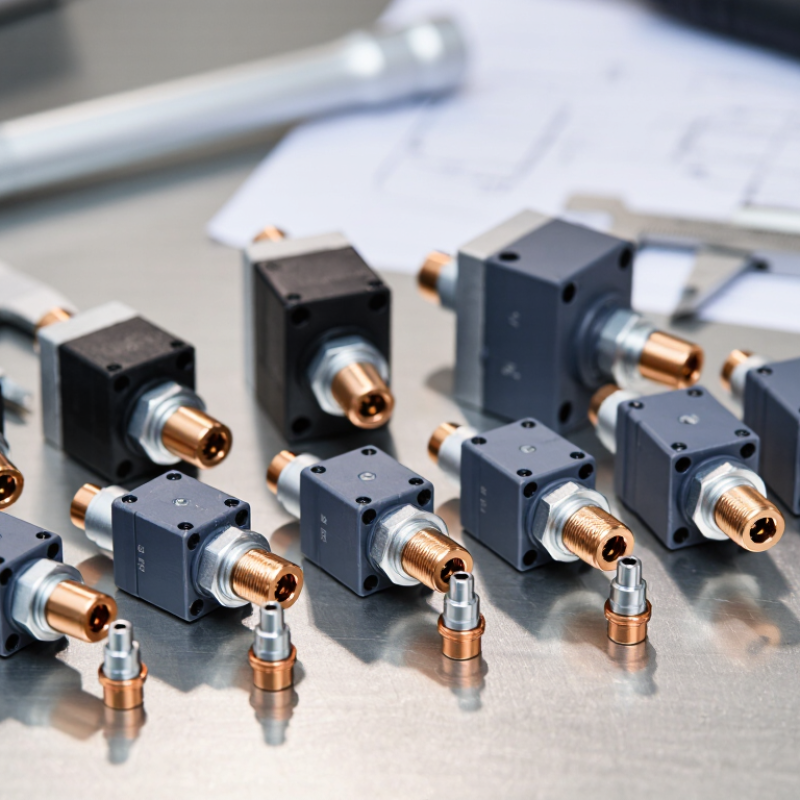
Top Throttle Pedal Sensor Suppliers for Global Buyers

Understanding Throttle Pedal Sensors and Their Role in Vehicle Control

In a drive-by-wire vehicle, the accelerator pedal does not pull a cable to open the throttle. A pedal-position sensor converts pedal movement into an electrical signal, which the control unit interprets as the driver’s torque request. Press gently, and the signal should rise smoothly; lift your foot, and it should fall without sticking or jumping. That transition is critical in stop-and-go traffic. Small changes matter.

Many designs use two signal tracks so the control unit can compare readings and detect disagreement. The sensor is only one part of the control chain, though: wiring, connectors, software, and throttle actuators also affect response. A worn connector can create intermittent signals that are difficult to reproduce during a quick inspection. NHTSA’s Federal Motor Vehicle Safety Standard No. 124 sets a one-second return-to-idle requirement for accelerator control systems after the actuating force is removed. This is a useful safety benchmark, not a direct sensor-accuracy rating. Buyers should assess operating range, signal consistency, environmental durability, and validation evidence together. A clean specification sheet helps, but real-world test conditions matter more.

Key Criteria for Evaluating Throttle Pedal Sensor Suppliers

Top Throttle Pedal Sensor Suppliers for Global Buyers

Key Criteria for Evaluating Throttle Pedal Sensor Suppliers

Reliable supplier evaluation starts with engineering evidence, not attractive catalogs. Check sensor accuracy, response time, operating temperature, and signal stability. Request test data under vibration, humidity, and repeated pedal cycles. A serious supplier should explain calibration methods clearly. In practical sourcing work, small signal drift often becomes a costly vehicle issue.

Manufacturing control matters equally. Review material specifications, inspection points, traceability records, and production capacity. Ask how suppliers manage connector fit, housing strength, and sealing performance. Samples should undergo independent testing before volume orders. Do not trust one successful sample alone. A polished datasheet can still hide inconsistent batches, and this is easy to overlook.

Communication is another useful measure. Suppliers should provide clear drawings, change notices, delivery forecasts, and technical responses. Evaluate their ability to support regional requirements without making unsupported compliance claims. Check warranty terms, replacement procedures, and failure-analysis reports. A capable technical team can identify root causes, rather than simply offering replacements. Cost deserves attention, but the lowest quotation may reflect thinner materials, weaker testing, or limited support. I would also question my own evaluation when all evidence looks perfect; real production usually contains some variation.

Profiles of Leading Throttle Pedal Sensor Suppliers Worldwide

Global throttle pedal sensor suppliers serve a vehicle market that continues to expand. OICA reported 93.5 million motor vehicles produced worldwide in 2023, a 10% annual increase. This scale raises demand for stable, traceable sensor production.

Leading suppliers usually fit three profiles. Tier-one electronics manufacturers offer large-scale production, automated calibration, and documented automotive quality systems. Regional specialists often provide faster engineering support and flexible tooling for smaller programs. Contract manufacturers can reduce costs, but their testing depth may vary.

Strong suppliers typically provide dual-channel position sensing, vibration testing, temperature cycling, and end-of-line validation. These details matter when pedals face dust, moisture, and repeated driver input.

Supplier credibility should be checked against IATF 16949 certification, ISO 26262 capability, audit records, and measurable return rates. The MarketsandMarkets Automotive Sensors Market report identifies continued growth in sensor adoption, driven by electrification and advanced driver assistance systems. However, a market forecast is not proof of product quality. That distinction is easy to miss.

Tips: Request sample data, not only brochures. Compare response linearity, connector sealing, lead times, and failure analysis reports. Ask whether calibration is completed for every unit. A low quoted price can hide expensive validation work. Also review continuity plans for chips and molded components. No supplier profile is perfect. Some vendors communicate well but lack global service coverage; others have strong plants but slower engineering replies. A practical scorecard should expose those gaps before nomination.

Global Sourcing, Quality Standards, and Supply Chain Considerations

Global buyers should qualify throttle pedal sensor suppliers beyond unit price. The World Bank’s 2023 Logistics Performance Index covered 139 economies and 4,090 trade professionals. Its findings highlight persistent gaps in customs, tracking, and delivery reliability. Ask suppliers for lane-specific evidence, not polished averages.

A practical audit checks connector fit, signal redundancy, sealing, vibration records, and end-of-line calibration. Request IATF 16949 certification, ISO 9001 controls, and traceability to each lot and test station. For environmental validation, align tests with ISO 16750, including temperature cycling, humidity, mechanical shock, and electromagnetic conditions. Data matters more than claims. Review capability studies, gauge repeatability, failure returns, and corrective-action timing. A supplier unable to show raw test records deserves caution.

Supply-chain design needs equal attention. UN Trade and Development’s Review of Maritime Transport 2023 states that roughly 80% of global merchandise trade by volume moves by sea. One port delay can stop a small sensor from reaching final assembly. Dual sourcing helps, but it is not automatically safer. Different suppliers may share one resin, terminal, or connector source. Keep a controlled buffer, approved alternates, and quarterly risk reviews. This may sound excessive. It is still cheaper than discovering calibration drift after shipment. I would challenge my own audit, too: a clean factory visit proves little without repeated, independent data.

Quality Standards Relevant to Throttle-Pedal Sensor Suppliers

Edition years of selected quality, automotive, environmental, and occupational health and safety standards

These dates identify the editions shown; they do not indicate whether a supplier is certified or guarantee the performance of a specific sensor. Buyers should verify certificates, scope, and component-level validation directly with each supplier.

How to Compare Suppliers and Select the Right Partner

Choosing a throttle pedal sensor supplier requires more than comparing unit prices. Buyers should examine sensor accuracy, signal stability, housing strength, and resistance to vibration. Ask for inspection records, material specifications, and traceability documents for each production batch. A supplier that explains testing clearly usually understands the component’s real operating demands.

Request samples before signing a long-term agreement. Test them across temperature changes, repeated pedal cycles, and different voltage conditions. Check connector fit, response time, and return-to-zero performance. Review the supplier’s quality system, production capacity, and corrective-action process. Can they identify a failed batch quickly? Can they replace it without disrupting your assembly schedule?

Communication reveals practical reliability. Measure response speed, engineering support, packaging quality, and delivery consistency. A low quote can look attractive, but hidden tooling costs or unstable lead times may change the calculation. Compare total ownership cost, not only the purchase price. No scorecard is perfect. A spreadsheet can hide weak cooperation. Leave room for technical judgment, site audits, and honest questions about previous defects. Suppliers should also explain design changes before shipment, not after problems reach your production line.

Site Feedback
Close