Skip to content
Menu Close

What Are the Top Commercial Lift Types in 2026?

Commercial Lifts do far more than move people between floors. They shape how a building handles deliveries, daily traffic, accessibility, and limited space. In 2026, the right choice still depends on practical details: the building’s height, expected passenger flow, load needs, available shaft space, and maintenance plan. Small differences matter. A busy hotel lobby has different demands from a warehouse loading area.

This guide compares the leading commercial lift types, including passenger, freight, service, platform, traction, and hydraulic systems. It also considers machine-room-less designs and newer control features, while recognizing that availability and suitability vary by market and project. Elevator historian Dr. Lee Gray’s published work offers a useful perspective: lift design reflects the needs and expectations of the building around it. This is a paraphrase, not a direct quotation. The distinction matters; a specific lift recommendation should rest on verified site details, not a trend list. Some choices look efficient on paper but prove less suitable once traffic, access, and maintenance are considered. That part is easy to overlook. The following overview gives building owners, managers, and project teams a clear starting point for comparing options without treating any single lift type as universally best.
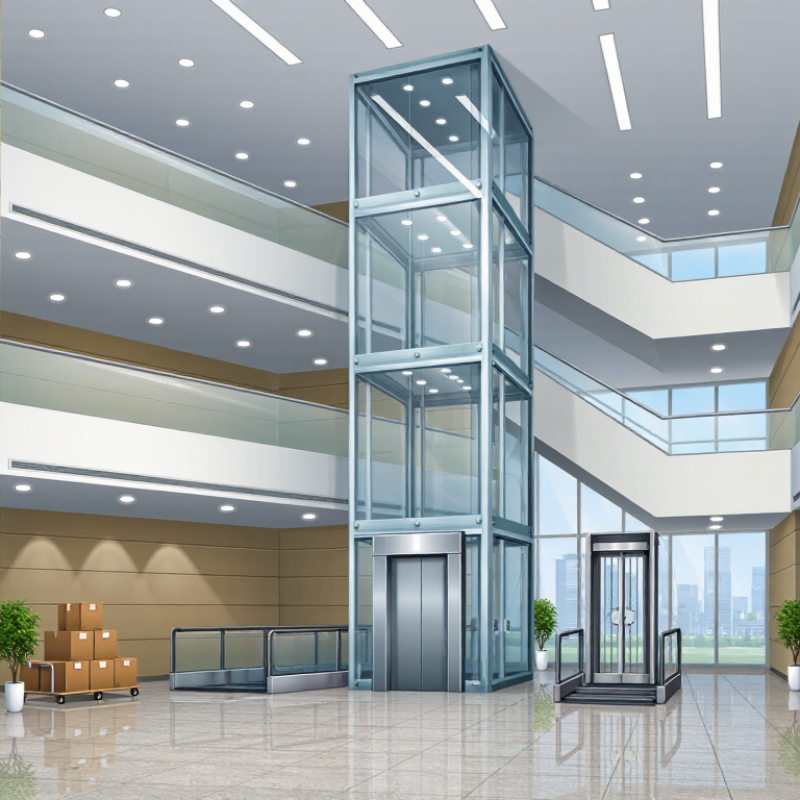
What Are the Top Commercial Lift Types in 2026?

What Is a Commercial Lift and How Does It Work?

A commercial lift is a powered system that moves people or goods between floors inside a building. Its core parts include a cabin, doors, guide rails, a drive system, and a controller. In a traction lift, an electric motor turns a sheave; ropes and a counterweight move the cabin. A hydraulic lift uses a pump to push fluid into a cylinder, raising the cabin. A valve releases the fluid to lower it. Sensors track position and door status, while brakes and other safety devices help control movement. The details matter: a lift that works well for a quiet office may not suit a busy loading area.

Traction and hydraulic lifts are common commercial options, with different space, height, and traffic demands. The IEA and UNEP’s 2024 Global Status Report for Buildings and Construction gives useful context. It attributes 32% of global energy demand and 34% of CO2 emissions to buildings and construction. These figures are not lift-specific, but they make energy use worth checking when comparing systems.

Tips: Match capacity and speed to real peak traffic, not just the floor count. Ask about standby power, maintenance access, and emergency operation. A small detail, such as a slow-closing door, can frustrate daily users. Don’t overlook it.

What Are the Top Commercial Lift Types in 2026? - What Is a Commercial Lift and How Does It Work?
Commercial Lift Type Common Applications Typical Rated Load Typical Speed or Travel How It Works
Passenger Lift Offices, hotels, residential buildings, retail centres and public buildings About 450–2,500 kg, depending on car size and building requirements Often about 0.5–2.5 m/s in low- and mid-rise buildings; high-rise systems may be faster Usually uses an electric traction system: a motor moves the lift car and counterweight with ropes or belts. Some low-rise models use hydraulic power.
Freight or Goods Lift Warehouses, factories, loading areas and commercial buildings moving bulky goods Commonly about 1,000–10,000 kg; specialist installations can differ Often about 0.15–1.0 m/s, depending on load, travel height and duty A heavy-duty traction or hydraulic drive raises a reinforced car. Larger doors, durable finishes and load controls support goods handling.
Service Lift Hotels, hospitals, restaurants and offices moving supplies, laundry or equipment Often about 500–1,600 kg for a person-sized service elevator; smaller service lifts have lower capacities Varies by building and system; commonly comparable to a low- or mid-rise passenger lift Typically operates like a passenger lift, using traction or hydraulic drive, but is configured for staff, equipment and service routes.
Dumbwaiter Restaurants, hotels, libraries and multi-level food-service or storage areas Often about 50–300 kg, subject to the model and local requirements Varies by installation; intended for short-distance, small-load movement A compact powered carriage travels in a shaft between floors. Interlocks and controls are designed to prevent access while it is moving.
Platform Lift Small commercial premises and locations where an accessible route is needed over a short vertical distance Often about 250–500 kg, depending on design and applicable regulations Generally slow-speed; maximum speed and travel are governed by the lift type and local accessibility and safety rules A platform moves vertically using a screw, hydraulic or other approved drive. Controls, barriers and safety features depend on the installation.
Vehicle Lift Car parks, vehicle showrooms, workshops and sites with limited space for ramps Often about 2,500–5,000 kg for passenger-vehicle systems; heavier designs are available Usually low-speed, with travel and cycle time selected for the building and vehicle type A vehicle platform or carrier is raised by a hydraulic or traction mechanism, with guides and safety devices controlling its movement.
How a commercial lift works: A lift moves a car, platform or load between levels using a drive system, guide rails, controls and safety devices. Traction systems use a motor with ropes or belts and commonly a counterweight; hydraulic systems use pressurised fluid to move a piston. Actual capacity, speed, travel and permitted use depend on the design, building and local codes. Figures above are indicative ranges, not specifications for a particular installation.

How Are Commercial Lifts Classified?

Commercial lifts are commonly classified by what they carry and where they operate. Passenger lifts move people between floors in offices, hotels, and shops. Goods lifts handle heavier loads, such as boxed stock or equipment. Service lifts carry smaller items between areas, often from a kitchen to a dining room. Some buildings also use platform lifts where a conventional lift shaft is impractical.

The categories can overlap. It gets messy. A lift may be described by its purpose, rated load, travel distance, and drive system at the same time. For example, a compact goods lift might serve two floors and carry several hundred kilograms. Its capacity and landing layout matter as much as its label. Traction and hydraulic systems are also common classifications, though suitability depends on building height, traffic, space, and maintenance needs.

For a useful comparison, check the rated capacity, usable car dimensions, number of stops, and expected trips per hour. A busy retail building may need faster handling than a small office with occasional deliveries. Classification alone does not determine the right choice. Specifications should be checked against the building plan and applicable local requirements; details are easy to overlook during early planning.

What Are the Main Commercial Lift Types in 2026?

Commercial buildings commonly use passenger lifts, goods lifts, service lifts, dumbwaiters, and platform lifts. Each type solves a different movement problem. Passenger lifts carry people between floors in offices, hotels, clinics, and shops. Their capacity, door width, and speed should match expected traffic. A lift near a busy lobby may need to handle frequent peak-hour journeys. Fit matters.

Goods and freight lifts move heavier or bulky items, such as delivery carts, stock cages, and equipment. They often have larger cabins, stronger floors, and doors designed for loading. Service lifts support staff and supplies, helping keep deliveries away from public areas. Dumbwaiters carry smaller items between floors, such as dishes or documents. They are not designed to transport people.

Platform lifts provide short-distance vertical access where a conventional passenger lift may not fit. They can help connect split levels or raised entrances, but space, travel height, and user needs affect suitability. Drive systems, including traction and hydraulic designs, are separate from lift types; each has practical limits. The best choice depends on building layout, traffic, load, and maintenance access. It is easy to focus on cabin size and overlook the space needed for doors, equipment, and servicing. That detail matters.

How Do Commercial Lift Types Differ in Capacity and Use?

What Are the Top Commercial Lift Types in 2026?
How Do Commercial Lift Types Differ in Capacity and Use?

Commercial lifts differ less by appearance than by the loads and routines they serve. Passenger lifts move people between floors, with rated capacity commonly stated by weight and passenger count. Their speed, cabin size, and traffic handling matter in busy offices, hotels, and medical buildings. A lift that feels spacious at midday may still queue during a morning rush.

Freight lifts are built for heavier or bulkier goods, such as palletized stock, equipment, or furniture. Their wider doors and durable interiors can make loading easier, but they may trade passenger comfort or speed for practical handling. Service lifts carry smaller items between work areas, often helping kitchens, stores, and staff avoid crowded public routes. They are not simply tiny freight lifts; access, loading patterns, and daily frequency shape the choice.

For buildings with limited space or specific access needs, platform lifts can connect short vertical distances. Their capacity and travel range are usually more limited than those of full passenger lifts. Check the rated load, usable cabin dimensions, door clearance, and expected trips per hour against real operating conditions. Details matter. A capacity label alone cannot predict queues, awkward deliveries, or peak-hour delays. Even a careful estimate can miss how staff actually move through the building.

How Can You Choose the Right Lift for a Building?

Choosing a commercial lift starts with the building’s daily rhythm, not a catalogue. A passenger lift suits offices, hotels, and mixed-use sites, but capacity alone does not determine comfort. Estimate peak traffic, floor count, travel distance, and expected waiting time. A busy clinic may need faster service and room for mobility devices. A small office may work well with a simpler arrangement. Small details matter.

Measure the shaft, pit, overhead clearance, and available machine space before comparing systems. Traction lifts can suit taller buildings, while hydraulic lifts are often considered for lower-rise settings. Service and goods lifts need different car sizes, door arrangements, and load ratings. Check how deliveries move through the building, including carts and loading areas. A floor plan can look generous on paper, then feel tight once doors and waiting space are drawn.

Also consider energy use, noise, maintenance access, and how the lift will be used during an outage. Ask suppliers for traffic calculations and clear operating assumptions, then have a qualified lift professional verify the design against site conditions and applicable accessibility and safety requirements. The first estimate may be wrong. That is worth noticing early, before construction makes changes costly. A suitable lift balances real demand, available space, and long-term upkeep—not just the lowest upfront price.

Site Feedback
Close