Top 10 Sewer Line Cleaning Machines for Buyers
Selecting a Sewer Line Cleaning Machine is a practical decision, not just a comparison of motor power or price. Buyers need to match the machine to pipe diameter, blockage type, access conditions, and expected workload. A compact drum machine may suit indoor maintenance, while larger jobs can call for a jetter or sectional cable system. The right choice depends on the work.
This guide compares ten options through details buyers can verify: cleaning method, cable or hose capacity, portability, controls, maintenance needs, and available support. It also considers where each machine may be less suitable. A powerful unit can be awkward in a narrow service area. A lightweight one may struggle with demanding, frequent work. Those trade-offs matter.
Look closely at specifications. Check the recommended pipe range, compatible accessories, and operating instructions before purchase. Ask suppliers about replacement parts, warranty coverage, and service access; these details affect long-term ownership. Operator training and protective equipment also matter, especially around rotating cables and pressurized water. Follow the manufacturer’s guidance.
No single machine fits every crew. That is easy to overlook. The comparisons ahead are intended as a starting point, not a substitute for assessing actual job conditions. Some product details change, and listed capabilities should be confirmed with the manufacturer or authorized seller. A careful match can reduce downtime, avoid overspending, and help crews choose equipment they can operate and maintain reliably.
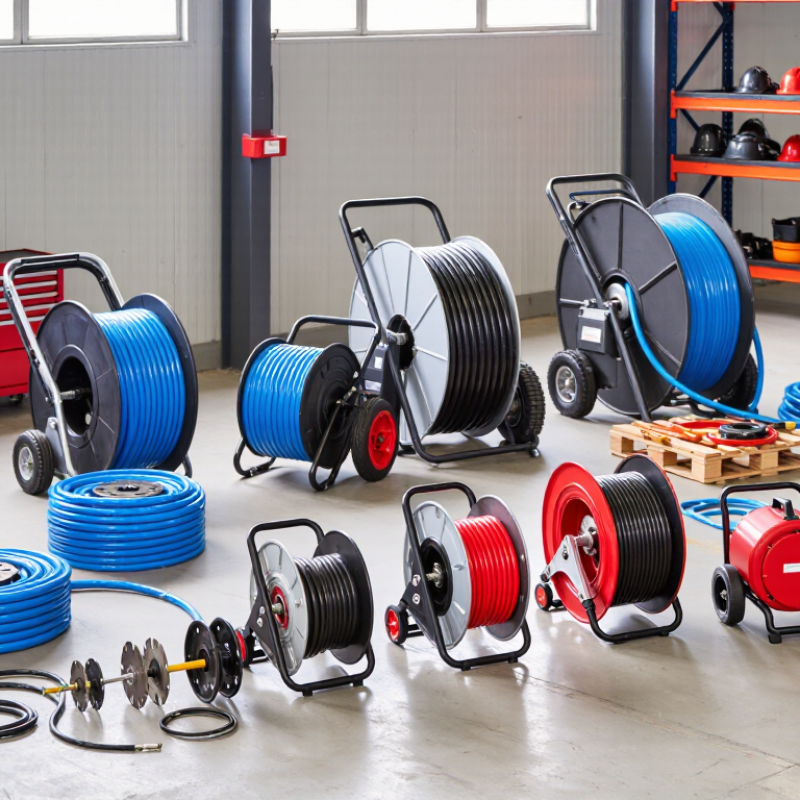
How Sewer Line Cleaning Machines Work: Cables, Water Jets, and Cutting Heads
A sewer line cleaning machine clears blockages by delivering force through a cable, pressurized water, or a rotating cutting head. Cable machines feed a flexible steel cable into the pipe. The cable turns an attachment that breaks up grease, roots, or compacted debris. An operator feels resistance through the machine, but that feedback takes practice to read. Too much force can damage a weakened pipe. Feel matters.
Water-jet machines send pressurized water through a hose and nozzle. Small rear-facing openings push the hose forward while the spray scours pipe walls and carries loose material back toward the access point. Nozzle shape and water pressure affect performance. A jet can clean long stretches well, but it may not remove a dense root mass by itself. Not magic. Operators should consider pipe condition and drainage before choosing pressure.
Cutting heads attach to cables and use rotating blades or chains to cut stubborn roots and deposits. Different shapes suit different obstructions, and the wrong head can create unnecessary wear. A camera inspection can help identify the blockage and check the pipe afterward. Buyers should compare cable length, machine reach, and compatible attachments against the work they expect to handle. There is no perfect setup; even a well-matched machine may need a different tool once the obstruction becomes clear.
Top 10 Sewer Line Cleaning Machines for Buyers
How sewer line cleaning machines work: cables, water jets, and cutting heads.
Typical illustrative operating ranges for water jetters; actual pressure and flow vary by machine, nozzle, and setup. Cable machines rotate cutting heads to break up obstructions, while jetters use pressurized water to clear debris and clean pipe walls. Always follow equipment specifications and safe operating procedures.
Compare 10 Machines by Drive Type, Reach, and Rated Pipe Diameter
Top 10 Sewer Line Cleaning Machines for Buyers
Compare 10 Machines by Drive Type, Reach, and Rated Pipe Diameter
A machine’s drive type affects mobility, setup, and the work it can sustain. Reach and rated pipe diameter matter just as much. EPA’s 2022 Clean Watersheds Needs Survey estimated $630.1 billion in wastewater infrastructure needs over 20 years. That figure is not a machine-buying budget, but it underscores why access and maintenance choices deserve care. These planning ranges are indicative, not guaranteed specifications; confirm each model’s manual before buying.
Typical configurations vary: 1) handheld electric drum, 25–50 ft, 1¼–4 in; 2) compact electric drum, 50–100 ft, 2–4 in; 3) sectional electric, 100–200 ft, 1½–6 in; 4) heavy sectional, 200–300 ft, 3–10 in; 5) gas drum, 100–200 ft, 3–8 in; 6) powered electric drum, 100–200 ft, 3–8 in; 7) portable electric jetter, 100–300 ft, 1½–6 in; 8) trailer jetter, 300–600 ft, 3–12 in; 9) truck jetter, 500–1,000 ft, 4–24 in; 10) combination jet-vac unit, 500–1,000 ft, 4–36 in. Actual ratings vary with cable, hose, nozzle, and blockage conditions.
Match the drive to the site: hand-fed or electric units suit indoor access, while trailer and truck systems need vehicle clearance and staging room. Reach is not the same as effective cleaning distance. Bends, deposits, and pipe condition can reduce performance. Measure the line and check access points. A small detail, often missed. It is easy to overbuy reach and still choose the wrong pipe rating.
Top 10 Sewer Line Cleaning Machines for Buyers - Compare 10 Machines by Drive Type, Reach, and Rated Pipe Diameter
| # | Machine Type | Drive Type | Typical Reach | Common Pipe Diameter | Best Suited For |
| 1 | Hand-crank drain auger | Manual, hand-cranked cable | 15–25 ft (5–8 m) | ½–2 in (13–50 mm) | Simple, nearby blockages in small household drains |
| 2 | Compact electric sink machine | Electric motor, flexible cable | 25–75 ft (8–23 m) | 1¼–3 in (32–75 mm) | Sinks, tubs, and smaller branch lines |
| 3 | Medium-duty drum machine | Electric motor, rotating cable in drum | 50–100 ft (15–30 m) | 2–4 in (50–100 mm) | Routine cleaning of residential branch drains |
| 4 | Heavy-duty drum sewer machine | Electric motor, heavy cable and drum | 100–200 ft (30–61 m) | 3–10 in (75–250 mm) | Longer building drains and accessible sewer laterals |
| 5 | Sectional rod machine | Electric motor, coupled sectional rods | 100–300 ft (30–91 m) | 2–10 in (50–250 mm) | Professional work requiring controlled rod-by-rod access |
| 6 | Gas-powered sectional rodder | Gasoline engine, sectional rods | 300–500 ft (91–152 m) | 4–12 in (100–300 mm) | Longer storm drains and larger lines where electric access is limited |
| 7 | Portable electric water jetter | Electric motor-driven high-pressure pump | 100–300 ft (30–91 m) of hose | 1½–4 in (40–100 mm) | Grease and soft deposits in smaller drain lines |
| 8 | Cart-mounted sewer jetter | Gasoline engine or electric motor, high-pressure pump | 200–400 ft (61–122 m) of hose | 2–8 in (50–200 mm) | Commercial drain maintenance and recurring line buildup |
| 9 | Trailer-mounted sewer jetter | Engine-driven high-pressure pump | 300–600 ft (91–183 m) of hose | 3–12 in (75–300 mm) | Municipal and contractor work across multiple job sites |
| 10 | Truck-mounted combination jetter and vacuum unit | Truck-powered high-pressure water pump and vacuum system | 500–1,000 ft (152–305 m) of hose, configuration dependent | 4–60 in (100–1,500 mm), depending on equipment and application | Large-scale sewer cleaning, flushing, and removal of debris or wastewater |
Note: Figures are typical capability ranges for equipment classes, not universal specifications. Actual usable reach and pipe-size suitability depend on the specific configuration, cable or hose, nozzle or cutting tool, pipe condition, and operating requirements. Confirm the manufacturer’s specifications before purchase.
Evaluate Cable Cleaners: 3/8-Inch and 1/2-Inch Cables, Length, and Cutters
Choosing a sewer line cleaning machine starts with matching cable diameter to pipe size and blockage. A 3/8-inch cable is generally easier to maneuver in smaller branch lines and tight bends. A 1/2-inch cable offers more stiffness for larger lines and heavier deposits, but can be awkward in narrow piping. Check the machine’s rated cable range and the pipe’s actual diameter; one size does not fit every job. Details matter. The EPA’s 2004 Report to Congress estimated 23,000–75,000 sanitary sewer overflows annually in the United States. That figure is not a machine-selection guide, but it shows why reliable access for clearing lines matters.
Cable length should cover the run, including bends and the distance from the machine to the pipe entrance. Extra length can help on long lines, yet it also adds handling and storage demands. For cutters, choose a profile suited to the material: a boring head can open a path through a blockage, while a wider cutter can clear accumulated buildup. Avoid forcing a large cutter into a small or fragile line. ASCE’s 2021 Infrastructure Report Card graded U.S. wastewater infrastructure D+, underscoring the need for careful maintenance. Even experienced operators can misjudge a line from its cleanout alone. Confirm pipe size and condition where possible, then select cable and cutter accordingly.
Assess Hydro Jetters by Pressure (PSI), Flow Rate (GPM), and Hose Length
A hydro jetter’s pressure, flow rate, and hose length should be judged together. PSI describes water pressure; GPM describes the volume available to move loosened material. A high PSI figure can look impressive, but it does not guarantee strong cleaning at the nozzle. Ask whether the listed pressure is measured at the pump or during operation, and check which nozzle was used. Small detail. It changes the comparison.
Flow rate matters when carrying debris through the pipe, while hose length affects reach and can add friction loss. Match the hose to the pipe diameter and typical access points, not just the longest run in a product table. For a long, narrow hose, performance at the nozzle may differ from the headline rating. I would question any ranking that treats PSI as the only measure; it is an easy number to overvalue.
The U.S. EPA’s 2022 Clean Watersheds Needs Survey estimated $630.1 billion in wastewater infrastructure needs over 20 years. That figure describes system-wide investment, not jetter specifications. The EPA’s 2005 CMOM guidance also emphasizes maintenance planning based on system conditions and records. For buyers, that means comparing machine ratings against actual pipe sizes, blockage types, and service routes. Record the working pressure, GPM, and hose length used on each job. The notes may be imperfect, but they can still improve the next purchase decision.
Match Machine Capacity to 2–4-Inch Residential Drains and Buyer Needs
Choosing from the top ten sewer line cleaning machines starts with the pipe, not the motor. Most residential models serve 2–4-inch drains, but their cable diameter, length, and cutter options differ. A compact drum machine may suit a bathroom branch with a tight access point. A larger unit can provide more reach for longer runs, though it may be awkward to move through a narrow hallway.
Match capacity to the likely blockage. Grease and soft buildup often need a different cutter head than roots or compacted debris. Use only cable and attachments rated for both the machine and the pipe. Too much force can damage older or fragile lines. Too little reach can leave the clog untouched. Check the drain layout, cleanout location, and distance to the blockage before comparing machines.
Keep it practical. If several sinks back up together, the problem may be farther along the shared line. A longer cable can help, but it is not a diagnosis. Look for accessible controls, a stable frame, and straightforward cable handling, especially if one person will operate the machine. I would not buy the largest model by default; matching its capacity to the actual drains is easy to overlook. Inspecting the cable and fittings after use also helps catch wear before the next job.