Choosing a reliable Industrial Transformer manufacturer can shape a factory’s safety, uptime, and long-term operating costs. China has developed a broad transformer industry, serving power grids, renewable projects, rail systems, construction sites, and heavy manufacturing plants. Many suppliers offer similar ratings, yet their engineering depth and service quality can differ considerably.
This article introduces China’s top 10 Industrial Transformer manufacturers through practical evaluation criteria. These include production capacity, voltage range, insulation design, temperature control, factory testing, delivery performance, and after-sales support. A strong manufacturer should provide clear technical datasheets, traceable quality records, and testing evidence from qualified facilities. Field experience also matters. A transformer may perform well on paper, but poor cooling design can create problems beside a dusty steel mill or in a humid coastal substation.
Real operating conditions matter.
The selection also considers industry reputation, product certifications, export experience, customization capability, and customer feedback. Engineers should examine load patterns, ambient temperatures, noise limits, maintenance access, and short-circuit requirements before making a decision. Price alone is an unreliable guide. A lower purchase cost may bring higher losses, longer downtime, or difficult spare-parts support.
No ranking is perfect.
Manufacturers continue to expand, merge technologies, and improve their product lines. Therefore, this list should serve as a practical starting point rather than a permanent verdict. Readers should verify current certifications, project references, warranty terms, and local service coverage before signing a contract. A careful comparison can reveal which Chinese manufacturer best fits a specific Industrial Transformer application, budget, and reliability target.
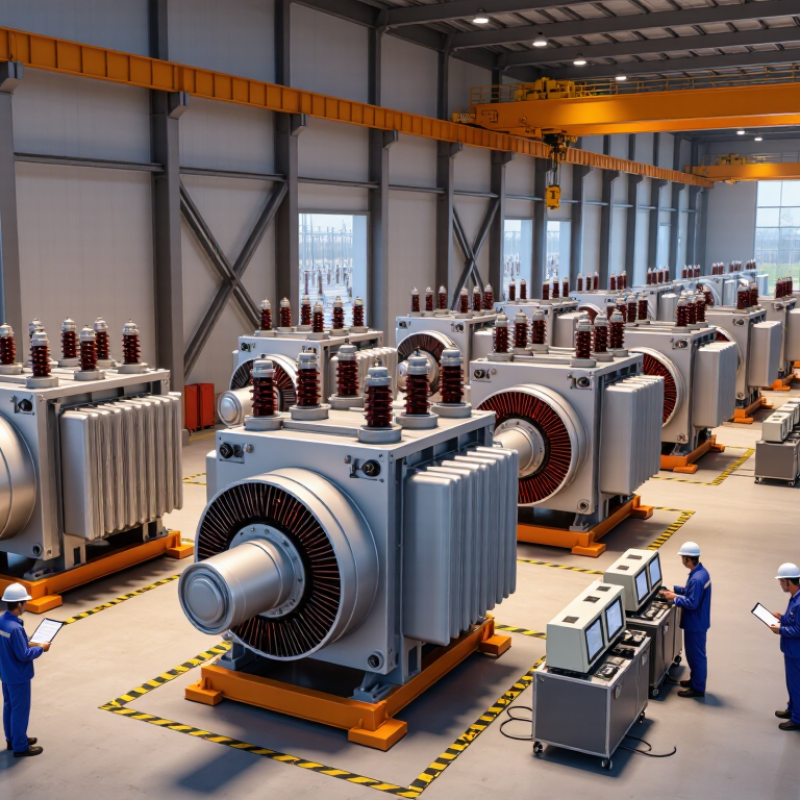
Industrial transformers are essential devices in modern power systems. They transfer electrical energy between circuits while changing voltage levels. A factory may receive high-voltage electricity, then use transformers to reduce it for motors, lighting, and control equipment. Without this step, sensitive machinery could suffer dangerous voltage stress.
Their importance becomes clear on a production floor. A transformer may hum beside a switchboard while supplying stable power to welding lines, pumps, or automated tools. Proper capacity reduces energy losses during transmission. Good insulation, cooling, and protection also help prevent overheating and unexpected shutdowns. When evaluating China’s top industrial transformer manufacturers, buyers should examine design experience, factory testing, material quality, and after-sales technical support rather than relying only on price or production scale.
Field inspections often reveal details that brochures miss. Engineers check oil or resin condition, connection temperatures, noise, grounding, and load patterns. A unit that runs quietly at noon may overheat during a summer production peak. Maintenance records matter. So do test certificates and compliance with relevant electrical standards. No checklist is perfect. Even a well-designed transformer can fail when installation is careless or maintenance is delayed. I have seen small issues, such as loose terminals, develop into costly interruptions. Clear specifications and honest communication between suppliers, installers, and operators remain vital.
Manufacturer-neutral reference table: the entries below describe ten widely used industrial transformer configurations rather than ranking or identifying individual companies or brands. Actual ratings and designs are selected according to the project specification, applicable standards, site conditions, and utility requirements.
| No. | Industrial Transformer Configuration | Typical Voltage Class | Typical Capacity Range | Common Cooling Method | Typical Industrial Use | Primary Value | Key Selection Consideration | Common Reference Standard |
|---|---|---|---|---|---|---|---|---|
| 1 | Medium-Voltage Distribution Transformer | Primary: 6–35 kV Secondary: 0.4–0.69 kV | 100 kVA–5 MVA | Oil-immersed or cast-resin | Factories, commercial facilities, warehouses, and utility-fed industrial sites | Steps medium voltage down to a usable low-voltage supply | Load profile, indoor or outdoor installation, fire-safety requirements, and available fault level | IEC 60076 series |
| 2 | Power Transformer | Typically above 35 kV on the high-voltage side | 10–500+ MVA | Oil-immersed, ONAN/ONAF | Industrial substations, utility interconnections, and large process plants | Transfers large amounts of electrical power efficiently between voltage levels | System voltage, short-circuit strength, transport limits, cooling capability, and grid connection requirements | IEC 60076 series |
| 3 | Furnace Transformer | Primary: commonly 6–35 kV Secondary: low voltage, high current | 5–100+ MVA | Forced-oil or water-cooled designs | Electric arc furnaces, ladle furnaces, and metal-melting operations | Supplies very high current for melting and refining processes | Furnace duty cycle, harmonic content, short-circuit forces, tap-changing method, and thermal stresses | IEC 60076 series and project-specific furnace requirements |
| 4 | Rectifier Transformer | Input commonly 6–35 kV Output depends on the rectifier system | 1–100+ MVA | Oil-immersed with auxiliary cooling | Electrolysis, traction substations, electroplating, and DC industrial drives | Provides a controlled AC supply for conversion into DC power | Pulse number, harmonics, DC current, phase-shifting arrangement, insulation coordination, and duty cycle | IEC 60076 series and applicable rectifier-transformer specifications |
| 5 | Converter or VFD Transformer | Primary: typically 6–35 kV Secondary: low voltage or medium voltage | 500 kVA–20+ MVA | Cast-resin or oil-immersed | Variable-frequency drives, pumps, compressors, fans, conveyors, and mills | Supplies power electronic converters while helping manage voltage and harmonic effects | Converter topology, harmonic spectrum, insulation stress, overload profile, and required impedance | IEC 60076 series and drive-system specifications |
| 6 | Dry-Type Cast-Resin Transformer | Primary: up to 35 kV is common Secondary: low voltage | 100 kVA–20 MVA | AN or AF air cooling | Indoor plants, hospitals, data centers, underground facilities, and high-fire-risk locations | Provides electrical transformation without liquid insulation | Ventilation, ambient temperature, altitude, noise, partial discharge, and enclosure protection | IEC 60076-11 |
| 7 | Oil-Immersed Industrial Transformer | Low voltage through high-voltage transmission classes | 100 kVA–500+ MVA | ONAN, ONAF, OFAF, or OFWF | Outdoor substations, heavy industry, mining, renewable-energy collection systems, and process plants | Offers high power density and effective insulation and heat transfer | Fire protection, oil containment, environmental conditions, maintenance access, and cooling-stage requirements | IEC 60076 series |
| 8 | Ferroresonant or Constant-Voltage Transformer | Usually low-voltage input and output | 0.5–100 kVA | Air-cooled | Control systems, instrumentation, automation panels, and sensitive electronic loads | Improves voltage regulation and can provide limited power conditioning | Load type, regulation range, waveform requirements, heat generation, and compatibility with modern electronic loads | Applicable low-voltage transformer and equipment standards |
| 9 | Grounding Transformer | Matches the medium- or high-voltage system | Typically rated by neutral current and short-time duration | Oil-immersed or dry-type | Ungrounded or delta-connected industrial power systems | Creates a neutral point and provides a controlled path for ground-fault current | Zero-sequence impedance, neutral grounding resistor rating, fault duration, and system protection coordination | IEC 60076 series and grounding-system requirements |
| 10 | Isolation Transformer | Commonly 400–690 V on both sides, or as specified | 1 kVA–5 MVA | Dry-type or oil-immersed | Maintenance supplies, medical or special-purpose facilities, control circuits, and equipment isolation | Provides galvanic separation between the source and the load | Insulation level, leakage capacitance, grounding arrangement, inrush current, shielding, and required efficiency | IEC 60076 series and applicable installation standards |
Note: Voltage classes, capacity ranges, cooling methods, and applications are representative engineering ranges. Final transformer specifications should be confirmed through a qualified electrical design, thermal study, protection study, and compliance review.