A Three Phase Transformer is not just a line item on a purchase order. It shapes voltage quality, operating costs, and the resilience of an entire facility. For global buyers, the decision also involves shipping dimensions, local grid conditions, service access, and clear technical documentation. A small mismatch in voltage, frequency, or connection configuration can become an expensive problem after delivery.
The market context makes careful selection more important. The International Energy Agency’s Electricity 2024 report projects global electricity demand will grow by an average of 3.4% annually from 2024 through 2026. Its 2023 report, Electricity Grids and Secure Energy Transitions, says annual grid investment needs to rise from about USD 300 billion to more than USD 600 billion by 2030. These figures point to expanding infrastructure needs, but they do not guarantee that every project has the same requirements. Site conditions matter.
This guide presents seven practical buying tips for comparing suppliers and specifications. It covers load capacity, efficiency, cooling, protection, standards, delivery, and after-sales support. Ask for test records, confirm the nameplate details, and check that the proposed unit fits the installation—not just the spreadsheet. Small details matter. And sometimes, the first quotation leaves important questions unanswered. A reliable decision starts with evidence, a clear scope, and a willingness to revisit assumptions before committing.
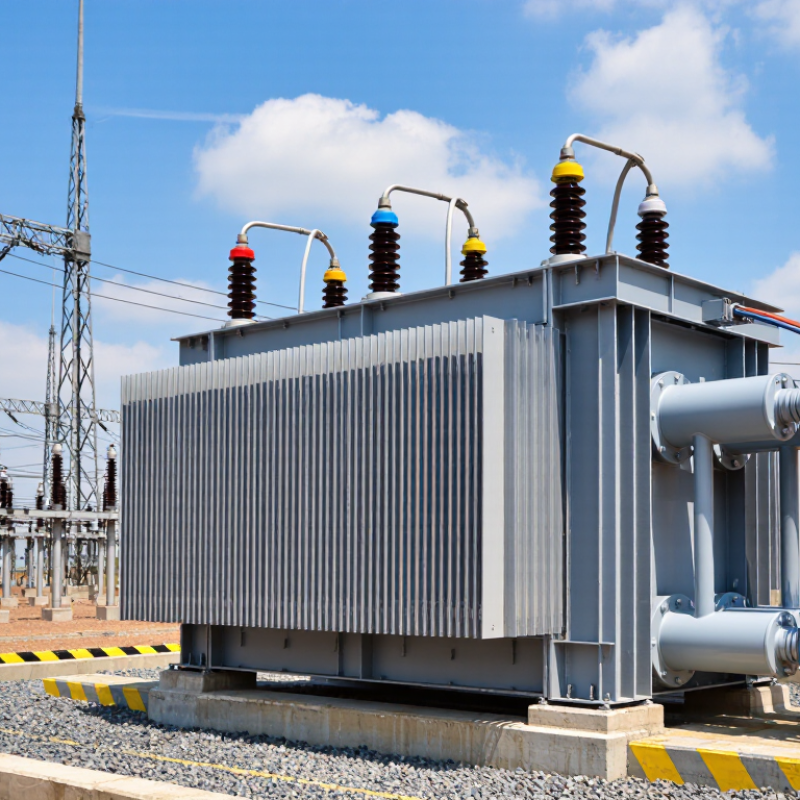
Before comparing three-phase transformers, describe the actual load—not just the total nameplate rating. List motors, pumps, lighting, and sensitive electronic equipment, then note which units start together. Motor starting can create a brief demand well above normal operating load. Allow for realistic future expansion, but avoid paying for capacity you may never use. A spreadsheet helps. It can still miss unusual operating cycles.
Confirm the incoming and required output voltages, system frequency, and connection details. Specify whether the transformer needs a neutral, the grounding arrangement, and any preferred tap range for voltage adjustment. A plant drawing may be outdated, so check the figures against the site supply and equipment labels. Small mismatches matter. Do not assume that voltage alone tells the whole story.
Installation conditions affect the right specification. Record whether the unit will sit indoors or outdoors, the expected ambient temperature, altitude, dust, and available ventilation. Measure doorways, floor space, cable access, and lifting clearance; a transformer that fits on paper may not pass through the service entrance. Share site photos and dimensional drawings with the supplier, then ask a qualified electrical professional to verify the proposed configuration. I have seen purchase plans stall over a missing clearance measurement, an easy detail to overlook.
Compare transformer designs against the installation, not a catalog photo. A dry-type unit can suit indoor rooms where oil containment is difficult. An oil-immersed unit may offer compact capacity and effective outdoor cooling. Neither is automatically better. Check ventilation, fire planning, maintenance access, and exposure to dust or moisture. Small details matter.
Match ratings to the actual electrical system. Confirm primary and secondary voltage, frequency, kVA capacity, impedance, vector group, and tap range. A 50 Hz unit is not a safe assumption for every grid. Allow for motor starting, future loads, and ambient temperature. Undersizing may cause overheating, while excessive capacity can increase purchase costs and no-load losses. Ask for routine test data and applicable standards, not just a nameplate.
Efficiency needs context. Compare guaranteed no-load and load losses, then estimate annual energy use from your expected load profile. A high-efficiency figure at one operating point may not reflect a lightly loaded facility. Check the cooling method and temperature rise, too. Request loss values in writing. A simple spreadsheet helps, though its assumptions can be wrong. Review them with an electrical engineer before ordering.
| Buying Tip | What to Compare | Example Specification or Data | What to Verify Before Ordering |
|---|---|---|---|
| 1. Match the transformer design to the installation | Liquid-immersed versus dry-type construction; indoor or outdoor location; fire and environmental requirements. | Liquid-immersed units commonly use mineral oil or an alternative insulating liquid and may use ONAN cooling. Dry-type units commonly use air cooling, such as AN, and are often selected for indoor installations. | Confirm the installation environment, fire-protection rules, ventilation, spill containment requirements, and applicable local codes. Neither design is universally best. |
| 2. Select the correct kVA rating | Present demand, motor starting, non-linear loads, load growth, and operating duty. | Common three-phase distribution ratings include 100, 250, 500, 1,000, and 2,500 kVA. These are examples, not a substitute for a load calculation. | Size from the expected maximum demand and load profile. Check starting currents, harmonic content, ambient temperature, altitude, and any required future capacity. |
| 3. Confirm voltage, frequency, and vector group | Primary and secondary voltage, system frequency, tap range, and winding connection. | Example systems include 11 kV to 400 V at 50 Hz and 13.8 kV to 480 V at 60 Hz. Dyn11 is a commonly used vector group, but it is not appropriate for every network. | Specify the actual network voltages and frequency. Confirm the required vector group, neutral arrangement, phase rotation, and tap-changing method with the utility or system designer. |
| 4. Compare efficiency using losses, not a percentage alone | No-load loss, load loss, expected loading, power factor, and the method used to state efficiency. | Illustrative example: a 1,000 kVA unit with 1.6 kW no-load loss and 10 kW load loss has approximately 98.86% efficiency at rated load and unity power factor, before auxiliary losses. | Request guaranteed losses at the specified reference temperature and test method. Compare total energy cost over the expected load cycle; efficiency varies with load and power factor. |
| 5. Check insulation, temperature rise, and site conditions | Insulation level, temperature-rise limits, ambient temperature, altitude, humidity, and corrosion exposure. | IEC 60076 and IEEE C57 are widely used transformer standards families. Applicable requirements and specific test levels depend on the project and market. | State the governing standard and any local deviations in the purchase specification. Confirm derating or design requirements for high altitude, hot climates, coastal air, or dusty locations. |
| 6. Review protection, accessories, and maintainability | Temperature monitoring, pressure or liquid-level devices where applicable, surge protection, enclosure rating, and access for inspection. | Accessory requirements differ by design and rating. Outdoor installations may require a suitable weather-protected enclosure; liquid-immersed designs may require specified liquid containment and monitoring. | List required alarms, trips, sensors, terminals, cable entry, grounding points, and enclosure protection in the specification. Confirm maintenance clearances and replacement access. |
| 7. Compare test documentation, delivery, and lifetime cost | Routine and type-test documentation, manufacturing lead time, transport limits, warranty terms, and spare-parts support. | IEC 60076 and IEEE C57 include requirements and test guidance for different transformer categories. The exact tests required depend on the design and contract. | Request a dimensional drawing, nameplate data, loss guarantees, test plan, packing details, and commissioning requirements. Evaluate purchase price together with losses, maintenance, and expected service life. |
Note: Ratings, voltage combinations, cooling methods, and loss figures shown are illustrative procurement examples. Confirm the final design and guaranteed performance against the project specification, applicable standards, and local regulations.
Before ordering a three-phase transformer, match its rating to the country’s grid: voltage, frequency, connection group, and earthing arrangement. Then check which standards the destination market actually adopts. IEC 60076 covers power-transformer requirements, while IEEE C57.12.00 sets general requirements for liquid-immersed distribution, power, and regulating transformers. Neither reference replaces local rules or the required certification. Ask for the exact standard edition, type-test reports, routine-test results, and a nameplate sample. Small details matter. The U.S. Department of Energy’s 2016 distribution-transformer standards analysis projected 3.63 quadrillion Btu in energy savings over 30 years, illustrating why efficiency requirements can have significant long-term impact.
Safety checks should reflect the installation, not just the factory paperwork. Confirm insulation levels, temperature rise, enclosure rating, clearances, and protection requirements against local codes and site conditions. For an oil-filled unit, verify the specified insulating liquid and any required spill containment or fire precautions. For dry-type equipment, check ventilation and indoor installation requirements. Ask an independent engineer or local utility to review documents before shipment; certification accepted in one market may not satisfy another. A spreadsheet can still miss a mismatch between the transformer’s tap range and the actual supply voltage. It is easy to overlook. Recheck drawings, test records, and delivery documents together, and resolve discrepancies in writing before installation.
Nominal grid frequency varies by market and affects transformer specification. These examples are not a substitute for checking the project’s actual supply requirements. Before purchasing, confirm local voltage, applicable transformer standards, safety rules, and certification requirements with the utility or relevant authority.
Buying a three phase transformer across borders begins with supplier evidence, not a confident sales call. Ask who engineers the unit and how long the team has built comparable models. Request anonymized project records for similar voltage and capacity ranges. Review the drawings, nameplate data, and reasons behind the cooling and insulation choices. Specific answers matter.
Quality control should be visible in records. Ask for the inspection plan, calibration dates, material traceability, and test reports linked to the unit’s serial number. For unusual orders, agree on production hold points, such as reviewing core assembly or witnessing final electrical tests. Photos alone are not proof. A polished factory tour can still leave gaps; no checklist catches everything.
Read warranty terms beside the technical specification. Confirm the start date, duration, covered components, remedies, and responsibility for transport, labor, and replacement parts. Check exclusions related to humidity, overload, storage, or installation, and make sure the requirements suit the destination site. Ask how claims are documented and how quickly technical support responds across time zones. Get it in writing. A low price may still be reasonable, but unclear service terms deserve a pause.
When requesting quotations, share the transformer’s rated capacity, voltage, frequency, cooling method, and site conditions. Confirm its shipping dimensions and gross weight, not just its electrical rating. A compact drawing helps freight teams plan container space, lifting points, and unloading access. Check route limits, packaging protection, and required shipping documents before dispatch. Small details matter.
At the site, prepare a level foundation that can support the filled unit and withstand expected vibration. Leave clear access for cable work, inspection, and future component replacement. Verify ventilation and electrical clearances against the installation design and applicable local requirements. Use qualified personnel to inspect connections, grounding, tap settings, and protective devices before energization. Keep the commissioning record.
Maintenance planning should match the transformer’s design and operating environment. In dusty or humid locations, inspect seals, radiators, bushings, and signs of corrosion more often. For oil-filled units, follow the manufacturer’s sampling schedule and use qualified laboratories to assess oil condition. Track temperature, load, alarms, and maintenance dates; trends often reveal problems earlier than a single reading. A checklist can still miss something, so assign one person to review records and act on unusual changes.