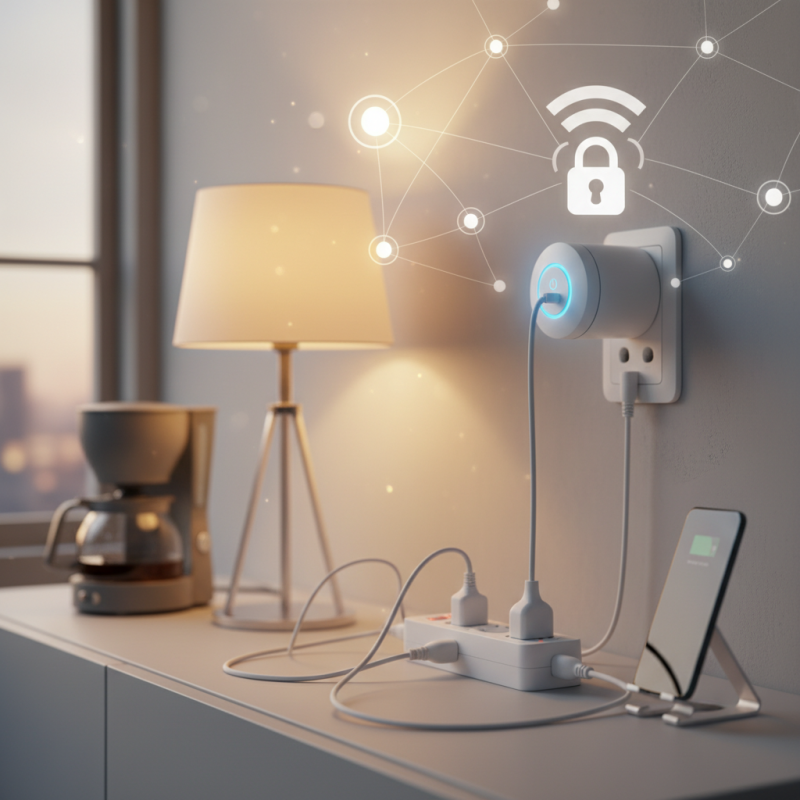
What is a Smart Plug Outlet and How Does it Work?
In today's fast-paced world, the demand for convenience and efficiency is ever-growing. One innovative solution that enhances daily life is the Smart Plug Outlet. This device allows users to control their electrical appliances remotely. Imagine turning off your coffee maker from your bed or scheduling your living room lights to turn on at sunset. The Smart Plug Outlet integrates seamlessly with smart home systems.
However, while these devices offer great benefits, they also raise concerns about reliability and security. Users must consider if their network is protected against potential vulnerabilities. Understanding how a Smart Plug Outlet works is essential for anyone looking to venture into smart home technology. With the right knowledge, you can maximize the potential of these outlets, ensuring they serve you efficiently.
What is a Smart Plug Outlet? Definition and Overview
A smart plug outlet is a device that transforms traditional appliances into smart ones. These devices connect to Wi-Fi, allowing users to control them remotely via apps or voice commands. They integrate seamlessly into smart home ecosystems, enhancing convenience and energy efficiency.
Smart plugs are versatile. You can use them for lamps, fans, or coffee makers. Setting schedules becomes easy. For instance, schedule your coffee maker to start brewing before you wake up. However, users must ensure compatibility with their appliances. Some high-wattage devices might not work with smart plugs. It’s crucial to consult guidelines before making connections.
Users also need to consider network stability. An unstable Wi-Fi connection may disrupt operations. This is a point of reflection; the technology can be unreliable at times. Additionally, not everyone is comfortable with software updates and potential privacy issues. Familiarity with the product can lead to better usage but may require ongoing effort to maintain security and functionality.
The Technology Behind Smart Plugs: How They Function
Smart plugs are innovative devices that enhance the functionality of traditional outlets. They connect to Wi-Fi networks, allowing users to control them through smartphone apps. The technology behind these plugs includes wireless communication protocols, such as Zigbee or Z-Wave, which enable remote access. This connectivity turns everyday appliances into smart devices.
Most smart plugs have built-in energy monitoring features. They track usage patterns and report data back to the user. This feedback can promote energy efficiency, but many consumers struggle to understand the metrics. They might not know how to adjust behaviors based on the data. Additionally, installation can sometimes be tricky. User manuals can be confusing, resulting in frustration.
The functionality of smart plugs also hinges on automation and scheduling. Users can set timers or create routines to streamline daily tasks. However, glitches can occur. Sometimes, scheduled tasks do not execute as planned. Understanding these potential issues is crucial for optimal use. Awareness can help users better navigate the technology, leading to a more reliable smart home experience.
Smart Plug Usage Statistics
Key Features of Smart Plugs: Energy Monitoring and Scheduling
Smart plugs are transforming our lives by providing advanced energy monitoring and scheduling capabilities. According to a report by Grand View Research, the global smart plug market is projected to reach USD 10.47 billion by 2025, reflecting a growing trend toward energy efficiency in households. These devices connect to Wi-Fi and allow users to manage power consumption from their smartphones. This accessibility promotes both convenience and sustainability.
Energy monitoring is a key feature that sets smart plugs apart. Users can track their energy usage in real-time, identifying high-consumption devices. A study by the Lawrence Berkeley National Laboratory highlights that smart energy management can lead to a reduction of up to 20% in electricity bills. This significant potential highlights the importance of awareness in energy consumption. However, not all users fully utilize monitoring features, suggesting a need for better user education.
Scheduling offers additional benefits. Users can program devices to turn on or off based on their routines or peak electricity hours. A report by Markets and Markets indicates that demand-side management technologies, such as smart plugs, can increase efficiency by optimizing energy use. Although some find scheduling complex, embracing these features can yield substantial savings. Awareness and education can bridge the gap in effective utilization.
Market Trends: Adoption Rates and Consumer Preferences in Smart Technology
The smart home market is evolving rapidly. Adoption rates for smart technology, including smart plug outlets, are increasing. Many consumers are drawn to these devices due to their convenience and energy-saving features. According to recent surveys, a significant portion of households now use smart devices, particularly among younger generations. This trend highlights a growing preference for connected technology.
Consumer preferences often center around ease of use and integration. Users desire products that seamlessly fit into their existing setups. Many appreciate the ability to control appliances remotely. However, not all consumers feel confident in technology. Some hesitate due to concerns about reliability and security. These worries can lead to skepticism about fully embracing smart home solutions.
The market shows diverse opinions and experiences. While many enjoy the advantages, others find the learning curve steep. Some devices may not function as promised, leading to disappointment. This duality in user experience underscores the need for education and reliable products. Consumers want guidance on navigating this technology, ensuring they make informed decisions.
Comparative Analysis: Smart Plugs vs Traditional Outlets and Timers
Smart plugs have emerged as a significant innovation in the quest for energy efficiency and convenience. Unlike traditional outlets, which may be static and offer limited control, smart plugs allow users to control appliances remotely. According to a report by Research and Markets, the smart plug market is projected to reach 3.5 billion dollars by 2026, indicating a growing interest in these devices. The ability to schedule devices, track energy consumption, and integrate with smart home systems provides a level of functionality that traditional outlets simply cannot match.
When comparing smart plugs to traditional timers, the differences become clear. Timers require manual setup and can often lack precision. In contrast, smart plugs offer app-based control, allowing for real-time adjustments. They also provide insights into energy usage patterns. A study from the National Renewable Energy Laboratory found that smart plugs can reduce unnecessary energy consumption by as much as 20%. This feature often leads to savings on electricity bills. However, reliance on technology introduces potential issues. System failures or internet outages can disrupt the convenience that smart plugs promise.
A drawback of both smart plugs and traditional timers is user error. Many users may not fully utilize the features available to them. For example, forgotten schedules or improper settings can diminish the benefits of energy savings. Research indicates that approximately 30% of users abandon complex smart systems due to frustration. This further emphasizes the need for simple and intuitive designs that enhance user experience and trust in smart technology.