What Is Reverse Circulation Drilling and How Does It Work?
Reverse Circulation Drilling is a widely used method for collecting rock samples during mineral exploration. It sends compressed air down the drill rods and returns cuttings through an inner tube. The result is a steady stream of samples at the surface. On a busy site, those samples may arrive in labeled bags beside a rig coated with fine dust. The method is efficient, but the sample still needs careful handling.
[Insert a verified quotation from a named Reverse Circulation Drilling expert here. No source was provided, so an expert’s name or words should not be invented.]
How does the process work? A hammer at the bit breaks the rock into small fragments. Compressed air carries them upward through the inner tube, helping limit contact with the outer wall of the borehole. At the surface, a cyclone separates the cuttings, which are collected at measured intervals. Those intervals matter. Poor collection, contamination, or unclear labels can weaken the value of otherwise useful samples.
Reverse Circulation Drilling is not a shortcut around sound field practice. Operators must match the rig, bit, air supply, and ground conditions. They also need to monitor sample recovery and maintain equipment. Results can vary in fractured or water-bearing ground. That deserves attention. This guide explains the method, its main components, and the practical choices that affect sample quality, while noting where its limits should shape exploration decisions.
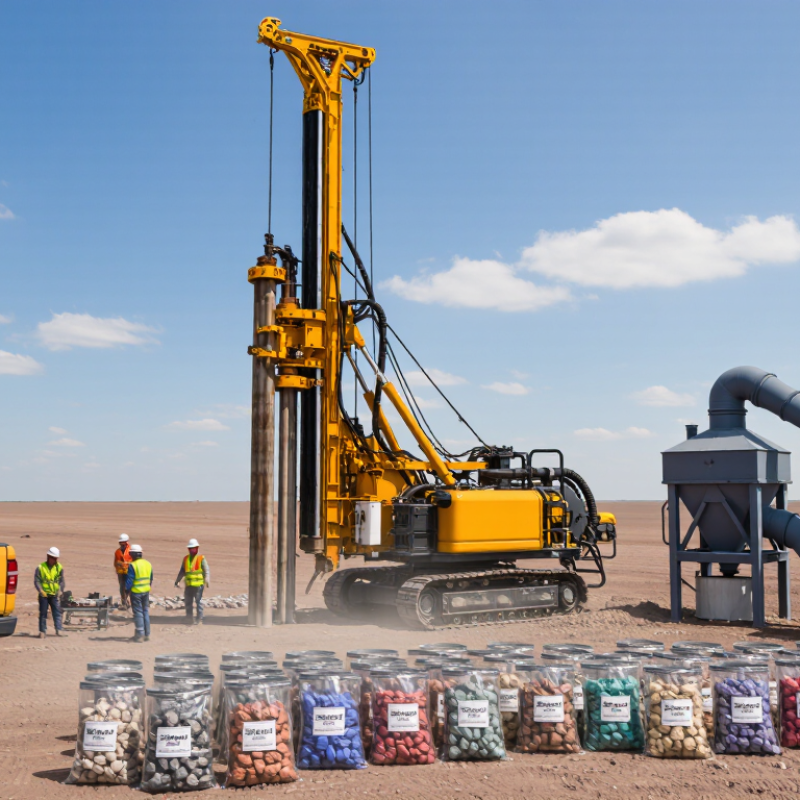
What Reverse Circulation Drilling Is
Reverse circulation (RC) drilling uses dual-wall drill rods to bring rock chips to the surface. Compressed air travels down the outer passage, drives the hammer and bit, then pushes cuttings back up through the inner tube. This return path helps limit contact with loose material along the borehole wall. At the rig, a cyclone separates the chips from the air, and a splitter divides them into sample portions. Dust, noise, and the sharp rattle of the hammer are part of the fieldwork.
Geoscience Australia’s mineral exploration guidance describes RC as a method for recovering rock-chip samples from depth. In common field practice, crews collect chips in one-metre intervals, then label and log each bag against its depth. The interval is useful, not magical: broken formations, wet cuttings, or poor splitting can make a sample less representative. That detail is easy to underestimate. RC is often chosen for relatively fast, continuous sampling, but it does not produce an intact core for examining rock structures. Results therefore depend on careful sample handling as much as on the drill itself. Reference: Geoscience Australia, “Mineral exploration: drilling techniques.”
Key Components of a Reverse Circulation Drilling System
A reverse circulation drilling system depends on several parts working together. The drill rig holds and advances the drill string, while a compressor supplies high-pressure air. Double-wall drill rods form two passages: air travels down the outer annulus, and rock cuttings return through the inner tube. At the bottom, a percussion hammer and bit break the rock into fragments. The arrangement keeps samples moving upward through a protected path.
At the surface, a cyclone slows the returning air and separates most cuttings. A sample splitter then divides the material into smaller portions for collection and logging. Small parts matter. Leaking rod connections or a worn splitter can affect sample quality. Dust-control equipment helps limit airborne fines around the collection area, while gauges and hoses let operators monitor air pressure and flow.
The rig’s mast and hydraulic system handle rod movement, and the compressor must match the drilling conditions. Operators also check connections, sample bags, and the area around the cyclone during shifts. In practice, samples are not perfectly uniform; fine material may separate from heavier fragments. That limitation deserves attention, even when the equipment appears to run smoothly.
How Reverse Circulation Drilling Works Step by Step
Reverse circulation (RC) drilling brings rock samples to the surface through the drill string, rather than up the hole wall. The Australian Bureau of Statistics reported about A$4.4 billion in mineral exploration expenditure for 2023–24, showing the scale of work that depends on dependable sampling (ABS, Mineral and Petroleum Exploration, 2023–24).
The sequence is practical. A rig positions the drill string over the planned hole. Compressed air travels down the space between the inner and outer rod walls, powering the hammer and bit. The bit breaks the rock. Cuttings then rise through the inner tube, limiting contact with the hole wall. At the surface, a cyclone slows the air and drops the cuttings into a collection system. A splitter divides each sample into portions for logging, storage, or laboratory analysis. Crews commonly collect samples at regular depth intervals, often one metre, and label each bag with its depth. Small leaks or poor splitting can still bias a sample; the method is not automatically contamination-proof.
Tips: Check rod connections, sample labels, and splitter cleanliness between intervals. Keep dust extraction working, and record any wet or mixed sample. A neat bag cannot fix a poor sample.
How Drill Cuttings Travel to the Surface
Reverse circulation drilling moves cuttings inside the drill rods rather than up the open borehole. The rods have two passages. Compressed air travels down the outer annulus toward the bit. At the bit, air and broken rock enter the central return tube. The sample then rises rapidly to the surface.
The air carries fragments through the inner tube, helping limit mixing with material from higher in the hole. At the rig, the return line feeds a cyclone. Its curved chamber slows and spins the airflow. Heavier chips drop into a collection container, while dust-laden air exits separately. A splitter can divide the sample into labelled bags for logging and analysis. Small details matter.
A driller monitors air pressure, return flow, and the cuttings themselves. If the stream weakens, recovery may become uneven. Wet ground can make chips stick inside the tube, and worn seals can let air escape. Not every chip returns. These problems can blur sample intervals, so the samples need careful checking against drilling conditions. A neat pile does not, by itself, prove that every depth is represented accurately.
Common Uses and Practical Limitations of the Method
Reverse circulation drilling is widely used in mineral exploration and mine-grade control, where crews need many samples quickly. Compressed air drives a hammer at the bit, and rock chips travel up an inner tube inside the drill rods. This keeps most cuttings away from the hole wall. Speed matters here. At a prospective site, regular samples can help geologists compare mineral changes across a grid and decide where closer investigation is warranted.
The method provides chips, not an intact cylinder of rock. Geologists can examine the fragments and assay them, but fine structures, fractures, and the exact order of thin layers may be harder to interpret than in core drilling. That matters. Chips may also mix if the hole is unstable, the sampling system leaks, or cleaning between runs is poor. Careful setup and routine checks reduce these risks, though they cannot remove them entirely.
RC drilling can be less effective in very wet or highly fractured ground, where water or loose material can disrupt sample return. Dust, noise, and the need for air-compressor equipment also affect work near people or sensitive surroundings. Depth, hole diameter, and ground conditions can limit its suitability compared with other methods. It is not a perfect window. Choosing RC because it is fast, without considering what geological detail may be lost, can leave an incomplete picture.