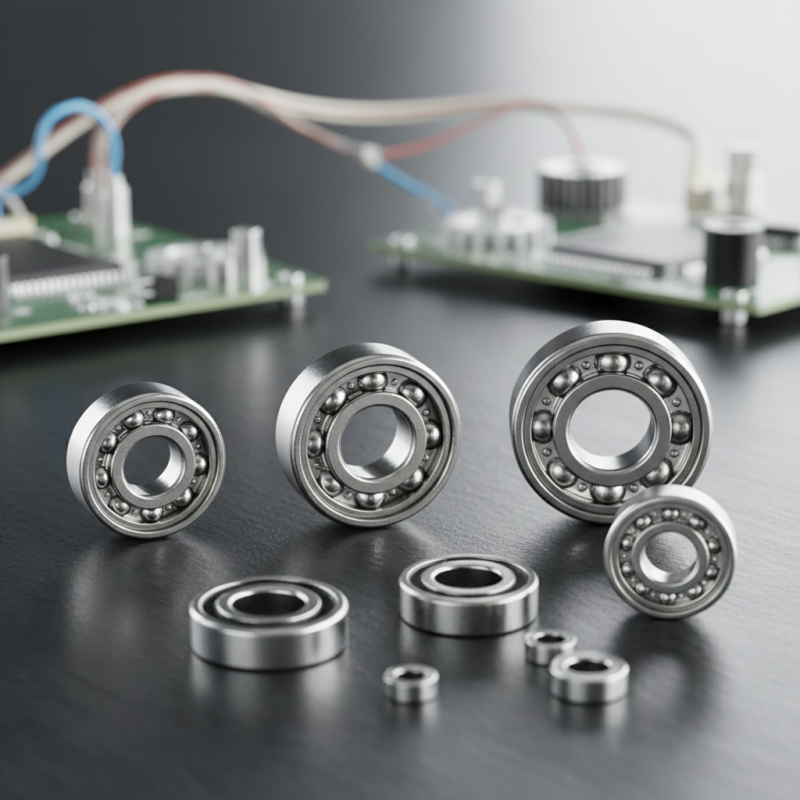
What are Miniature Angular Contact Bearings and Their Benefits?
Miniature Angular Contact Bearings are essential components in modern machinery. Their design allows for precise load handling and minimizing friction. These bearings support high-speed operations and enhance overall system efficiency.
In numerous applications, Miniature Angular Contact Bearings excel in tight spaces. Their compact design ensures they fit where standard bearings cannot. Whether in robotics, medical devices, or precision instruments, these bearings provide reliable performance.
However, selecting the right bearing requires careful consideration. Factors like load requirements, speed, and environment play a role. It’s crucial to understand the specific needs of your application, as the wrong choice can lead to inefficiencies or mechanical failures.
Definition and Characteristics of Miniature Angular Contact Bearings
Miniature angular contact bearings are specialized components designed for precision applications. These bearings have unique geometries that allow them to support both radial and axial loads simultaneously. Their design features include a thinner cross-section and a higher contact angle compared to standard bearings. This enhances their performance in limited spaces, making them a preferred choice in many engineering sectors.
One key characteristic of miniature angular contact bearings is their ability to handle high-speed operations. The precise alignment of the bearing components ensures minimal friction. Consequently, this leads to extended lifespan and greater reliability. They can be found in applications ranging from medical devices to aerospace technologies.
Tips: Consider lubricant quality. A good lubricant enhances bearing performance. Regular maintenance can avoid failures. Monitor operation temperatures to spot potential issues early.
Applications of Miniature Angular Contact Bearings in Various Industries
Miniature angular contact bearings are crucial in numerous industries. They excel in high-speed applications, offering improved precision and reduced friction. These bearings are commonly used in robotics, aerospace, and medical devices. A report by the Global Bearings Market 2021 projected a compound annual growth rate (CAGR) of 5.6% for precision bearings. This highlights their growing importance in critical applications.
In robotics, miniature angular contact bearings provide reliability for joints and motors. Precision is key for movement and accuracy in tasks. In aerospace, they support lightweight components while maintaining strength. Medical devices, such as MRI machines, benefit from their ability to handle varying loads. This adaptability enhances performance and safety in patient care.
Tips: Always consider the load and speed requirements when selecting a bearing. Proper installation is essential to ensure optimal performance. Regular maintenance can extend the lifespan of these components.
What are Miniature Angular Contact Bearings and Their Benefits? - Applications of Miniature Angular Contact Bearings in Various Industries
| Industry | Application | Benefits |
| Aerospace | Rotating machinery and control systems | High precision, reduced weight, and improved reliability |
| Medical Devices | Surgical instruments and diagnostic equipment | Enhanced accuracy and longevity |
| Electronics | Hard drives and optical devices | Compact size, noise reduction, and energy efficiency |
| Robotics | Actuators and joint mechanisms | Precision motion control and increased responsiveness |
| Automotive | Steering and transmission systems | Improved performance and durability |
Advantages of Using Miniature Angular Contact Bearings
Miniature angular contact bearings are precision components widely used in various applications. They feature a unique design that allows them to accommodate axial and radial loads simultaneously. This dual functionality is crucial in high-speed and high-precision environments, making them ideal for robotics, aerospace, and medical devices.
One significant advantage of miniature angular contact bearings is their ability to handle higher speeds compared to standard bearings. This efficiency can lead to enhanced performance in intricate machinery. Moreover, their compact size allows engineers to design smaller systems without sacrificing stability. The result is a saved space that can be repurposed for additional components.
Tips for choosing miniature angular contact bearings include paying attention to load ratings. Ensure the selected bearing can handle the specific loads of your project. Check the lubrication method, as effective lubrication can significantly extend bearing life. It's also wise to consider the operating environment, as factors like temperature can influence bearing performance. Remember, even the most advanced designs can malfunction if not properly applied.
Comparison with Other Bearing Types
Miniature angular contact bearings stand out for their unique design. They feature raceways that are set at an angle to the axis of rotation, allowing them to handle both axial and radial loads. This makes them ideal for applications requiring high precision and reliability. According to a report by Grand View Research, the global bearing market is projected to reach $81.39 billion by 2025, with high-performance bearings like these driving significant growth.
When comparing miniature angular contact bearings to traditional ball bearings, the differences become apparent. Ball bearings typically handle only radial loads and offer less stability under combined loading conditions. In contrast, miniature angular contact bearings can accommodate higher speeds and loads in compact spaces. Their ability to operate effectively in harsh environments further enhances their appeal. In fact, a study conducted by the American Society of Mechanical Engineers highlighted that these bearings can increase machine efficiency by up to 15%.
Despite their advantages, there are challenges. Miniature angular contact bearings are often more sensitive to misalignment than other types. Proper installation and alignment are crucial for optimal performance. Managers must weigh these considerations when selecting the best bearing type for their applications. The choice ultimately hinges on the balance between performance requirements and operating conditions.
Maintenance and Care for Miniature Angular Contact Bearings
Miniature angular contact bearings are precision components that find applications in various sectors. Regular maintenance is crucial for their optimal performance and longevity. Keeping these bearings clean is vital. Dust and debris can cause wear, leading to premature failure. Regularly inspect the bearing surfaces and ensure there is no obstruction.
Tips: Use a soft brush or compressed air to remove dirt. Avoid using harsh chemicals that can damage the bearing material.
Lubrication plays a significant role in the care of these bearings. Proper lubrication reduces friction and helps maintain performance. Choose the right lubricant based on your specific application requirements. Over-lubrication can cause issues too.
Tips: Apply lubricant sparingly to avoid excess build-up. Monitor the bearings for signs of increased heat or noise. These can indicate that maintenance is needed.
Lastly, monitor the bearing for signs of wear over time. Listen for unusual sounds and check for any irregular movements. Early detection of issues is key in preventing costly downtime. Regular checks and proper care can enhance the performance of miniature angular contact bearings significantly.
Benefits of Miniature Angular Contact Bearings