Top Power Distribution Panel Suppliers Worldwide?
Choosing among top power distribution panel suppliers worldwide requires more than comparing prices or browsing polished product catalogs. A reliable supplier should demonstrate engineering depth, documented quality systems, and practical experience with industrial, commercial, and infrastructure projects. Their panels must support safe power routing, clear labeling, heat management, and dependable protection under real operating conditions. Factory testing matters. So does field performance.
This guide introduces leading suppliers by examining product range, manufacturing capability, certifications, customization, delivery reliability, and technical support. Buyers should look for evidence such as routine test records, short-circuit ratings, enclosure specifications, and traceable component selection. A panel built for a humid coastal plant may need different materials than one installed in a clean office tower. That detail can change the decision.
Not every large manufacturer fits every project. Some suppliers excel at standardized low-voltage assemblies, while others handle complex automation or high-current applications. Marketing language can also hide important limitations. Verify the claims.
The discussion considers established global brands and capable regional manufacturers, using practical purchasing criteria rather than reputation alone. It also recognizes an uncomfortable point: supplier rankings are never completely objective. Project voltage, local standards, budget, service access, and installation conditions can shift the best choice. Readers should treat this overview as a professional starting point, then confirm technical data with qualified engineers and the supplier’s latest documentation.

What Is a Power Distribution Panel?
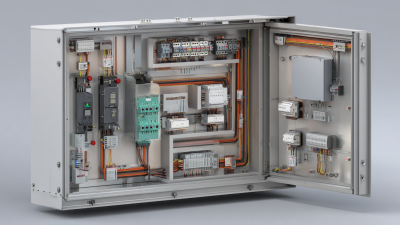
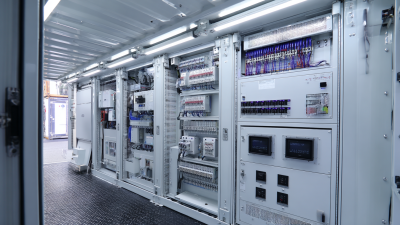
A power distribution panel is an enclosed assembly that receives electrical power and divides it into controlled circuits. It normally contains busbars, circuit breakers, protective devices, meters, and connection terminals. Think of it as a traffic controller for electricity. It directs current toward lighting, machinery, heating, and emergency systems.
The panel also limits damage. When a fault occurs, the relevant breaker should disconnect that circuit before heat spreads through the enclosure. IEC 61439-1 and IEC 61439-2 define important requirements for low-voltage assemblies, including temperature rise, insulation, short-circuit withstand, and verification. In commissioning work, clear labeling matters as much as component quality. A neat panel can still hide poor coordination.
Demand is rising with electrification. The International Energy Agency’s Electricity 2024 report expects global electricity demand to grow by about 4% annually through 2026. That growth increases the need for reliable distribution equipment in factories, data centers, housing, and renewable-energy projects. Fortune Business Insights reported that the broader global switchgear market reached about USD 103.96 billion in 2023, with continued expansion projected through 2032. However, switchgear figures include more than distribution panels, so they should not be treated as panel-market data. This distinction is easy to miss. A supplier should therefore be judged by tested assemblies, protection coordination, thermal performance, documentation, and service support—not only by a catalogue price.
How Power Distribution Panels Work and Are Classified
Top Power Distribution Panel Suppliers Worldwide?
Power distribution panels receive electricity, protect circuits, and divide power among buildings, machines, and process lines. An incoming main breaker controls the supply. Copper or aluminum busbars then carry current to outgoing feeders. Each feeder may include circuit breakers, fuses, meters, and surge protection. Grounding provides a safer path during faults, although installation quality still matters more than a polished enclosure.
Panels are commonly classified by voltage, installation location, protection rating, and internal arrangement. Low-voltage switchboards serve larger facilities, while distribution boards handle smaller circuits. Motor control panels coordinate motors and related protection equipment. Under IEC 61439, assemblies may also use Form 1 to Form 4 separation, which limits contact between busbars, devices, and terminals. Indoor and outdoor designs differ in enclosure protection, often identified through IP ratings.
Demand is becoming harder to predict. The International Energy Agency’s Electricity 2024 report expects global electricity demand to grow by about 4% in 2024, with strong increases continuing through 2026. This growth raises pressure on panel capacity, thermal management, and maintenance planning. In practice, a panel rated correctly on paper may still overheat when ventilation, harmonics, or future loads are underestimated. That is where many specifications need honest review.
Major Types of Global Power Distribution Panel Suppliers
Global power distribution panel suppliers generally fall into several practical categories. Low-voltage panel manufacturers serve commercial buildings, factories, and retail facilities. Medium-voltage specialists support utilities, infrastructure projects, and large industrial sites. Custom system integrators combine protection devices, meters, busbars, and automation inside engineered enclosures. Modular suppliers focus on fast installation, especially in data centers and renewable-energy projects.
Demand is expanding with electrification. The International Energy Agency’s Electricity 2024 report forecasts global electricity demand growth of about 3.4% annually from 2024 to 2026. That growth increases demand for panels that manage higher loads, distributed generation, and battery storage. Industry market studies also identify data centers, manufacturing, and infrastructure upgrades as major application areas. Buyers should check short-circuit ratings, temperature-rise tests, enclosure protection, and compliance with IEC 61439 requirements. Small details matter.
Regional suppliers often provide faster site support and easier customization. Global suppliers may offer broader testing capacity, standardized documentation, and multi-country project coverage. However, supplier size does not guarantee better field performance. A panel can meet a specification and still fail through poor cable termination, unclear labeling, or weak commissioning records. That point deserves more attention. Evaluators should request factory test reports, maintenance instructions, spare-part availability, and evidence from similar installations. A reliable comparison should measure total ownership cost, not only the initial quotation.
How Worldwide Suppliers Compare by Products and Capabilities
Worldwide power distribution panel suppliers differ less by catalog size than by engineering depth. Some focus on low-voltage panels for offices, retail buildings, and workshops. Others build medium-voltage systems for factories, utilities, and transport sites. A useful comparison starts with ratings, enclosure types, busbar design, protection devices, and short-circuit performance. Look for clear technical datasheets, not polished product images.
Experienced suppliers can adapt layouts to local voltage systems, installation spaces, and maintenance practices. They may provide floor-standing panels, wall-mounted boards, motor control centers, or modular assemblies. Their capabilities also include thermal calculations, protection coordination, factory testing, and site commissioning. Ask whether engineers review cable entry, heat dissipation, and future feeder capacity. Small details matter. A crowded panel becomes difficult to service.
Quality evidence should be practical and traceable. Check routine test records, material specifications, inspection procedures, and compliance with relevant international or regional standards. References from similar climates and industries can reveal more than a general sales presentation. Delivery capability matters too. A supplier with strong design skills may still struggle with replacement parts or technical support. That weakness is easy to overlook. I would also compare response times, drawing revision control, warranty terms, and training. No supplier is perfect, and published information may hide limitations; independent verification remains necessary before approval.
Key Criteria for Choosing a Power Distribution Panel Supplier
Choosing a power distribution panel supplier should begin with evidence, not catalogue variety.
The International Energy Agency’s Electricity 2024 report expects global electricity demand to grow by an average of 3.2% annually from 2024 to 2026. That pressure makes dependable distribution equipment more important. Suppliers should show experience with comparable loads, fault levels, ambient temperatures, and installation environments. A panel built for a clean factory may fail in a dusty processing site.
Compliance is a practical screening tool.
Ask for documented testing against IEC 61439, including temperature-rise, short-circuit, and dielectric-performance verification.
Independent laboratory records are more credible than broad marketing claims.
Check enclosure ratings, busbar materials, ingress protection, and the availability of replacement components. The supplier should also explain inspection stages, torque controls, wiring identification, and factory acceptance testing.
Small omissions can create large commissioning delays.
Reliability includes service after delivery.
The supplier should provide drawings, digital manuals, spare-parts guidance, and clear response times. Uptime Institute’s Global Data Center Survey has repeatedly identified power issues as a significant source of disruption, although panel quality alone cannot prevent every outage. That distinction matters.
I would not accept a supplier based only on a low quotation.
Total cost includes testing, installation changes, training, and future maintenance. Site references help, but they are not perfect evidence. A technical interview often reveals more than a polished brochure.
Ask difficult questions.
Weak answers are useful information.