Why Choose Investment Casting Mold for Your Manufacturing Needs?
In today's competitive manufacturing landscape, choosing the right methods can significantly impact efficiency and quality. Investment casting molds have emerged as a leading choice for many industries, boasting exceptional precision and surface finish. According to a recent market report by MarketsandMarkets, the investment casting market is projected to reach $19.93 billion by 2025, underscoring its growing relevance.
Companies in aerospace, automotive, and medical sectors specifically benefit from this technique. With the ability to produce complex shapes, investment casting molds can reduce the need for secondary machining. However, challenges remain. The initial costs of creating these molds can be high. This underscores the importance of careful planning and budget considerations in the early stages of production.
Furthermore, while investment casting offers numerous advantages, not every application may be suitable for this method. Understanding the limitations and required expertise is essential. Manufacturers must weigh these factors to make informed decisions that align with their production goals. The choice of investment casting molds may enhance manufacturing processes, but it is not without its challenges.
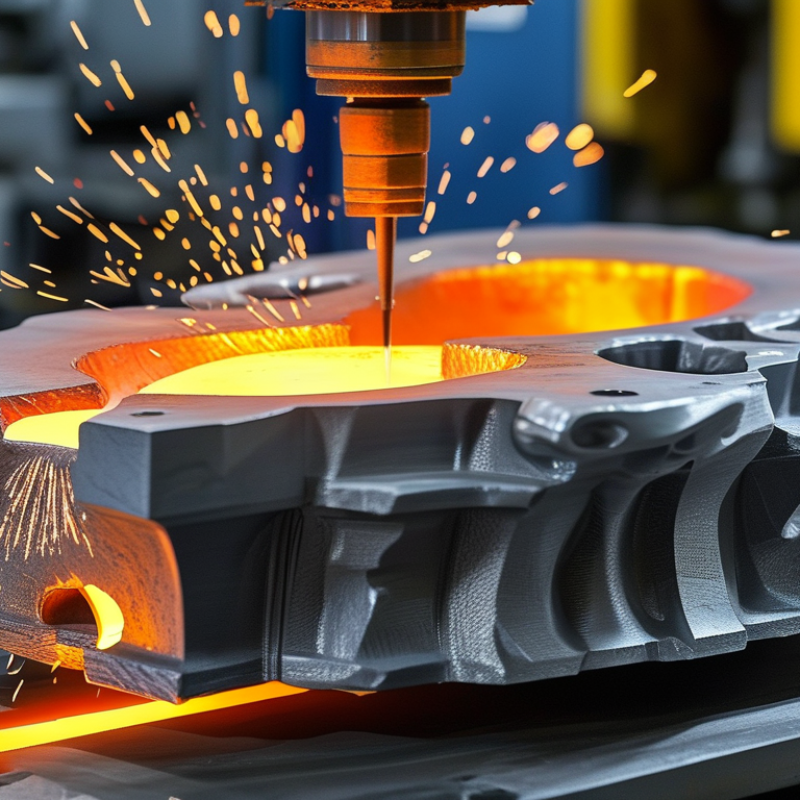
Benefits of Investment Casting in Modern Manufacturing
Investment casting has emerged as a vital process in modern manufacturing. The method allows for intricate designs with exceptional precision. This is particularly beneficial in industries requiring complex components, such as aerospace and automotive. The molds are created with high detail, capturing every nuance of the design. This leads to reduced finishing work, which ultimately saves time and costs.
Another significant advantage is the material versatility. Investment casting accommodates a wide range of metals, such as stainless steel, aluminum, and copper alloys. This flexibility opens doors for engineers to select the best materials for their specific applications. Reducing waste is another strong point. The process generates less scrap compared to traditional techniques. However, getting the right mold design can be challenging and requires careful consideration. Errors in design may lead to defects, which can be costly to rectify.
The reliability of investment casting is another key benefit. Parts produced through this method typically exhibit excellent mechanical properties. This consistency helps engineers rely on the quality of their components. Nevertheless, managing production runs can present challenges. Each run can vary in complexity and precision, making it essential to maintain control throughout the process. This continuous need for quality checks creates room for improvement, enhancing overall production efficiency over time.
Understanding the Investment Casting Process and Techniques
Investment casting, also known as lost-wax casting, is a precise manufacturing method. It involves creating a wax pattern coated with a ceramic shell. Once the shell hardens, the wax is melted away, leaving a cavity for molten metal. This technique allows for intricate designs and complex geometries that other methods struggle to achieve.
The investment casting process has several advantages. It provides excellent surface finish and dimensional accuracy. This is critical for industries like aerospace and automotive. However, the process requires careful management. Errors in the shell or wax pattern can lead to imperfections. Each step must be monitored closely to ensure quality.
Understanding these techniques can be challenging. The balance between speed and precision is not always straightforward. Some manufacturers may prioritize cost over quality. This can lead to issues down the line, such as parts needing rework or replacement. Investing time in mastering the process is essential for long-term success.
Why Choose Investment Casting Mold for Your Manufacturing Needs?
| Dimension | Description | Benefits | Applications |
| Precision | Achieves tight tolerances and excellent surface finish. | Reduces need for machining, saving time and cost. | Aerospace, Automotive, Medical devices |
| Material Versatility | Supports a wide range of materials including ferrous and non-ferrous alloys. | Allows for optimized material selection based on specific needs. | Consumer products, Industrial machinery |
| Complex Geometries | Can produce intricate shapes that are difficult to achieve with other manufacturing processes. | Enhances design options and functionality of parts. | Electronics, Agricultural equipment |
| Reduced Waste | Generates less scrap material compared to traditional methods. | Promotes sustainability in manufacturing. | Renewable energy, Heavy machinery |
| Scalability | Easily scalable for both small and large production runs. | Enables cost-effective mass production. | Construction, Transportation |
Comparative Analysis: Investment Casting vs. Traditional Methods
Investment casting and traditional methods serve distinct roles in manufacturing. Investment casting offers high precision and intricate designs, often required in industries like aerospace and medical devices. This method uses a wax pattern, allowing for complex geometries that are hard to replicate with traditional casting. The result is reduced machining time and improved surface finish.
Traditional casting methods, like sand casting, excel in mass production of simpler parts. They are cost-effective for larger products but may struggle with detail. Surface finish may not meet the standards set by investment casting. Moreover, traditional approaches can lead to more material waste. This waste impacts both costs and environmental sustainability.
Understanding the specific needs of your project is crucial. Investment casting may have higher initial costs, but when precision and quality are paramount, the investment pays off. Assessing the trade-offs helps in making informed decisions about manufacturing processes. Each project presents unique challenges, requiring careful thought and consideration.
Applications of Investment Casting Across Various Industries
Investment casting is a versatile manufacturing process used in various industries. This method creates complex shapes with high precision. It is particularly favored in aerospace, automotive, and medical sectors. Investment casting molds allow for intricate designs and tight tolerances not achievable with traditional techniques.
In the aerospace industry, investment casting is crucial. It produces parts like turbine blades that need to withstand extreme conditions. The process ensures lightweight components while maintaining strength. Similarly, in the automotive sector, manufacturers use this technique for gears and engine components. These parts require durability and dimensional fidelity, which investment casting can provide.
Tip: Consider material choice carefully. Different alloys can enhance properties like corrosion resistance or hardness.
Another notable application is in the medical field. Investment casting produces surgical instruments and prosthetics. These items must meet strict quality standards. The precision of investment casting lends itself well to these demanding requirements.
Tip: Always evaluate the complexity of the part's design. Some intricate designs can lead to higher production costs.
While investment casting offers many advantages, it’s essential to understand its limitations. For example, larger components may be more challenging to cast efficiently. Each application requires careful planning to avoid potential pitfalls.
Cost-Effectiveness and Efficiency of Investment Casting Solutions
Investment casting is known for its cost-effectiveness and efficiency. This method provides precise shapes, reducing the material waste that often occurs in traditional machining. Its capability to produce complex geometries is unmatched. This translates to fewer assembly parts and lower overall production costs.
Tips: When considering investment casting, always evaluate the design intricacies. Simplicity can often enhance efficiency.
Additionally, the process has a quicker turnaround time, which is crucial for those on tight schedules. However, it is vital to keep in mind that not every design is suitable. The choice of material also plays a significant role in the cost.
Tips: Research multiple materials and their properties beforehand. The wrong choice can lead to increased expenses in the long run.