Choosing a Control Circuit Board supplier in China starts with a clear picture of the application. Define operating voltage, current, dimensions, connectors, environmental conditions, and expected production volume. A board for a compact appliance may need different protection and thermal handling than one used in factory equipment. Small details matter. A connector placed a few millimeters off can disrupt assembly, even when the circuit design looks sound on paper.
Compare suppliers on engineering capability, production controls, and communication—not price alone. Ask how they review schematics, manage component substitutions, inspect solder joints, and track revisions. Request relevant quality documents, but confirm that they apply to the specific facility and product. A sample can reveal useful details: connector fit, labeling, finish, and test results. It cannot prove long-term reliability by itself. That takes patience.
A useful sourcing process includes a written specification, a prototype review, and agreed acceptance tests before volume production. Ask for clear answers about lead times, minimum order quantities, warranty terms, and support when a board fails testing. Keep design files and revision records organized. This sounds basic, but it is easy to overlook when schedules tighten. No supplier is automatically the best fit for every project. The right choice depends on technical needs, evidence, and the ability to resolve problems openly. Compare findings carefully, and leave room to revise early assumptions as real samples arrive.
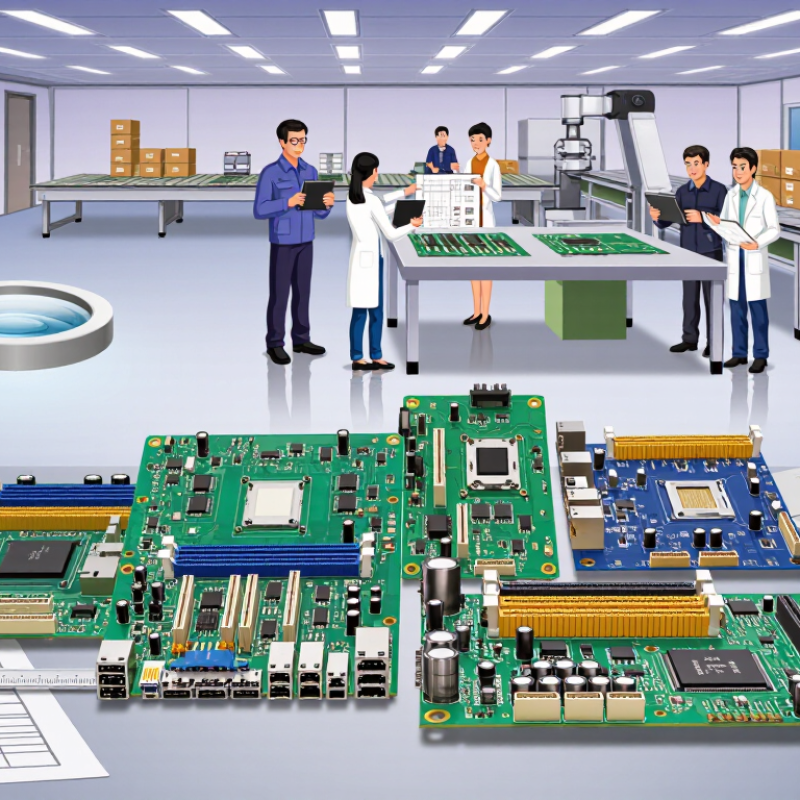
How to Find the Best Control Circuit Board in China?
Define the board’s job before comparing quotations. List operating voltage, current, switching speed, temperature range, and expected service life. Then document connector positions, mounting-hole locations, enclosure limits, and cable direction. A board that fits electrically but clashes with a bracket is still the wrong board.
Use IPC-2221 as a design reference for items such as conductor spacing, insulation, and board layout. Apply its guidance to the actual voltage, materials, and operating environment; do not treat a standard as a substitute for engineering review. For example, a control board near a motor may need wider power traces, careful separation from noisy signals, and thermal checks around switching components. Details matter. Requirements should also reflect assembly and inspection, including test points and accessible connectors.
When evaluating manufacturers in China, share the same controlled drawings, stack-up, bill of materials, and acceptance criteria with each candidate. Ask how design changes are recorded and how electrical tests are documented. Request sample boards for fit, function, and temperature testing before approving volume production. A neat quotation proves little. I have seen specifications that looked complete yet missed a simple cable-clearance issue; it is easy to overlook. Recheck the requirements with the people who install and service the board, then revise them before production.
| Design Dimension | Requirements to Define | IPC-2221 Design Consideration | Application-Specific Verification |
|---|---|---|---|
| Electrical ratings | Operating and maximum voltage, current per circuit, signal frequency, and expected switching conditions. | Use the applicable IPC-2221 guidance for conductor spacing and electrical design. Required spacing depends on factors such as voltage, environment, and insulation conditions. | Check the circuit against the actual load, transient conditions, and any applicable product safety requirements. |
| Trace width and copper | Specify current by net, allowable temperature rise, copper weight, and whether traces carry continuous or intermittent current. | Determine conductor dimensions using the applicable design method and the selected copper thickness; do not select trace width from current alone. | Review high-current paths, connectors, vias, and local heating together. Confirm performance through analysis or testing where needed. |
| Layer count and stack-up | Define signal, power, and ground layers; board thickness; copper weights; and controlled-impedance needs, if any. | Plan conductor arrangement, spacing, and insulation within a documented stack-up that supports the electrical and mechanical design. | Confirm routing capacity, return paths, noise control, impedance targets, and availability of the proposed stack-up with the fabricator. |
| Board material | State operating temperature range, expected humidity, mechanical demands, and any flame-rating or dielectric requirements. | Select materials and construction appropriate to the board’s electrical, thermal, and environmental conditions. | Verify material properties and required certifications against the end product’s operating environment and regulatory obligations. |
| Thermal management | Identify heat-producing components, maximum component temperatures, ambient temperature, and cooling method. | Account for conductor heating and the board’s thermal design as part of the overall layout and material selection. | Assess hot spots, copper spreading, thermal vias, airflow, and enclosure effects under representative operating conditions. |
| Mechanical fit and mounting | Provide board outline, thickness, mounting-hole locations, keep-out areas, connector positions, and dimensional tolerances. | Apply the relevant design guidance to conductor placement and board features while maintaining the specified mechanical constraints. | Check enclosure fit, connector access, mounting stresses, and clearances using drawings or a physical prototype. |
| Environmental protection | Specify exposure to dust, moisture, chemicals, vibration, and temperature cycling, plus any required protective coating. | Include environmental conditions in material, spacing, and construction decisions; IPC-2221 does not by itself define every product-level qualification test. | Define suitable protection and qualification tests for the intended environment, including any required sealing or coating process. |
| Manufacturing and assembly | Set component package details, soldering process, minimum feature requirements, panelization needs, and inspection expectations. | Use design rules compatible with the chosen board construction and communicate the stack-up and fabrication requirements clearly. | Request a design-for-manufacturing review and confirm that the selected fabricator can meet the specified features and assembly process. |
| Reliability and validation | Define service life, expected duty cycle, critical failure modes, and acceptance criteria. | Use IPC-2221 as a generic printed-board design reference alongside the requirements of the finished product. | Plan appropriate electrical, thermal, mechanical, and environmental tests based on the application and applicable standards. |
Note: IPC-2221 provides generic printed-board design guidance. Final dimensions and qualification criteria should be based on the complete design, the applicable standard revision, and the end product’s safety and regulatory requirements.