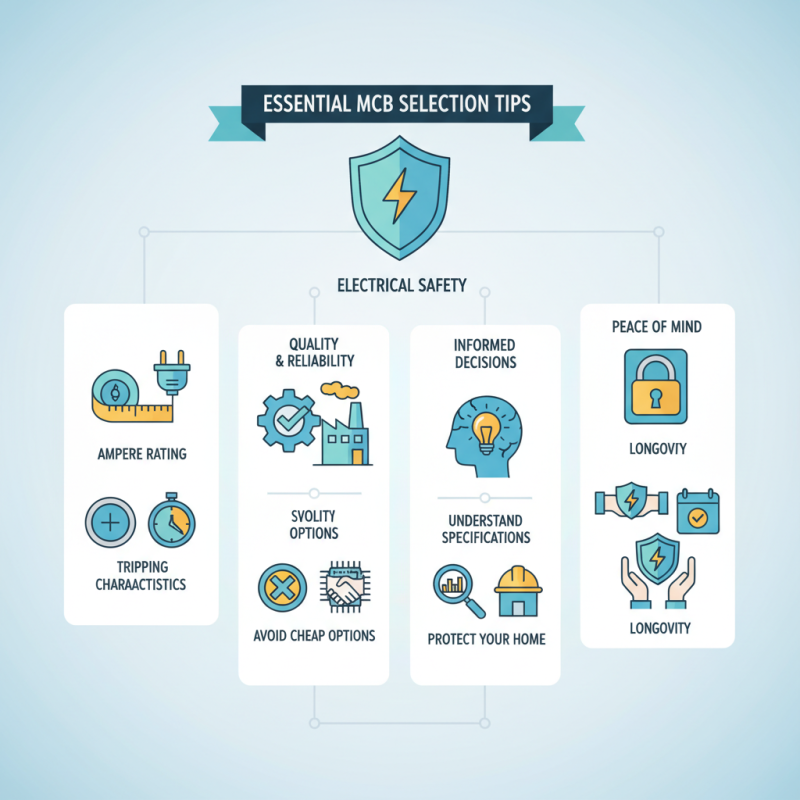
What are the Essential Tips for Choosing a Miniature Circuit Breaker?
Choosing the right Miniature Circuit Breaker (MCB) can significantly impact electrical safety and performance. According to industry expert Robert Miller, "The right MCB prevents disasters." Each MCB has different specifications. Understanding these differences is essential.
In a world where electrical systems are critical, selecting an appropriate MCB is not just a technical decision. It affects safety, efficiency, and longevity. Factors such as ampere rating and tripping characteristics must be considered carefully. Choosing poorly can lead to serious consequences.
You might be drawn to cheaper options or brands without a proven track record. It’s tempting but can be risky. Electrical systems demand reliability. Thus, investing in a quality Miniature Circuit Breaker is indispensable for peace of mind. Make informed choices to protect your partnership with electricity.
Understanding the Functionality of Miniature Circuit Breakers
Miniature Circuit Breakers (MCBs) play a crucial role in protecting electrical circuits. They act as automatic switches. When excessive current flows, they trip and disconnect the circuit. This prevents damage to appliances and reduces the risk of fire. Understanding how MCBs function is vital in selecting the right one.
While choosing an MCB, consider the operational current and voltage ratings. These specifications must match your electrical system. Activation speed is another key factor. Some MCBs respond faster than others. However, not all environments suit all types. A fast trip may not be beneficial in every case.
It's essential to assess the load type, whether it's resistive or inductive. Different loads can affect the performance of an MCB. Some might trip easily, leading to unnecessary downtime. Additionally, circuit behavior under fault conditions varies. Testing often reveals unexpected results. Regular evaluations help refine your choices and improve safety.
Key Specifications to Consider When Selecting a Miniature Circuit Breaker
When selecting a miniature circuit breaker (MCB), key specifications play a vital role. One of the essential factors is the current rating. MCBs typically range from 0.5 A to 125 A. The chosen rating should match the load to ensure optimal protection. According to industry reports, incorrect ratings lead to 30% of circuit failures.
Another critical specification is the breaking capacity. This refers to the maximum fault current the MCB can interrupt. Standard values range from 3 kA to 10 kA in residential settings. Higher capacity ensures safety in the event of a fault. However, many users overlook this specification, creating potential hazards.
Also, consider the tripping characteristics. Types B, C, and D MCBs cater to diverse applications. Type B is suitable for residential, while Type C is favored in commercial settings. Nearly 25% of electrical fires are linked to inappropriate tripping characteristics of MCBs. Understanding these nuances can significantly improve safety and reliability.
Evaluating Current Ratings and Breaking Capacity Requirements
When choosing a miniature circuit breaker (MCB), understanding current ratings is crucial. Current ratings indicate the maximum load an MCB can handle. For example, if your system runs on 16A, an MCB with a 16A rating is necessary. However, it's essential to consider seasonal variations too. A slightly higher rating may prevent frequent trips in warmer months.
Breaking capacity is another key factor. It represents the MCB's ability to interrupt fault currents without damage. An MCB with a low breaking capacity might fail during a short circuit. It's advisable to assess your circuit's potential fault current. An engineer can help with these calculations. Too often, users underestimate this requirement and face challenges later.
Incorporating additional safety features can be beneficial. These can help prevent potential hazards. You might also want to prioritize devices with indicators. Visual cues can simplify troubleshooting. However, this might slightly increase costs. Weigh these factors carefully based on your needs. Each installation is unique, and sometimes, compromises are necessary. The balance between safety and budget is critical.
Assessing Electrical Load Types for Suitable Breaker Choices
When selecting a miniature circuit breaker (MCB), understanding the types of electrical loads is crucial. Different loads require different levels of protection. For instance, resistive loads like heaters generally have a stable current draw. However, inductive loads such as motors can cause inrush currents that are much higher than their normal operating current. A mismatch here may lead to nuisance tripping.
According to industry reports, approximately 30% of electrical faults are linked to overloading and short circuits. Choosing the right MCB involves assessing both the continuous load and potential peak loads. If you underestimate the load, you might face frequent breaker trips. In some cases, users select MCBs rated significantly lower than needed. This can lead to equipment damage and safety hazards.
Moreover, it’s essential to recognize that not all loads behave predictably. For example, a mixed-use environment may see fluctuating demands. In such situations, an MCB should be capable of handling these variations. Some reports suggest that using a dual-type circuit breaker can mitigate these inconsistencies. Balancing safety and efficiency is often overlooked, yet it’s a critical factor for reliable electrical setups.
Tips for Installation and Maintenance of Miniature Circuit Breakers
When installing miniature circuit breakers (MCBs), proper attention to detail is crucial. Make sure to select a mountable location that is dry and easily accessible. This is vital for functionality and future maintenance. Avoid crowded areas, as they may lead to overheating. Ensure that the wiring used is suitable for the circuit's voltage and current ratings. Poor connections can lead to faults and even system failures.
Regular maintenance is equally important. Check MCBs for signs of wear, such as discoloration or unusual sounds. These signs often signal a deeper issue. Keep the area around your MCBs clean and free of debris. Dust can impair performance and lead to overheating. It’s advisable to conduct periodic inspections. Sometimes, we overlook the basics, but small details can prevent major accidents.
Ensure that everyone using the electrical system knows how to reset the breakers if they trip. Many users struggle with this step, which can lead to unneeded panic. Clearly labeled circuits help avoid confusion. Reflection on installation practices can reveal overlooked mistakes, enhancing future projects. Keeping a log of maintenance activities can also be beneficial for tracking issues.