Why Is Speed Sensor Essential for Your Vehicle Performance?
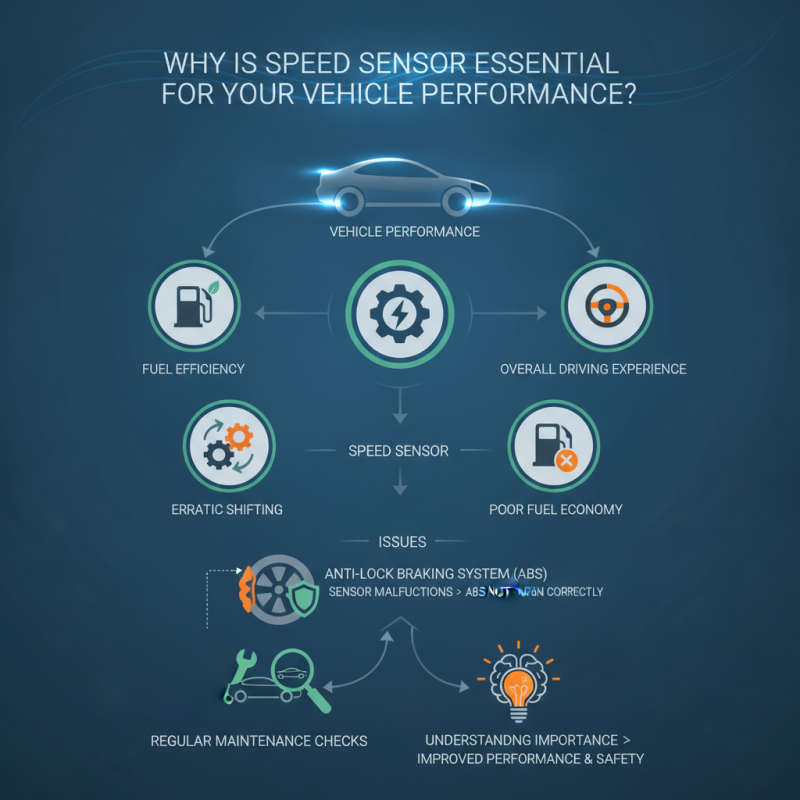
The Speed Sensor plays a crucial role in your vehicle's performance. It monitors the wheel speed and sends data to the engine control unit. This information influences fuel efficiency, acceleration, and overall driving experience. Without a functioning Speed Sensor, issues can arise. You may experience erratic shifting or poor fuel economy.
In many vehicles, the Speed Sensor also affects the anti-lock braking system. This feature enhances safety while driving. When the sensor malfunctions, the ABS may not function correctly. It is vital to recognize these signs before serious performance issues develop. Regular maintenance checks can identify problems early.
Drivers often overlook the significance of a Speed Sensor. Many only consider it when issues occur. Understanding its importance can lead to improved performance. By acknowledging the Speed Sensor's role, you can take proactive measures. This awareness can ultimately enhance your vehicle's safety and efficiency on the road.
Importance of Speed Sensors in Modern Vehicles: An Overview
Modern vehicles rely heavily on speed sensors to ensure optimal performance. These sensors track the vehicle’s speed and relay crucial information to the engine control unit (ECU). This enables efficient engine management and improves fuel efficiency. Accurate speed readings also enhance safety features like anti-lock braking systems (ABS) and traction control.
Drivers may not always recognize the importance of speed sensors. They monitor speed fluctuations to maintain stability on the road. Inaccurate readings can lead to poor vehicle handling and increased stopping distances. Regular checks are recommended to ensure these sensors function properly.
Tips: If you notice inconsistent speed readings, seek professional diagnostics. A simple sensor replacement can restore your vehicle's performance. Maintain a regular vehicle inspection schedule. This ensures your speed sensors are clean and fully operational, so your safety isn't compromised.
How Speed Sensors Enhance Engine Performance and Fuel Efficiency
Speed sensors play a crucial role in enhancing engine performance and fuel efficiency. These devices measure the wheel speed and communicate this information to the vehicle's engine control unit. By providing real-time data, speed sensors help optimize fuel injection and ignition timing. This leads to a smoother engine operation and improved power output.
Inconsistent or failing speed sensors can create performance issues. Drivers may notice sluggish acceleration or increased fuel consumption. Such problems not only affect the driving experience but also raise maintenance costs. For instance, when the engine receives incorrect speed readings, it may operate less efficiently. Regular checks of the speed sensor can prevent these issues. This small component has a significant impact on overall vehicle performance.
Moreover, understanding how speed sensors work can empower vehicle owners. Knowledge about this technology can lead to better-informed maintenance decisions. While many may overlook speed sensors, their influence on fuel efficiency is undeniable. Maintaining these sensors ensures that the vehicle operates at its best, ultimately saving money and reducing emissions.
Key Types of Speed Sensors Used in Automotive Applications
Speed sensors play a crucial role in your vehicle's performance, influencing everything from acceleration to fuel efficiency. Among the key types of speed sensors in automotive applications are Hall effect sensors, optical sensors, and inductive sensors. Each type has unique functions and advantages.
Hall effect sensors detect the speed of rotating components using magnetic fields. They are often found in transmission systems. Optical sensors rely on light signals to measure rotational speed. Inductive sensors generate voltage as metal targets pass by, offering reliability in various conditions. Choose wisely based on your vehicle's needs.
Tips: Regularly inspect your speed sensors. Look for any signs of wear or damage. A failing sensor can lead to inaccurate speed readings and affect performance. Additionally, understanding your sensor type can aid in effective maintenance. Keep your vehicle in top shape by ensuring all sensors are functioning correctly.
Impact of Speed Sensors on Transmission Systems and Gear Shifting
Speed sensors play a crucial role in the performance of your vehicle, particularly in transmission systems. They monitor the speed of the wheels and relay this information to the vehicle's onboard computer. This data is essential for smooth gear shifting and enhances overall driving experience. When the sensor is malfunctioning, it can lead to erratic gear changes. Drivers may experience a jarring sensation while shifting gears, which can be alarming and uncomfortable.
The accuracy of the speed sensor directly impacts how efficiently the transmission system operates. Delays in gear shifts can affect acceleration and fuel efficiency. In severe cases, this may result in transmission damage. Regular checks of speed sensors can prevent unexpected failures. Stay vigilant about warning lights on your dashboard that may indicate a speed sensor issue.
Tips: Keep an eye on your vehicle’s performance, especially during acceleration. If you feel any hesitation or rough shifts, it might be time to inspect your speed sensor. Additionally, always consider having your vehicle serviced by professionals to ensure reliable diagnosis. Addressing concerns early can save you time and money later.
Why Is Speed Sensor Essential for Your Vehicle Performance? - Impact of Speed Sensors on Transmission Systems and Gear Shifting
| Dimension | Impact | Measurement | Optimal Range |
| Transmission Fluid Temperature | Affects gear shifting smoothness | Degrees Celsius | 70 - 90°C |
| Vehicle Speed | Directly influences RPM and fuel efficiency | Miles per hour (MPH) | 30 - 70 MPH |
| Engine RPM | Determines power output during shifting | Revolutions per minute | 1000 - 3000 RPM |
| Throttle Position | Affects acceleration response and shifting pattern | Percentage (%) | 20 - 80% |
Common Issues with Speed Sensors and Their Effects on Vehicle Operations
Speed sensors play a crucial role in vehicle performance. They measure the rotation of wheels or gears. When these sensors malfunction, it affects many systems. A failing speed sensor can lead to erratic speed readings. This can confuse the engine control unit, resulting in poor acceleration. The vehicle might also stall unexpectedly.
Other common issues include erratic transmission behavior. The transmission relies on accurate speed data for smooth shifting. If the speed sensor miscommunicates, shifts may become harsh or delayed. Such problems can reduce fuel efficiency significantly. Drivers might notice increased fuel consumption during everyday driving.
Additionally, dashboard warning lights may illuminate. These can indicate a speed sensor issue or related components' failures. Ignoring these alerts can lead to bigger problems down the road. Replacing a speed sensor is often straightforward, yet many hesitate. They overlook the sensor's impact on overall vehicle operations. Regular checks can help maintain proper functionality. Addressing these concerns helps ensure a safer driving experience.