Skip to content
Menu Close

How to Choose Thermal Break Aluminum System Windows?

Choosing Thermal Break Aluminum System Windows is not just a profile comparison. It is a decision about comfort, energy use, weather resistance, and long-term performance. The right frame should suit the building’s climate, orientation, glass area, and installation conditions. A slim frame may look elegant, but appearance alone tells little about how it performs.

A useful building-science principle associated with Dr. Joseph Lstiburek can be summarized this way: “Treat heat, air, and moisture as connected parts of the building.” This is a paraphrase, not a verbatim quotation. It points to a detail buyers sometimes overlook: the thermal break must work with the glazing, seals, drainage paths, and wall connection. A polyamide separator can reduce heat transfer through the aluminum, but it cannot correct poor installation or weak perimeter sealing.

Look beyond brochure claims. Ask for whole-window test data, including thermal transmittance, air leakage, water penetration, and structural performance. Check whether the stated values apply to the complete window or only to the glass or frame. Then inspect practical details: corner joints, gasket continuity, drainage openings, hardware, and finish quality. Small details matter.

No single specification guarantees a good result. Site conditions, workmanship, and maintenance matter too. Even a strong product can disappoint when fitted carelessly. This guide explains how to compare Thermal Break Aluminum System Windows with clearer criteria, ask suppliers better questions, and choose a system that fits the project rather than the sales pitch.
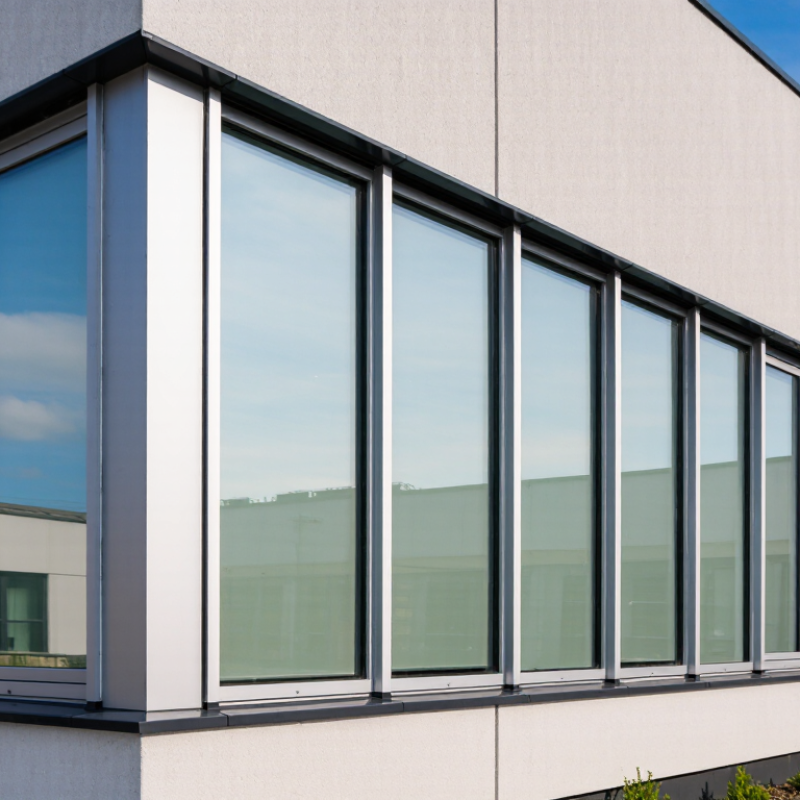
How to Choose Thermal Break Aluminum System Windows?

What Defines a Thermal Break Aluminum Window System?

A thermal break aluminum window is defined by a barrier between its exterior and interior aluminum sections. This barrier is commonly a rigid insulating strip, often made from polyamide. It interrupts the direct path that lets heat travel through metal. The aluminum remains strong and slim, but the frame transfers less heat.

That is the core idea.

Look closely at a cutaway profile. You should see separate aluminum sections joined by a continuous insulating strip, not one uninterrupted metal chamber. The strip’s fit and connection matter; a poorly assembled profile may weaken the system’s performance.

Small details count.

Thermal breaks can reduce heat loss and help limit condensation on the indoor frame, but they cannot prevent every cold surface or moisture problem. Glass, edge spacers, seals, and installation all play a part.

A practical assessment considers the complete window, not just the frame material. Check whether the frame and sash use thermal breaks, and review tested performance data for the full assembly. Ask how the seals handle wind-driven rain and how the window is installed into the wall.

A good profile can still disappoint if gaps remain around the opening. I would not judge it by a thick frame alone; that visual cue is easy to misread.

Performance depends on several connected parts.

Which Thermal and Acoustic Performance Requirements Matter?

How to Choose Thermal Break Aluminum System Windows?

Thermal and acoustic requirements should match the building, not just the frame. The U.S. Department of Energy estimates that windows account for 25–30% of residential heating and cooling energy use. Compare whole-window U-factors, not glass-only figures, and check solar heat gain coefficient against local climate and orientation. A thermally broken frame limits heat transfer through aluminum, but installation still matters. Small gaps matter.

For sound, ask for tested STC or OITC ratings for the complete window assembly. STC is commonly used for speech and indoor noise; OITC better reflects lower-frequency outdoor sounds, such as traffic. The World Health Organization’s 2018 environmental-noise guidelines recommend keeping road traffic exposure below 53 dB Lden and 45 dB Lnight. These are outdoor exposure recommendations, not promised indoor window targets. A laboratory rating also cannot fully predict results after installation.

Tips: Request test reports, glass build-up, and air-leakage data for the exact window configuration. For a roadside bedroom, compare laminated or unequal-thickness glazing options, then consider the wall and vents too. One rating rarely tells the whole story; even careful specifications can miss how a room is actually used.

How Should Frame Design and Glazing Options Be Compared?

Compare frame design and glazing as one assembly, not as separate features. A wide aluminum profile may improve stiffness, yet it can reduce daylight and view area. Check the thermal break’s position and continuity through corners and meeting rails. Small gaps in insulation can create cold interior spots. Look closely.

Also compare frame depth, drainage paths, and gasket details. A deeper frame can support larger glass units, but may feel heavy in a small room. Ask for section drawings and whole-window performance data, rather than relying only on center-of-glass figures. Those numbers can look reassuring while overlooking the frame. I still find this distinction easy to miss.

For glazing, compare pane count, low-emissivity coatings, gas fill, and warm-edge spacers. Match the glass to the room’s orientation: strong afternoon sun may need more solar control than a shaded north-facing wall. In a quiet bedroom, laminated glass may help reduce some outside noise, though results depend on glass thickness and installation. Request condensation guidance for your climate, too. One detail is often overlooked: a high-performance unit can still disappoint if the opening is poorly sealed. Ask how the window will be installed, and compare the written specifications against the actual room conditions.

How Do Certifications and Installation Affect Window Performance?

How to Choose Thermal Break Aluminum System Windows?

Certifications and installation determine whether a thermal-break aluminum window performs as expected. Check the NFRC label for independently certified U-factor and solar heat gain coefficient (SHGC) ratings. A lower U-factor generally means less heat passes through the window; SHGC indicates how much solar heat enters. The U.S. Department of Energy reports that windows can account for 25–30% of a home’s heating and cooling energy use. That makes verified ratings worth checking, not just frame descriptions. Sources: NFRC, “Understanding NFRC Labels”; U.S. Department of Energy, “Update or Replace Windows.”

Installation matters just as much. A well-rated unit can lose performance if the frame is out of square, the sill is poorly drained, or gaps around the opening are left unsealed. On site, check that the sash moves smoothly and that installers seal the perimeter without blocking drainage paths. Ask for the installation method and any applicable warranty terms in writing. Lab ratings are useful, but they cannot fully represent every wall, exposure, or installer. I would not treat a label as a promise.

Tips: Match U-factor and SHGC to your climate and window orientation. Ask for the product’s NFRC label before ordering. Confirm who handles flashing, air sealing, and final inspection. Small gaps matter.

How to Choose Thermal Break Aluminum System Windows? - How Do Certifications and Installation Affect Window Performance?
Evaluation Area What to Check Why It Matters Practical Selection Guidance
Thermal performance Look for a tested whole-window U-factor, not only a center-of-glass value. Confirm the rating applies to the specified frame, glazing, and operating style. U-factor measures heat transfer through the complete window; lower values indicate less heat flow under the rating method used. Compare products using the same rating system and units, and check the requirements for the project’s climate and building code.
Thermal break design Ask for details about the insulating barrier between the interior and exterior aluminum sections, along with whole-window test results. A thermal break reduces direct heat conduction through the frame, but it does not by itself establish the performance of the complete window. Assess the frame, glazing, spacers, seals, and frame-to-wall connection as a complete assembly.
Energy rating and labeling Where applicable, check for a current, independently verified NFRC rating or label showing U-factor, solar heat gain coefficient (SHGC), and visible transmittance (VT). These values describe different aspects of energy and daylight performance. A label helps make comparisons on a consistent basis. Choose U-factor and SHGC values appropriate to the local climate, orientation, shading, and energy-code requirements; verify the rating for the exact configuration.
Air leakage Review the reported air-leakage result, test method, specimen size, and applicable product standard. ASTM E283 is a commonly used laboratory method for measuring air leakage through exterior windows and doors. Lower tested air leakage can help limit drafts and uncontrolled air movement, but field results also depend on installation and maintenance. Compare results only when the test conditions and units are comparable. Confirm that the tested product type matches the project specification.
Water penetration Check the documented water-penetration test pressure and the test standard. ASTM E331 is one method used to evaluate water penetration under uniform static air pressure. Test results indicate how the specimen performed under stated laboratory conditions; they do not guarantee that every installed window will be leak-free. Match the specified performance to the building’s exposure and design requirements, and make sure the surrounding wall has a functioning drainage path.
Structural performance Review the product’s rated design pressure and supporting test or certification documentation. ASTM E330 is a commonly used method for structural performance testing under uniform static air pressure. The required capacity depends on project-specific loads, opening size, building height, location, and applicable codes. Have the project designer confirm that the rating covers the actual window size, configuration, and site conditions.
Product certification Confirm that certificates or directory listings are current and identify the tested product series, glazing, operation type, and performance values. A certification or label is meaningful only when it applies to the product being purchased and its stated scope is understood. Request the test report or listing details and check them against the purchase specification; do not treat a general quality certificate as proof of window performance.
Performance standards For North American projects, ask whether the product was evaluated to the applicable edition of AAMA/WDMA/CSA 101/I.S.2/A440, where required or specified. This standard covers performance requirements and classification for windows, doors, and skylights; required classes and ratings depend on the project. Have the architect or code professional determine the applicable standard, performance class, and design pressure for the location.
Rough-opening preparation Check that the opening is sound, appropriately sized, square, and prepared with the specified sill support and water-management details. An uneven or damaged opening can interfere with operation, anchorage, air sealing, and drainage. Follow the project drawings and the window manufacturer’s installation instructions; resolve defects before setting the window.
Flashing and drainage Verify that flashing, sill-pan details, and the wall’s water-resistive barrier are installed in a compatible sequence that directs water outward. Window performance depends on the interface with the wall. Sealant alone is not a substitute for a correctly designed drainage and flashing system. Use details suited to the wall assembly and follow the specified flashing materials, overlaps, and manufacturer instructions.
Anchorage and alignment Confirm that anchors, spacing, shims, and installation clearances follow the approved details and product instructions. Insufficient support or over-tightened fasteners can affect structural attachment, frame geometry, sash operation, and weather seals. Check that the frame remains plumb, level, square, and untwisted before final fastening and sealing.
Perimeter air seal Inspect the gap between the window frame and rough opening for the specified backer, insulation, and interior or exterior air-sealing materials. A well-rated window can still have drafts if the frame-to-wall joint is incomplete or incompatible with the wall system. Use compatible materials and leave designed drainage paths open; avoid filling drainage or pressure-equalization features with sealant or foam.
Installation reference and verification Use the product-specific installation instructions and applicable project details. ASTM E2112 provides standard practice for installation of exterior windows, doors, and skylights. Installation references help guide workmanship, but project conditions, local codes, and manufacturer instructions still need to be considered. Keep installation records, inspect before interior finishes conceal the work, and test or commission the installed assembly when the project specification calls for it.

How Can Cost, Durability, and Maintenance Guide Selection?

How to Choose Thermal Break Aluminum System Windows?

Thermal-break aluminum windows often cost more upfront than standard aluminum frames. Compare the full installed price, not just the frame quote. Include glazing, hardware, finishing, and installation in your estimate. A thermal barrier reduces heat transfer through the frame, but it cannot compensate for poorly fitted glass or gaps around the opening. Small details matter. Ask for documented thermal and air-leakage performance, then compare equivalent window sizes and configurations. Lower energy use may offset part of the initial cost, though actual savings depend on climate, glazing, and household habits.

Durability depends on more than aluminum alone. Check the coating, corner joints, drainage paths, seals, and hardware. In coastal or damp locations, ask how the finish resists corrosion and how replacement parts can be obtained. Maintenance is usually straightforward: clean tracks, clear drainage openings, and inspect seals periodically. Still, upkeep is not zero. I would not choose a system on appearance alone; a slim frame can look excellent but may be less practical if parts are difficult to service.

Tips: Request written warranty terms and care instructions before ordering. Ask who handles adjustments after installation. Compare the cost of likely repairs, not only the purchase price. A small sample corner can reveal finish quality, but it cannot prove long-term performance.

Site Feedback
Close