Skip to content
Menu Close

China Top 10 Electric Winch Manufacturers for Global Buyers

Choosing an Electric Winch for international projects takes more than comparing prices. Buyers need to match pulling capacity, duty cycle, line speed, and mounting space to the real job. A compact winch on a recovery truck faces different demands from a unit moving materials across a warehouse floor. Details matter.

“Check the full load path, not only the rated pull.” This is an editorial principle, not a verified quotation from a named expert; no reliable expert source was provided for attribution. It reflects a practical point: the winch, cable, anchor, controls, and supporting structure work as one system. A rating alone cannot confirm that a setup is suitable.

This guide reviews ten Chinese manufacturers for global buyers. It considers product range, stated specifications, customization, quality documentation, and export support. Look closely at real evidence: load-test records, clear manuals, component details, and responsive technical answers. Ask how the manufacturer defines rated capacity and duty cycle. Compare like with like.

Some information may remain unclear. Company claims are not independent test results, and catalog figures do not replace application-specific engineering review. Treat that distinction seriously. A dependable shortlist starts with questions, not slogans.
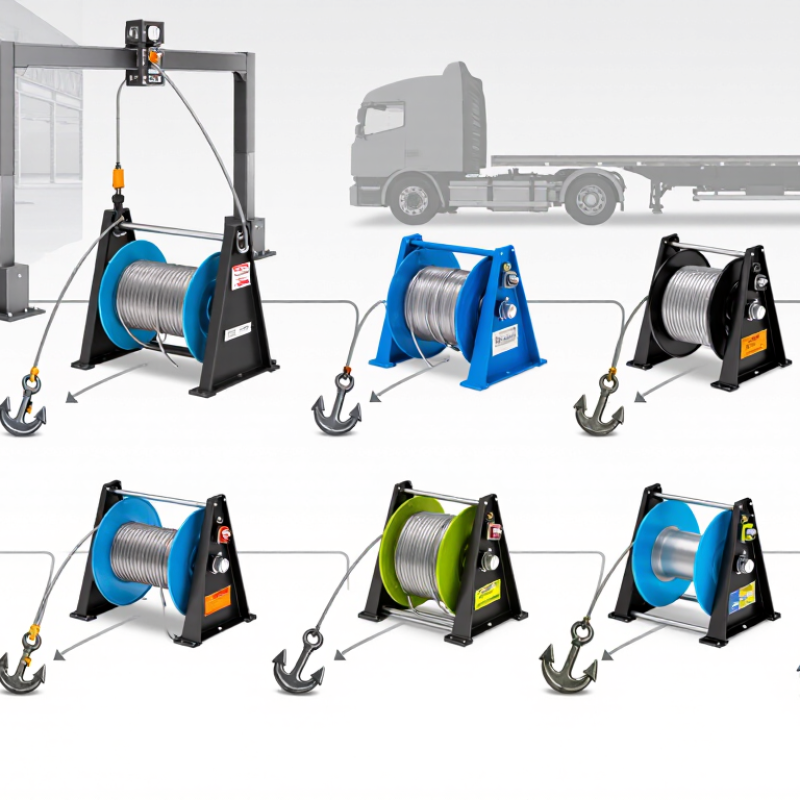
China Top 10 Electric Winch Manufacturers for Global Buyers

Electric Winches: Types, Applications, and Key Performance Features

Electric winches convert motor torque into controlled pulling force. Common designs include planetary-geared recovery winches, worm-geared lifting winches, and compact portable units. They serve vehicle recovery, construction, marine handling, and factory maintenance. The right choice depends on the load path, duty cycle, and working environment—not just the advertised pull rating.

Performance starts with rated line pull, but that figure can mislead. Pull usually falls as rope builds up on the drum. Check rope capacity, first-layer pull, line speed, braking method, and motor thermal protection together. For outdoor sites, enclosure protection and corrosion resistance matter; for repeated lifts, duty rating and cooling matter more.

GWEC’s Global Wind Report 2024 recorded 117 GW of new wind capacity installed worldwide in 2023. That scale highlights the need to move heavy components reliably, though a winch is only one part of a properly engineered lifting system. Small details count.

Tips: Match the winch rating to the actual load and rigging arrangement, then leave a practical safety margin. Measure the working distance before ordering; a full drum can reduce pulling force. Selection is rarely neat, and site conditions are easy to underestimate.

China’s Electric Winch Industry and Its Role in Global Supply

China’s electric-winch supply base is part of a wider machinery ecosystem: motor production, gear machining, steel fabrication, controls, and export logistics. This depth supports varied applications, from vehicle recovery to marine hauling and industrial lifting. The National Bureau of Statistics reported that equipment-manufacturing value added grew 7.7% in 2024. It represented 34.6% of industrial value added among large industrial firms. These figures provide context, not winch-specific output data. The General Administration of Customs reported 15.13 trillion yuan in mechanical and electrical exports in 2024, up 8.7% year on year. That broad category does not isolate electric winches.

For global buyers, supply reliability depends on more than production scale. Compare rated line pull at the first rope layer, duty cycle, brake holding load, ingress protection, and documented load tests. Ask how voltage drop affects performance during a long pull. A warm motor housing after repeated cycles is a practical warning worth investigating. Supplier catalogs can make capacity appear simpler than field use; rope layering and battery condition complicate the picture. That gap deserves scrutiny. Check sample units under realistic loads, and confirm spare-part availability before placing large orders.

How to Evaluate Electric Winch Manufacturers in China

When evaluating electric winch manufacturers in China, begin with the job the winch must perform. Ask for rated line pull, duty cycle, motor voltage, and drum capacity. Pulling force can fall as more cable winds onto the drum, so compare specifications at the same cable layer. A large headline number is not enough.

Request a test report for the exact model, not just a general product brochure. Check brake-holding performance, current draw under load, and operating temperature after repeated cycles. Small details matter. Look at cable diameter, hook safety latch, gearbox sealing, and the finish inside the control box. If possible, review production and inspection records. Photos help, but they cannot show every weld or internal component.

Communication is part of the evaluation. A capable supplier should explain limits clearly and answer questions about installation, maintenance, and spare parts. Ask how warranty claims are handled and whether replacement components can be identified by part number. Samples and factory audits can reveal useful details, though they take time and still have limits. It is easy to focus only on price; that may be a mistake. Compare the full configuration, packaging, documentation, and support before deciding. One overlooked point is whether the stated capacity matches your real operating conditions.

Electric Winch Evaluation: IEC 60529 Water-Protection Ratings

Use the winch enclosure’s declared IP rating to assess protection against water ingress. The chart shows the water-protection digit and the corresponding IEC 60529 test category.

Buyer note: Ask suppliers for the complete IP code and the supporting test report. These water tests are distinct conditions, not a general performance score; IPX8 immersion conditions are agreed between the manufacturer and user. An IP rating does not indicate winch capacity, duty cycle, or corrosion resistance.

Profiles of 10 Chinese Electric Winch Manufacturers

These ten manufacturer profiles show the range of electric winch production in China, from compact units for workshops to heavier models for industrial handling. Their differences matter more than a sales label. Buyers can compare rated line pull, drum capacity, motor power, and duty cycle, then check whether those figures match the intended load and operating pace.

Some manufacturers focus on standard models with common voltage options and straightforward controls. Others offer more configuration choices, such as different wire-rope lengths, mounting bases, or braking systems. Look closely at the details. A clear nameplate, wiring diagram, and inspection record make a supplier easier to evaluate. Ask how the winch performs under repeated lifting, not only during a brief test. Heat can build up quickly.

The profiles also help buyers prepare practical questions about factory testing, spare parts, packaging, and technical support. A polished catalog is useful, but it cannot replace a sample inspection or a review of test documents. That gap deserves attention. Specifications may vary between models, and a higher capacity alone does not guarantee a better fit. Compare the operating conditions, installation space, and expected service frequency before making a shortlist.

Export, Compliance, and After-Sales Considerations for Global Buyers

For global buyers comparing electric winch manufacturers in China, export readiness deserves as much attention as rated capacity. Ask for the exact model’s datasheet, duty cycle, motor details, and test records. Confirm that the stated line pull applies to the intended drum layer; pulling capacity can change as the cable winds. Small details matter.

Compliance is destination-specific. Before placing an order, check applicable machinery and electrical requirements with a qualified local professional. Request clear documents, including an invoice, packing list, country-of-origin information, and any required conformity records. Verify voltage, frequency, plug or wiring arrangements, and language needs for manuals and warning labels. A certificate alone may not settle every customs or installation question. This is easy to overlook.

After-sales support should be agreed in writing, not left to friendly emails. Clarify warranty coverage, response times, return procedures, and who pays freight for replacement parts. Ask whether common items, such as contactors, brake components, and control pendants, can be supplied separately. Keep a spare-parts list and installation photos. Test support before you need it: send a technical question and note the quality of the reply. No supplier is perfect, and a polished brochure cannot guarantee quick service. A little skepticism helps.

China Top 10 Electric Winch Manufacturers for Global Buyers - Export, Compliance, and After-Sales Considerations for Global Buyers

Buyer due-diligence matrix covering ten practical evaluation areas. It is not a ranked list of named manufacturers; product specifications, applicable regulations, and required documentation depend on the winch model and destination market.

No. Evaluation Dimension What Global Buyers Should Verify Useful Evidence or Reference
1 Rated Line Pull and Capacity Confirm rated line pull, the rope layer on which it is specified, duty cycle, and the intended load path. Do not treat line pull as the same as a winch’s safe working load for every lifting application. Model-specific datasheet, load chart, operating manual, and written confirmation of the rating basis.
2 Application and Duty Establish whether the product is intended for pulling, positioning, or lifting. Check operating frequency, expected run time, environment, and any restrictions on personnel lifting. Application questionnaire, duty classification or duty-cycle statement, and operating instructions. Use only equipment approved for the intended lifting use.
3 Rope, Drum, and Mounting Match rope type and diameter, drum capacity, fleet angle, mounting orientation, and foundation loads to the installation. Confirm whether rope and mounting hardware are included. Installation drawing, rope specification, drum-capacity details, and mounting-load information for the selected model.
4 Motor and Electrical Supply Check voltage, frequency, phase, control arrangement, rated current, and motor protection against the site supply. Verify the required operating and ambient conditions. Electrical schematic, motor nameplate data, wiring instructions, and confirmation of the configured supply voltage and frequency.
5 Brake and Safety Functions Review brake type and behavior on power loss, emergency-stop arrangements, limit switches where required, and procedures for inspection and maintenance. Risk assessment, brake documentation, control-system diagrams, and applicable test or inspection records.
6 Ingress Protection and Environment Select enclosure protection and materials to suit dust, water exposure, corrosion, temperature, and installation location. An IP rating alone does not establish suitability for every hazardous or outdoor environment. Declared IP rating tested or assessed under IEC 60529, environmental limits, coating details, and any relevant hazardous-area documentation.
7 Standards and Market Compliance Identify the rules that apply in the destination market and to the specific product configuration. EN 14492-1 is a commonly referenced European standard for power-driven winches; its relevance should be confirmed for the intended equipment and use. Applicable standards list, risk assessment, test reports, technical documentation, and the required conformity declaration. For EU machinery, check the legislation applicable on the placing-on-market date.
8 Export and Shipping Documents Agree the Incoterms® rule and named place, packaging method, shipping marks, gross and net weights, and responsibility for export and import clearance before production is completed. Commercial invoice, packing list, transport document, and certificate of origin when required by the destination or buyer. Confirm document requirements with the carrier and customs broker.
9 Inspection and Acceptance Set acceptance criteria in the purchase contract, including the inspection scope, test conditions, records to be supplied, and how non-conformities will be handled. Approved inspection and test plan, factory test report, serial-number record, and agreed pre-shipment inspection results.
10 Warranty and After-Sales Support Clarify warranty duration and start date, exclusions, claim procedure, technical-support hours, spare-parts lead times, and the availability of manuals and service guidance in the required language. Written warranty terms, spare-parts list, service contact details, maintenance schedule, and a defined process for replacement parts or technical claims.
Site Feedback
Close