Skip to content
Menu Close

China Best 60mm Stainless Tube Manufacturer

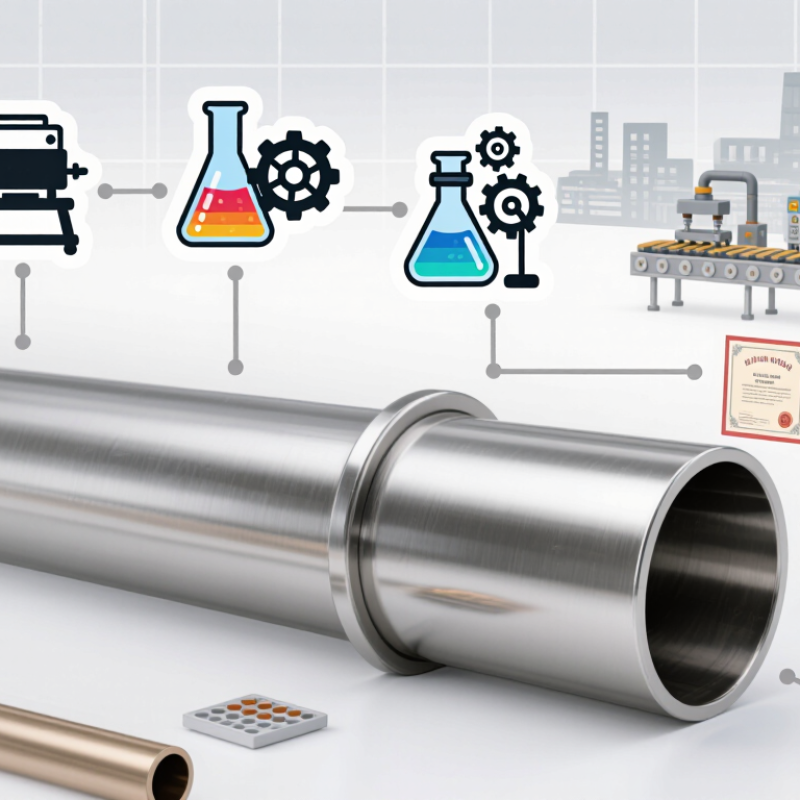
Choosing the China best 60mm Stainless Tube manufacturer requires more than comparing prices. It requires evidence, process control, and consistent delivery. This guide examines suppliers that produce 60mm Stainless Tube for construction, food processing, chemical equipment, and industrial fabrication. Each application demands a different balance of strength, corrosion resistance, surface quality, and dimensional accuracy.

A dependable manufacturer should explain its production route clearly. Options may include welded or seamless tube, depending on pressure, geometry, and budget. Common grades include 304, 316, and 316L stainless steel. Buyers should verify outside diameter, wall thickness, length tolerance, and surface finish. A bright polished tube may suit architectural work, while a brushed finish can hide handling marks more effectively. Small details matter here.

Quality evidence should include material certificates, heat-number traceability, chemical analysis, and mechanical test results. Hydrostatic, eddy-current, or dimensional inspections may also be relevant. Recognized standards such as ASTM, EN, or JIS can support more reliable purchasing decisions. Still, certificates alone do not prove daily consistency. Factory audits, sample checks, and clear communication remain valuable.

No supplier is perfect. Even an experienced mill may face delays, surface scratches, or specification misunderstandings. That reality deserves honest attention. Strong manufacturers respond with corrective action, photographs, inspection records, and practical solutions. They also clarify packaging, export protection, lead times, and after-sales support. With these factors in view, this article helps buyers compare Chinese suppliers with greater confidence and less guesswork.
China Best 60mm Stainless Tube Manufacturer

What Is a 60mm Stainless Steel Tube?

What Is a 60mm Stainless Steel Tube?

A 60mm stainless steel tube usually has an outside diameter of 60 millimeters. However, the term can be incomplete without its wall thickness. A tube measuring 60mm outside may have a 2mm, 3mm, or thicker wall. Its inside diameter changes accordingly. This detail affects weight, pressure capacity, bending, and installation clearance.

Stainless steel tubes are manufactured through welded or seamless processes. Welded tubes suit many structural and fluid-transfer applications, while seamless tubes are often selected for demanding pressure conditions. Common stainless grades include 304 and 316, but the correct choice depends on corrosion exposure, temperature, and fluid contact. In coastal environments, molybdenum-bearing steel can offer better resistance to chloride corrosion. Still, grade selection alone is not enough. Surface finish, heat treatment, dimensional tolerance, and inspection records also matter. I have seen projects delayed because the 60mm measurement referred to the inner diameter, not the outer diameter.

Tips: Confirm the diameter reference, wall thickness, steel grade, and tube length before ordering. Check both ends with a calibrated vernier caliper. Request a material certificate and dimensional inspection report for critical applications. A polished surface may look excellent, but it does not prove pressure performance. Ask about the manufacturing standard and allowable tolerance. Small details can become expensive corrections.

How 60mm Stainless Tubes Are Manufactured in China

China Best 60mm Stainless Tube Manufacturer

How 60mm Stainless Tubes Are Manufactured in China

Manufacturing a 60mm stainless tube begins with the right steel coil. Engineers check grade, surface condition, thickness, and chemical certificates before production. The coil is then slit into controlled-width strips. Small errors here can affect the final diameter.

The strip enters a forming mill, where rollers gradually shape it into a round profile. Edges meet along one continuous seam. TIG or laser welding creates the joint, depending on wall thickness and project requirements. After welding, sizing rollers correct the outside diameter and roundness. Some tubes receive annealing to improve ductility and reduce welding stress. The surface may be polished, brushed, or left mill-finished. It depends on the application.

Quality control happens at several points. Technicians measure diameter, wall thickness, straightness, and surface marks with calibrated instruments. Eddy-current testing can identify hidden seam defects. Hydrostatic testing may be added for pressure service. Each batch should match agreed GB, ASTM, or EN requirements. Traceability matters. Heat numbers, inspection records, and packing details should remain linked.

No production line is perfect. A rushed roller adjustment can leave slight ovality. Poor cleaning can stain the weld area. These issues are preventable, but only with disciplined inspection. Experienced Chinese manufacturers often combine automated equipment with skilled operators. That balance improves consistency, although every order still deserves careful review.

China Best 60mm Stainless Tube Manufacturer — How 60mm Stainless Tubes Are Manufactured in China

In 60mm stainless tube production, material verification is an important quality-control step before strip forming, welding, sizing, heat treatment, pickling, and dimensional inspection. The chart shows the typical chemical composition limits for Type 304 stainless steel, expressed as weight percentages.

Reference: Typical Type 304 stainless steel composition limits commonly specified in ASTM product standards. A value of zero indicates that no minimum content is specified for that element.

Which Stainless Steel Grades Suit Different Applications?

When producing 60mm stainless tubes, grade selection should begin with the fluid, temperature, and installation environment. 304 stainless steel suits indoor frames, food equipment, and dry process lines. It offers balanced corrosion resistance and easy fabrication. However, coastal air and cleaning chemicals can expose its limits. That detail is often underestimated.

316L performs better around chlorides, seawater mist, and pharmaceutical process equipment. Its low carbon content also reduces corrosion risks after welding. For elevated-temperature service, 321 stainless steel can be a practical choice. Titanium stabilization helps it resist sensitization during repeated heating. Still, temperature cycles and weld quality require careful review. 904L may suit highly aggressive chemical environments, but its cost and processing demands are much higher. It should not be selected from a material table alone.

A reliable 60mm tube manufacturer should confirm chemistry through positive material identification and provide traceable test records. Dimensional checks matter too, especially for wall thickness, ovality, and weld alignment. Hydrostatic or eddy-current testing can reveal defects that a clean surface hides. In fabrication work, rushed grade selection remains a common weakness. Engineers sometimes focus on purchase price and overlook cleaning agents, stagnant water, or thermal expansion. The cheapest tube can become the most expensive replacement. Application data should be checked again before production, even when the specification appears familiar.

China Best 60mm Stainless Tube Manufacturer - Which Stainless Steel Grades Suit Different Applications?

Grade selection guide for stainless steel tubes with an approximate 60 mm outside diameter

Stainless Steel Grade Common Standards Typical Chemical Characteristics Approximate Minimum Yield Strength Temperature Capability Corrosion Resistance Recommended 60 mm Tube Applications Key Selection Considerations
304 / 304L ASTM A312, ASTM A269, EN 10217-7 Approximately 18% chromium and 8% nickel; 304L has a lower carbon limit for improved weldability. Approximately 205 MPa for annealed material Suitable for normal service and many moderately elevated-temperature applications. Good general resistance to atmospheric corrosion, food products, and many organic chemicals. Food and beverage lines, architectural tubing, water systems, kitchen equipment, general process piping, and decorative structural tubes. Cost-effective and widely available. Not the preferred choice for high-chloride environments or continuous exposure to seawater.
316 / 316L ASTM A312, ASTM A269, EN 10217-7 Chromium-nickel stainless steel containing molybdenum, which improves resistance to chlorides and pitting. Approximately 205 MPa for annealed material Suitable for normal service and moderately elevated-temperature applications. Better pitting and crevice-corrosion resistance than 304, especially in chloride-containing environments. Marine equipment, pharmaceutical piping, chemical processing, coastal structures, saltwater-related systems, and hygienic tubing. Usually the better choice than 304 where salt, chlorides, cleaning chemicals, or process contamination are concerns.
321 ASTM A312, ASTM A269 Titanium-stabilized austenitic stainless steel designed to reduce chromium-carbide precipitation after heating. Approximately 205 MPa for annealed material Suitable for high-temperature service; exact limits depend on load, oxidation conditions, and design requirements. Good general corrosion resistance with improved resistance to intergranular corrosion after welding or prolonged heating. Exhaust systems, heat exchangers, furnace components, aerospace-related tubing, and high-temperature process lines. Useful when the tube will experience repeated heating or welding and post-weld heat treatment is impractical.
310S ASTM A312, ASTM A269 High-chromium, high-nickel austenitic stainless steel with increased resistance to oxidation at elevated temperatures. Approximately 205 MPa for annealed material Designed for high-temperature furnace and heat-resistant applications; actual limits depend on atmosphere and stress. Very good oxidation resistance in many hot-air environments; not a universal solution for wet chloride corrosion. Furnace tubes, radiant tubes, burner components, heat-treatment equipment, and high-temperature industrial ducting. Choose for heat resistance rather than maximum chloride resistance. Thermal cycling and reducing atmospheres require engineering review.
904L ASTM B677, ASTM A312, EN 10217-7 High-alloy austenitic stainless steel with elevated nickel, molybdenum, chromium, and copper content. Approximately 220 MPa for annealed material Suitable for demanding ambient and elevated-temperature chemical-processing service, subject to design conditions. Excellent resistance to many sulfuric-acid environments and strong resistance to localized corrosion. Chemical processing, acid handling, pollution-control equipment, specialty heat exchangers, and aggressive process piping. Higher material cost and more demanding fabrication. Confirm compatibility with the exact acid concentration, temperature, and flow conditions.
2205 Duplex ASTM A790, ASTM A789, EN 10217-5 Duplex ferritic-austenitic stainless steel containing approximately 22% chromium and 3% molybdenum, with nitrogen added for strength and corrosion resistance. Approximately 450 MPa for solution-annealed material Suitable for moderate-temperature service; prolonged exposure to excessive temperatures can reduce toughness and corrosion performance. Excellent resistance to chloride stress-corrosion cracking, pitting, and crevice corrosion. Oil and gas piping, offshore systems, desalination equipment, chemical tanks, seawater service, and high-pressure process lines. Provides much higher strength than 304L or 316L, allowing potential wall-thickness reduction. Welding and heat input must be carefully controlled.
410 ASTM A268, ASTM A269 Martensitic stainless steel containing approximately 11.5–13.5% chromium with low nickel content. Typically higher than austenitic grades after heat treatment; final strength depends strongly on tempering. Suitable for moderate-temperature mechanical and wear-resistant service. Moderate corrosion resistance; lower than 304, 316, and duplex 2205 in many wet environments. Valve components, mechanical tubes, pump parts, shafts, wear-resistant supports, and equipment exposed to mild atmospheric corrosion. Can be heat treated for higher hardness and strength. Avoid where high ductility, severe chloride exposure, or strong chemical resistance is required.
Technical note: The stated strength values are typical minimum values for annealed or solution-annealed material and may vary by product standard, wall thickness, heat treatment, and delivery condition. Final grade selection should consider the actual medium, chloride or acid concentration, operating temperature, pressure, welding method, and applicable piping code.

How to Assess a Reliable Chinese Tube Manufacturer

China Best 60mm Stainless Tube Manufacturer

How to Assess a Reliable Chinese Tube Manufacturer

A dependable 60mm stainless tube supplier should prove performance, not just display machinery. The International Stainless Steel Forum reported global stainless crude steel production of about 58.4 million tonnes in 2023. China represented the largest production share. Scale helps, but it does not guarantee stable tube quality.

Request heat-specific mill certificates before placing a large order. Check chemical composition, yield strength, tensile strength, and elongation against ASTM A269 or ASTM A554 requirements. For process tubing, confirm whether the finished tube follows the required dimensional standard. Measure outside diameter with a calibrated micrometer. A 60mm tube needs consistent wall thickness, especially near welded areas.

Ask for records from eddy-current testing, hydrostatic testing, and surface inspection. A reliable factory should explain test frequency and acceptance limits clearly. Visit the production line if possible. Look for clean polishing stations, protected storage, and traceable heat numbers on bundles.

Documentation matters.

The World Steel Association recorded China’s crude steel output at roughly 1.02 billion tonnes in 2023. That capacity supports competitive sourcing, but it can also hide uneven management. I would not rely on certificates alone. Compare a random sample with the packing list, then arrange independent inspection before shipment. One practical weakness remains: small suppliers may outsource polishing or testing without stating it clearly. Ask directly, and record every answer.

What Quality, Customization, and Export Services Matter?

China Best 60mm Stainless Tube Manufacturer

Quality begins with a clear definition of 60mm. It may describe outside diameter, not inside diameter. A reliable manufacturer confirms this detail before quoting. Inspect wall thickness, ovality, surface finish, and straightness. Request material certificates for every production batch. Grades such as 304 and 316L suit different environments. Chemical composition and mechanical results should match recognized standards. Random samples should receive dimensional and surface checks. Small scratches can become serious problems after welding or polishing.

Customization matters when standard tubes do not fit your assembly. A capable factory can adjust length, wall thickness, end treatment, and polishing level. Laser cutting, drilling, bending, and deburring may reduce work at your facility. Send drawings with tolerances and application details. This prevents attractive but unusable quotations. I have seen projects lose time because “60mm” lacked a tolerance note. That mistake is avoidable.

Export service shows whether production knowledge becomes practical delivery. Ask for seaworthy packaging, moisture protection, clear labels, and complete packing lists. Mill test certificates, inspection reports, and origin documents should be prepared accurately. Confirm production lead time, loading port, shipping terms, and replacement procedures. Communication should include measurable updates, not vague promises. No supplier performs perfectly every time. Honest correction matters more than polished sales language. Before placing a large order, approve a sample and inspect it independently.

Site Feedback
Close