Choosing the China Best Ion Tester for Accurate Results? The answer depends on your testing purpose, sample type, and required accuracy. A device for drinking water may differ from one used in soil, wastewater, or laboratory research. Practical evaluation matters more than a polished product page.
An Ion Tester should provide stable readings, clear calibration steps, and dependable electrode performance. During routine testing, small details become important. A clean probe, fresh calibration solution, and steady sample temperature can change the result. Good instruments usually support relevant ion-selective electrodes, automatic temperature compensation, and data records. However, these features do not guarantee accuracy by themselves. The operator’s technique still matters.
Look for manufacturers with documented quality systems, traceable reference standards, and responsive technical support. Independent test reports, factory inspection records, and long-term user feedback can reveal more than advertising claims. Ask how often the instrument needs calibration and how replacement sensors are supplied. Ask difficult questions.
In real use, even a high-quality tester may produce inconsistent results when the sample is contaminated or the electrode is poorly maintained. That limitation deserves honest attention. A reliable supplier should explain measurement range, resolution, repeatability, and known interferences. It should also provide practical instructions rather than vague promises. This guide compares key technical and purchasing factors, helping readers assess Chinese Ion Tester manufacturers with greater confidence. Accuracy is not a single feature. It is a process built through equipment, method, maintenance, and careful judgment.
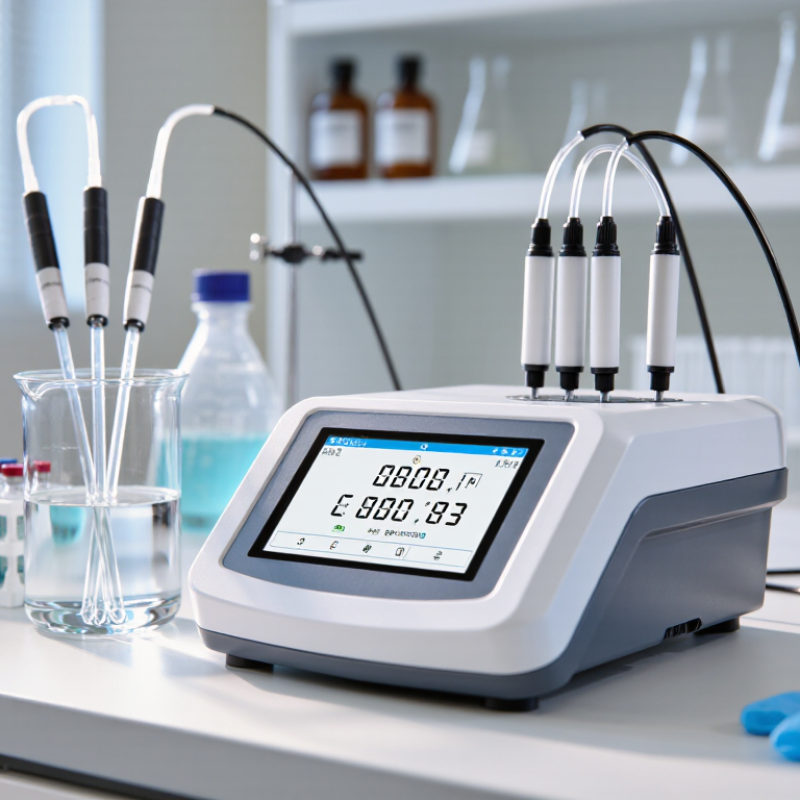
China Best Ion Tester for Accurate Results?
An ion tester measures whether an ionizer neutralizes electrostatic charge effectively. It usually checks two values: discharge time and ion balance. Discharge time shows how quickly a charged surface loses voltage. Ion balance shows whether positive and negative ions remain evenly matched.
The common tool is a charged plate monitor. Its conductive plate is charged to about +1,000 volts or -1,000 volts. The tester then records the time needed to fall to approximately 100 volts. These test points are widely used in ANSI/ESD STM3.1 procedures from the ESD Association. IEC 61340-5-1 also emphasizes ionizer verification within an electrostatic control program. Results depend on airflow, distance, humidity, and fan speed.
Small details matter.
A practical test places the sensor where sensitive work actually occurs, not only beside the ionizer. Record both polarities, because one side may decay faster. Compare readings at several positions across the workbench. ESD Association guidance, including TR53 verification principles, supports documented measurements instead of visual inspection alone. Still, a single reading can mislead. Dust on the emitter, an aging sensor, or poor grounding may distort the result. Calibration records deserve attention too. Accuracy is not just a screen number. It is a repeatable measurement supported by controlled conditions.
This chart shows the ideal response of an ion-selective electrode to a monovalent ion at 25 °C. The voltage changes by approximately 59.16 mV for every tenfold change in ion activity, according to the Nernst equation. Actual ion tester readings can vary with temperature, calibration quality, ionic strength, and electrode condition.
China-made ion testers now offer practical features for laboratories, water testing, agriculture, and process control. The strongest models combine ion-selective electrodes with automatic temperature compensation. This helps readings remain stable when sample temperature changes. A clear display matters, especially beside a wet bench. Some instruments also store calibration records and export results for later review.
Accuracy depends on more than a low detection limit. Look for multi-point calibration, replaceable electrodes, stable reference systems, and support for common ion ranges. A waterproof housing can protect the meter from splashes. However, no tester removes every source of uncertainty. Dirty samples, expired standards, or poor electrode storage can still distort results. I have found that careful preparation often matters more than a long feature list.
Tips: Calibrate before important tests, then check the reading with a known standard. Rinse the electrode with purified water, but do not wipe its sensitive surface harshly. Keep a simple testing log with temperature, sample condition, and calibration time. Review unusual results instead of accepting them immediately. China-made equipment can be reliable, but buyers should verify test reports, calibration traceability, warranty terms, and after-sales technical support. A small omission in documentation may become a large problem during routine quality checks.
China Best Ion Tester for Accurate Results?
When comparing ion tester accuracy, do not trust a single digital reading. Check the tester against a traceable reference, then repeat measurements at different distances. ANSI/ESD STM3.1 describes ionizer testing through offset voltage and discharge time. Common production limits are within ±35 volts for balance and below 20 seconds for discharge, but site requirements may be stricter. These figures are useful benchmarks, not universal guarantees.
Reliability depends on repeatability. Test the same ionizer three times, using identical humidity, airflow, and sensor position. Record the temperature and relative humidity beside every result. IEC 61340-5-1:2016 emphasizes controlled electrostatic protection programs, while TR53 compliance guidance supports documented verification and periodic testing. A tester that drifts after warm-up may look accurate during the first minute. That detail is easy to miss.
Look for resolution, calibration records, response time, and sensor durability. Compare readings before and after a full shift, not only in a quiet laboratory. In practice, clean displays can still mislead. Dust, fan turbulence, and a poorly grounded reference plate can distort results. I would also question an unusually perfect result. Real measurements vary slightly. That variation deserves investigation, not automatic rejection. A practical comparison should include repeatability, environmental tolerance, and evidence of calibration traceability, rather than price or screen size alone.
Ion testing equipment supports decisions where invisible chemical changes create visible problems. In drinking water analysis, technicians measure chloride, fluoride, nitrate, and hardness ions before treatment adjustments. A portable ion tester can check a field sample beside a storage tank. This helps identify changes that laboratory schedules may miss. Results should still be confirmed with a validated laboratory method when decisions carry high risk.
Manufacturers use ion testing during pharmaceutical, food, and chemical production. A food processor may monitor sodium levels in a brine line within minutes. A pharmaceutical laboratory can examine ionic impurities in purified water and raw materials. Process engineers also test cooling systems, boiler water, and metal surfaces for corrosive ions. Ion chromatography offers detailed separation, while ion-selective electrodes provide faster routine checks. The better choice depends on concentration range, sample condition, and required detection limits.
Calibration is not a formality. Temperature, contamination, and an aging sensor can shift readings quietly. I have found that clean containers and consistent sampling often matter more than expensive features. No test is perfect. A hurried rinse can dilute the next sample, and a single reading may look convincing while being wrong. Record the sample temperature, calibration time, electrode condition, and any unusual color or odor. These details make ion results more traceable and easier to challenge when a result does not fit the process.
China Best Ion Tester for Accurate Results?
How to Choose the Right Ion Tester in China
Choosing an ion tester in China should begin with the sample, not the price. A water laboratory may need an ion-selective electrode meter for fluoride, chloride, nitrate, or ammonium. A production site may require faster readings and stronger protection against dust and moisture. Match the measuring range to your real samples. A wide range sounds useful, but it may reduce sensitivity at low concentrations.
Check the instrument’s accuracy, resolution, calibration method, and temperature compensation. Ask for test data using certified reference solutions, not only promotional specifications. A reliable supplier should provide calibration records, operating instructions, electrode information, and clear after-sales support. Local technical service matters when an electrode becomes unstable during daily testing. Request a sample test before ordering several units. Watch the result closely.
Small details affect accuracy. Clean the electrode between samples. Allow the reading to stabilize. Record temperature, calibration slope, sample condition, and operator name. Matrix effects can change results, especially in salty, acidic, or colored liquids. A tester that performs well in clean water may behave differently in wastewater or process fluids. That difference is easy to miss.
Do not trust one reading.
Repeat the test.
A practical weakness remains: many buyers compare only price and measuring range. I would also review replacement electrode costs, calibration frequency, data export options, and repair response time. Ask whether the supplier can demonstrate repeatability under your working conditions. The best choice is the tester that produces dependable results in your actual samples, not merely impressive numbers on a specification sheet.
Practical comparison of common ion-selective testing options and the main specifications to verify before purchasing.
| Ion or Parameter | Measurement Technology | Typical Working Range* | Common Resolution | Calibration Requirement | Temperature Control | Recommended Applications |
|---|---|---|---|---|---|---|
| Hydrogen Ion (pH) | Glass combination electrode measuring hydrogen-ion activity | pH 0 to 14, depending on electrode design and sample matrix | 0.01 pH unit for routine testing; 0.001 pH unit on higher-resolution meters | Two- or three-point calibration using certified buffer solutions such as pH 4.01, 6.86 or 7.00, and 9.18 or 10.01 | Automatic temperature compensation is strongly recommended | Drinking water, wastewater, aquaculture, food processing, laboratories |
| Fluoride (F⁻) | Fluoride ion-selective electrode, usually combined with a reference electrode | Approximately 0.02 to 1,900 mg/L, electrode dependent | 0.01 to 0.1 mg/L at low concentrations | At least two standards covering the expected sample range; use ionic-strength adjustment when required | Temperature measurement is useful because electrode slope changes with temperature | Drinking-water monitoring, mineral analysis, industrial process control |
| Nitrate (NO₃⁻) | Nitrate ion-selective electrode or laboratory nitrate electrode system | Approximately 0.6 to 6,200 mg/L, depending on electrode and matrix | 0.1 to 1 mg/L for many field applications | Use two or more nitrate standards; verify recovery with an independent check standard | Automatic temperature compensation improves repeatability | Agricultural runoff, aquaculture, groundwater, fertilizers, wastewater |
| Chloride (Cl⁻) | Chloride ion-selective electrode or argentometric titration system | Approximately 1.8 to 35,500 mg/L, depending on electrode design | 1 to 10 mg/L in routine portable testing | Two- or three-point calibration; avoid standards that are far outside the sample concentration | Temperature compensation is helpful for consistent results across field conditions | Water treatment, desalination, food brine, concrete and environmental testing |
| Calcium (Ca²⁺) | Calcium ion-selective electrode | Approximately 0.4 to 40,000 mg/L, electrode dependent | 0.1 to 1 mg/L at low concentrations | Calibrate across the expected calcium range; control ionic strength for difficult samples | Temperature compensation is recommended for laboratory and process measurements | Hardness screening, boiler water, aquaculture, cement and mineral analysis |
| Ammonium (NH₄⁺) | Ammonium ion-selective electrode with pH and ionic-strength control | Approximately 0.2 to 18,000 mg/L, depending on electrode and sample preparation | 0.1 to 1 mg/L for common water-quality instruments | Use fresh standards and maintain a suitable pH; check for interference from potassium and amines | Temperature compensation is recommended for improved field repeatability | Wastewater, aquaculture, fertilizer solutions, compost and environmental monitoring |
| Potassium (K⁺) | Potassium ion-selective electrode | Approximately 0.04 to 39,000 mg/L, depending on the electrode | 0.1 to 1 mg/L in many portable systems | Perform multi-point calibration and verify selectivity in samples containing sodium | Temperature measurement is recommended for accurate slope correction | Soil extracts, fertilizers, hydroponics, food and beverage analysis |
| Conductivity / TDS Indicator | Electrolytic conductivity cell; TDS is calculated using a conversion factor | Approximately 0 to 200 mS/cm, depending on cell constant and instrument range | 1 µS/cm at low range; 0.01 to 0.1 mS/cm at higher ranges | Use a certified conductivity standard near the expected sample level | Automatic temperature compensation to a reference temperature, commonly 25°C | Water purification, hydroponics, cooling systems, wastewater and quality screening |
| Oxidation-Reduction Potential (ORP) | Inert metal electrode with a reference electrode measuring electrical potential | Typically about -1,000 to +1,000 mV, instrument dependent | 1 mV for routine portable meters | Verify with an ORP standard solution; allow the reading to stabilize before recording | Temperature compensation does not replace proper ORP calibration and sample control | Disinfection control, swimming pools, wastewater and chemical processes |