China Best Date Bar Extrusion Line Manufacturer?
Choosing a China-based Date Bar Extrusion Line manufacturer takes more than comparing prices or machine photos. A reliable supplier should explain how each stage works, from ingredient feeding and mixing to forming, cutting, cooling, and packaging. The right configuration depends on the date paste, added ingredients, target bar size, and expected output. A line that performs well with one recipe may struggle with another. Details matter.
Ask for a production trial using ingredients close to your own. Watch how evenly the bars form, whether the cutter leaves clean edges, and how quickly operators can adjust settings. Request clear information about food-contact materials, cleaning access, electrical requirements, spare parts, and after-sales support. These points are easier to verify than broad claims about quality. A polished brochure is not proof.
There is no single best manufacturer for every buyer. Compare documented specifications, test results, and service arrangements before making a decision. If possible, speak with customers who run similar products. Their day-to-day experience can reveal issues a factory tour may miss. Even then, comparisons are imperfect; recipes and operating conditions differ. Keep that in mind. This guide examines practical criteria for assessing a Date Bar Extrusion Line supplier in China, while recognizing that the final choice depends on your production needs, budget, and willingness to validate the equipment before purchase.
What Is a Date Bar Extrusion Line?
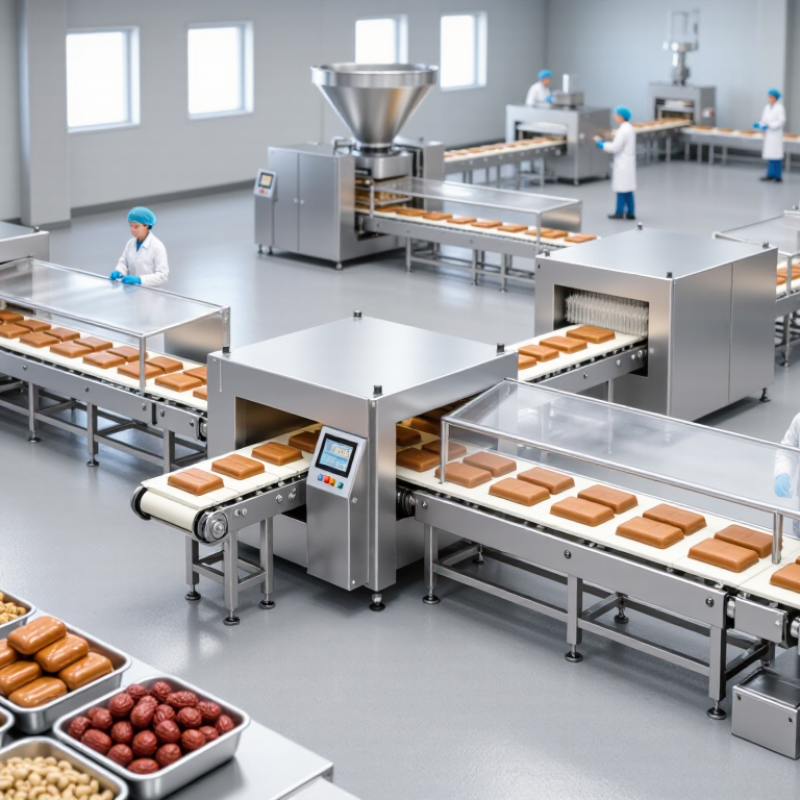
A date bar extrusion line is a connected set of machines that turns prepared date mixture into evenly shaped bars. It typically includes a mixer or conditioner, a feeder, an extruder, and a cutting unit. Some setups add cooling, coating, or packaging equipment. The exact layout depends on the recipe and the desired bar size.
In the mixer, dates and other ingredients are blended until the mass feeds consistently. The texture can change with moisture, fruit variety, and temperature, so operators often make small adjustments during production.
The extruder presses the mixture through a shaped die, forming a continuous strip. A cutter then portions it into bars. Small details matter. If the mixture is too sticky, it may cling to the die or cutter; if too dry, the edges can crack.
Cleaning access and food-contact surfaces also deserve attention when comparing equipment. A line that runs well in a short trial may behave differently over a full shift. It takes patience.
Checking bar weight, shape, and texture at regular intervals helps reveal problems early, though no single setting suits every formula.
How Does Date Bar Extrusion and Forming Work?
How Does Date Bar Extrusion and Forming Work?
Date bar production begins with inspection and pitting, followed by grinding the fruit into a workable paste. FAOSTAT’s Crops and Livestock Products database reports global date production of about 9.7 million tonnes in 2022. That scale does not mean every batch behaves alike. Variety, ripeness, and storage conditions affect paste firmness and stickiness. That matters. Dry ingredients are blended in gradually, while moisture is adjusted to help the mixture hold together without becoming overly soft.
The conditioned mixture moves from a hopper into a screw extruder. The screw conveys and compresses the paste, pushing it through a die that sets the bar’s width and thickness. A cutter or guillotine then sets the length; cooling may help the bars keep their shape before packaging. Operators monitor feed rate, screw speed, product temperature, and piece weight. These settings interact, so changing one can create new problems. Sticky paste may smear at the cutter, while a firmer mix can strain the feed system. A weakness in many setups is inconsistent batch logging. Recording adjustments makes troubleshooting more reliable, though it cannot remove natural variation in the fruit.
How to Evaluate Date Bar Extrusion Line Manufacturers in China?
China Best Date Bar Extrusion Line Manufacturer?
How to Evaluate Date Bar Extrusion Line Manufacturers in China?
Choosing a date bar extrusion line manufacturer takes more than comparing quoted speeds. FAOSTAT recorded about 9.66 million tonnes of global date production in 2022, showing the scale of the raw-material supply chain. But date paste varies in moisture, fiber, and stickiness. Ask manufacturers to run your own paste through a pilot line. Watch the feed hopper, rollers, and cutter; uneven flow can create bars with ragged edges or inconsistent weights. Details matter.
Check whether the supplier provides documented capacity under stated product conditions, not just a maximum speed. Request bar-weight tolerances, changeover time, and sanitation procedures in writing. Inspect food-contact surfaces, welds, and tool-free access points. Ask for sample bars after a sustained run, not only a polished demonstration. A machine may perform well briefly, then drift as warm paste builds up. This is easy to overlook.
Tips: Send a representative paste sample and target bar dimensions before requesting a quotation. Ask for a recorded test, spare-parts list, and operator training plan. Compare service response times across time zones. Trust clear evidence over promises; even a thorough evaluation can miss a practical detail.
How to Evaluate Date Bar Extrusion Line Manufacturers in China
Suggested 100-point evaluation framework—not a survey or ranking of manufacturers. Compare documented machine performance, food-contact material compliance, after-sales support, customization capability, and total cost using the same criteria for every supplier.
What Production Needs Should Buyers Consider?
Before comparing a date bar extrusion line, define the product you actually plan to make. Record the date paste’s moisture, fiber level, and temperature, since each can affect feeding and shape. Set target bar width, thickness, length, and weight, then test the recipe at realistic speeds. Small variations matter. A sticky filling may need gentler feeding and more frequent cleaning than a firm mixture. Ask suppliers how the machine handles recipe changes, start-up waste, and uneven ingredient flow. These details are easy to miss.
Capacity should mean saleable bars per hour, not simply the extruder’s highest stated output. Include downstream cooling, cutting, and packaging when estimating line speed. Check whether operators can adjust pressure, temperature, and belt speed without stopping production. Also measure floor space, electrical supply, cleaning access, and the route for removing worn parts. Request a trial using your own date mixture, with agreed checks for weight variation, shape, and surface cracks. Keep the test records. Ask for manuals, operator training, spare-part lead times, and a clear maintenance schedule. Not every feature pays back. A simpler line may be easier to run, though changeovers could take longer.