Skip to content
Menu Close

China Best Car Window Blackout Film Suppliers?

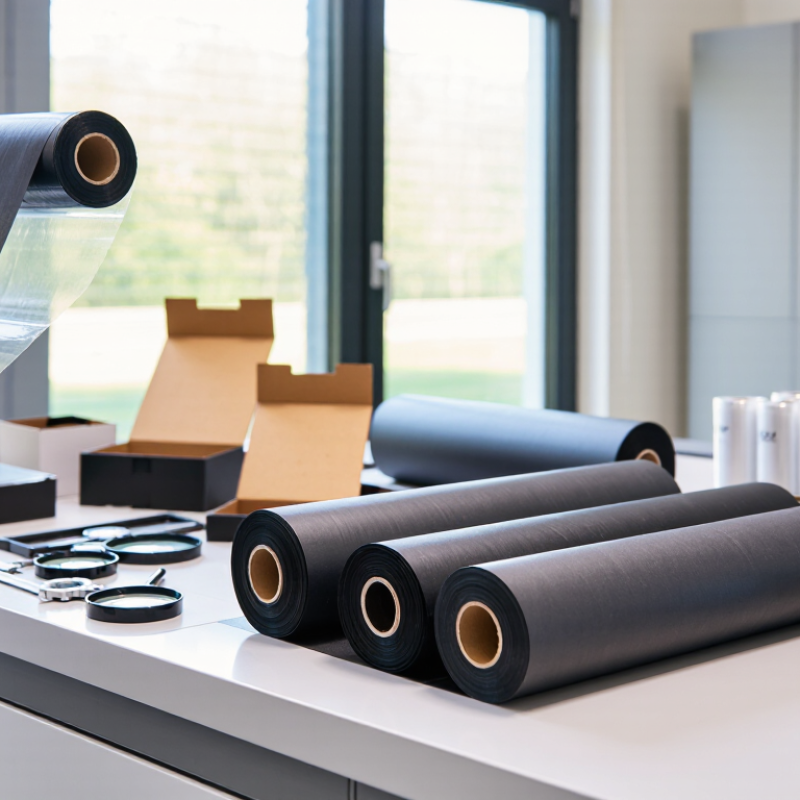
Finding reliable China suppliers for Car Window Blackout Film takes more than comparing prices. A polished product page can look convincing, but the film itself tells a fuller story. Check sample rolls for even color, clean edges, and a smooth adhesive layer. Look closely for haze, bubbles, or uneven shading after installation. Small flaws matter.

A careful supplier should explain the film’s construction, available shades, roll dimensions, and quality-control process. Ask for current product specifications and test reports, then confirm that they match the exact film being quoted. Claims about heat rejection or ultraviolet protection should be supported by clear test details, not vague percentages. Request samples before placing a large order. Test them under daylight and cabin lighting, since appearance can change with viewing conditions. Also discuss packaging, lead times, replacement terms, and how production batches are tracked. These details can reveal how consistently a supplier handles routine orders.

There is no single best supplier for every buyer. A factory suited to large wholesale orders may not fit a small custom project. Compare communication, documentation, sample quality, and after-sales support together. Ask direct questions. Keep records of the answers. Vehicle window-film requirements differ by market, so buyers should check applicable local rules before selecting a shade or planning installation. Supplier claims deserve a second look, too. That extra caution may slow the search, but it can prevent avoidable surprises once the film reaches the workshop.
China Best Car Window Blackout Film Suppliers?

What Is Car Window Blackout Film and How Is It Used?

Car window blackout film is an opaque or near-opaque sheet fitted over glass to greatly reduce light and outside visibility. Unlike ordinary tinted film, it is designed to block the view through a window, not simply soften glare. Some versions use adhesive; others rely on static cling and can be removed more easily. Check the product instructions, since fitting methods differ.

It can provide privacy in a parked vehicle, cover a cargo-area window, or reduce sunlight entering a camper. Not every window is suitable. A covered pane can limit a driver’s view, so use blackout film only where visibility is not needed, and check local vehicle requirements. Rear-window heating lines also need care. Scraping or pressing too hard may damage them.

Installation starts with clean, dry glass and accurate measurements. Dust trapped beneath the film can leave visible specks, even after careful work. If the instructions permit, a light mist of application solution helps position the sheet before a squeegee pushes out water and air. Work slowly around curved edges. It sounds simple. In practice, a small crease can be stubborn, and removing the film later may leave adhesive that needs gentle cleaning.

Car Window Blackout Film: Visible Light Transmission

How to read this chart: Visible Light Transmission (VLT) is the percentage of visible light that passes through a window and its film. The blocked-light values shown are calculated as 100% minus VLT. These are illustrative tint-film levels, not measurements of specific products. Fully opaque blackout film can transmit almost no visible light. Film is commonly applied to vehicle glass for privacy, glare reduction, or light control; check local regulations before installation.

What Types of Blackout Film Do Chinese Suppliers Offer?

China Best Car Window Blackout Film Suppliers?

What Types of Blackout Film Do Chinese Suppliers Offer?

Chinese suppliers typically offer several film constructions, and “blackout” can mean very different things. Dyed film gives glass a darker appearance at a lower cost, but its color may fade with prolonged sun exposure. Carbon film offers a darker, more stable finish. Ceramic film uses non-metallic particles and is often selected when heat rejection and signal compatibility matter. The trade-off is real. Ask for measured visible-light transmission and solar-energy data, not just a shade sample.

For near-opaque coverage, suppliers may offer opaque adhesive film or removable static-cling sheets. These suit limited privacy or temporary applications, but they can seriously restrict a driver’s view if fitted to viewing areas. Confirm the intended glass location and check local visibility requirements before ordering.

The IEA’s Global EV Outlook 2024 reports nearly 14 million electric-car sales in 2023, about 18% of global car sales. That signals a changing vehicle mix, but it does not prove one film type performs best across every cabin or climate.

How to Evaluate Chinese Car Window Film Suppliers

China Best Car Window Blackout Film Suppliers?

How to Evaluate Chinese Car Window Film Suppliers

When evaluating Chinese car window film suppliers, look beyond product photos and price lists. Ask for a current technical sheet covering film thickness, visible light transmission, UV performance, and adhesive type. Request samples from more than one production batch. Compare their shade, edge finish, and clarity under daylight and indoor lighting. Details matter. A dark sample may look uniform on a desk but reveal haze when held against a bright window. Ask how performance figures were tested, and whether the stated results apply to the exact film you are considering.

Check the supplier’s quality process, not only its showroom. Ask how incoming materials, production batches, and finished rolls are inspected. Request installation guidance, packaging details, and written warranty terms. Confirm that product specifications suit your intended market and vehicle applications. A reliable supplier should answer technical questions clearly and provide consistent records. Slow replies are not proof of poor quality, but repeated vague answers deserve attention. No supplier is flawless. I would still compare a second sample before placing a large order, even when the first one looks convincing.

What Certifications and Quality Checks Should Buyers Review?

When comparing China-based car window blackout film suppliers, review evidence, not just certificate logos. Ask for current test reports tied to the exact film type, thickness, and production batch. A factory’s ISO 9001 quality-management certificate can indicate controlled processes, but it does not prove that a film meets specific performance claims. Check the issuing body, validity dates, and product scope. Reports from an ISO/IEC 17025-accredited laboratory are more useful when the tested sample matches the goods you will receive.

Look for measured visible-light transmission, UV rejection, haze, adhesion, and resistance to heat and moisture. These figures affect both appearance and long-term use. Request sample pieces and inspect them under daylight and indoor lighting. Check for bubbles, uneven tint, edge lifting, and color changes after exposure. Small defects matter. Ask how the supplier controls batch consistency and handles failed inspections. A clear answer should include inspection records, sampling methods, and corrective steps, not vague promises.

I would also compare the label and test report with the packaging and purchase documents. Verify the applicable vehicle-glazing requirements in your destination market before ordering; acceptable tint levels can differ. One imperfect sample is not proof of poor production, but it is a reason to ask for another batch and clearer records.

China Best Car Window Blackout Film Suppliers? - What Certifications and Quality Checks Should Buyers Review?

Supplier qualification checklist — compare documented evidence and samples rather than relying on claims or a product label. “Blackout” describes a level of light blocking, not a universal automotive approval.

Review area What buyers should verify Evidence to request Buyer check / caution
Quality management Whether the manufacturing site has a documented quality system and whether its scope covers the relevant film products and processes. Current ISO 9001 certificate; certification body, site address, scope, validity, and certificate status confirmed with the issuer or its public directory. ISO 9001 is a quality-management-system certification, not proof that a particular film meets a performance specification. IATF 16949 is automotive-specific; verify its applicability and certificate scope rather than assuming it is required for every film supplier.
Laboratory competence Who performed each test, which method was used, and whether the results relate to the exact film construction and production lot offered. Full test reports with sample identification, date, method, results, and laboratory details; where relevant, verify the lab’s ISO/IEC 17025 accreditation and accredited test scope. A laboratory accreditation applies to specified tests and methods; it does not automatically certify the product.
Vehicle-glazing regulations Whether the intended vehicle, glazing position, installation, and destination market allow the proposed film and resulting visible-light transmittance (VLT). Applicable regulatory documents or approval evidence for the intended market, plus VLT results for the finished glass-and-film combination where required. Requirements differ by country and window position. For example, U.S. FMVSS No. 205 addresses glazing materials; UNECE Regulation No. 43 addresses safety glazing. Confirm whether the specific film and installation are permitted. Check local tint rules before using an opaque film on vehicle windows.
Visible light, haze, and optical quality VLT, haze, clarity, color uniformity, distortion, and appearance across the roll and after installation. A written product specification and test results using an identified method; ASTM D1003 may be relevant to haze and luminous transmittance of transparent plastics. Set acceptance limits in the purchase specification. VLT measured on film alone may differ from VLT through the film installed on glazing.
Solar-performance claims The exact meaning and test conditions behind claims for UV rejection, infrared rejection, solar-energy rejection, or total solar energy rejected (TSER). Method, wavelength range, sample construction, and full test data; confirm that figures refer to the offered product, not a different sample or test setup. These metrics are not interchangeable. Compare results only when the methods and test conditions are comparable; specify the required performance and test method in the contract.
Adhesion and installation behavior Adhesive consistency, liner release, shrinking and forming behavior, edge lift, bubbling, and compatibility with the intended glass and installation process. Installation instructions, adhesive and construction details, representative samples, and agreed acceptance criteria from an installation trial. Test samples under realistic conditions and follow the supplier’s stated curing and installation instructions. Appearance and adhesion can depend on the installer and substrate.
Durability and surface resistance Resistance to scratching, abrasion, heat, humidity, sunlight exposure, fading, cracking, and delamination over the intended service conditions. Test reports with methods and exposure conditions; ASTM D1044 may be relevant to abrasion of transparent plastics, and ISO 4892-2 may be used for xenon-arc exposure of plastics. Accelerated tests do not by themselves establish a precise real-world service life. Agree on performance criteria, warranty terms, and exclusions.
Chemical and material declarations Whether materials and chemical substances meet the legal requirements of the destination market and the buyer’s restricted-substance policy. Current material declarations and supporting test documents as appropriate, including applicable REACH or RoHS information when relevant to the product and market. REACH and RoHS have specific scopes and are not general quality certifications. Confirm applicability to the product and intended use.
Production control and traceability Whether each roll can be traced to its production batch, raw materials, inspection records, and release decision. Sample roll labels, batch records, certificates of analysis or inspection, defect-handling procedure, and a documented process for corrective action. Check that the lot identification on the documents matches the delivered goods and the approved sample.
Pre-shipment inspection and packaging Roll width and length, winding, edge condition, surface defects, labeling, moisture protection, and damage prevention during transport. A written inspection plan, inspection records tied to the shipment, approved packaging specification, and clear sampling and defect-acceptance criteria. Agree on inspection timing and remedies for nonconforming goods before placing the order.
Supplier identity and commercial documents Whether the contracting entity, payment beneficiary, manufacturing site, and export documents are consistent and verifiable. Business registration details, manufacturing-site information, invoice and packing-list samples, and a factory audit or independent verification where appropriate. Verify documents independently and confirm who is responsible for production, inspection, warranty, and export. Do not treat a trading address as proof of factory capability.

Practical buying rule: Approve a representative sample, define measurable specifications and test methods in the purchase order, and require production-lot traceability and shipment inspection. Always confirm local road-use and glazing requirements before selecting blackout film.

How to Compare Pricing, Customization, and After-Sales Support

When comparing car window blackout film suppliers, look beyond the quoted price. Ask whether it covers film only or also packaging, sample costs, and shipping. A low quote can hide a high minimum order. Check the film’s thickness, roll width, adhesive type, and stated light-blocking performance. Request a written specification, not just a sales description. Small details matter.

Customization should be confirmed with a sample. Ask whether the supplier can adjust roll sizes, backing liners, or private packaging, and how those changes affect cost and lead time. Compare samples under the same indoor light, then check for bubbles, uneven coating, and clean edges after application. Samples help. Also consider how the film may affect visibility, and verify that the intended use meets local requirements.

After-sales support is easier to judge through specific questions. Ask how defects are documented, what evidence is needed for a claim, and how replacement rolls are shipped. Get warranty terms and response times in writing. Good support is practical. A spreadsheet cannot show how clearly a supplier handles a damaged shipment, so keep the first order manageable. I would still treat polished samples cautiously; production batches can differ. Compare total cost, consistency, and support together, rather than choosing the lowest price alone.

Site Feedback
Close