Skip to content
Menu Close

China Best Hydraulic Final Drive Manufacturer and Supplier

Choosing a Hydraulic Final Drive supplier in China requires more than comparing prices. The drive must match the machine’s weight, travel speed, torque needs, and mounting dimensions. It converts hydraulic pressure into controlled movement at the track or wheel. A mismatch can cause poor performance, excess heat, or premature wear. Details matter.

China has manufacturers serving excavator, drilling, and other mobile-equipment markets. Their products and support can vary, so buyers should verify specifications rather than rely on a catalog image. Ask for rated torque, displacement, pressure limits, reduction ratio, and compatible machine models. Request clear drawings and installation guidance. Check whether the supplier can explain its inspection process and provide relevant test records. Numbers tell a story.

For a project, discuss operating conditions, such as frequent turning, steep ground, or long travel cycles. These details help a manufacturer recommend a suitable unit and identify possible limitations. A good supplier should answer technical questions plainly and describe warranty terms, spare-parts availability, and after-sales support. Not every catalog answer is complete, and some details may need follow-up. That deserves attention. This guide explores how to assess China-based Hydraulic Final Drive manufacturers and suppliers, compare practical capabilities, and ask better questions before placing an order.
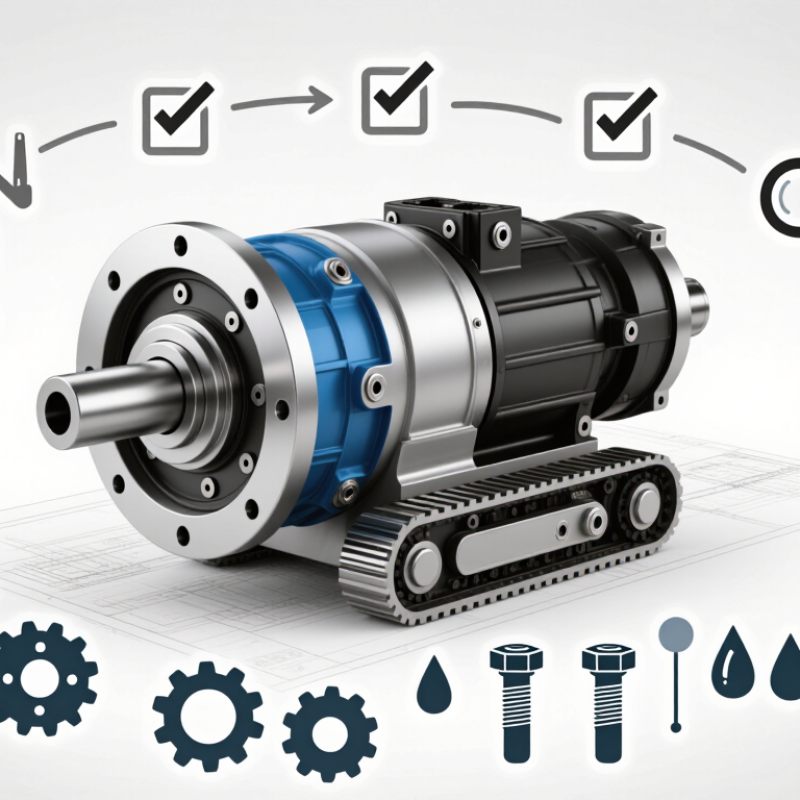
China Best Hydraulic Final Drive Manufacturer and Supplier

Hydraulic Final Drives: Definition and Core Operating Principles

A hydraulic final drive is a compact assembly that turns hydraulic power into controlled movement at a machine’s track or wheel. It usually combines a hydraulic motor with a reduction gearbox. Pressurized oil enters the motor and drives its rotating components, producing torque. The gearbox reduces rotational speed and increases usable torque at the output shaft. That shaft turns a sprocket or wheel.

Oil flow largely affects motor speed, while pressure responds to the load and helps determine available torque. Reversing the flow direction can reverse travel. These relationships are useful, but real operation is not quite so tidy. Oil temperature, internal leakage, and changing ground resistance can all influence performance. A drive that feels weak may need inspection; pressure alone does not reveal the whole story.

Tips: Check for oil leaks, unusual heat, and metallic noise during routine inspections. Compare travel speed on both sides under similar conditions. Keep the hydraulic oil clean and use the machine’s specified service procedures. Small warning signs matter. Diagnosis can still be uncertain, so confirm the cause before replacing components.

Hydraulic Final Drives: Definition and Core Operating Principles

A hydraulic final drive combines a hydraulic motor and reduction gearing to convert pressurized fluid into controlled wheel or track rotation. This chart shows theoretical hydraulic power at a constant flow rate of 60 L/min. Power is calculated as pressure (bar) × flow (L/min) ÷ 600; actual output is lower because of system losses.

Main Components and Technical Performance Characteristics

A hydraulic final drive combines a hydraulic motor with a planetary gearbox to deliver controlled rotation and high output torque. Inside the assembly, gears share the load, while bearings support rotating parts and seals help retain oil. A parking brake may also be integrated, depending on the design. The housing protects these components from dust, impact, and operating heat. Small details matter: loose fittings or damaged seals can lead to leakage and reduced performance.

Technical performance depends on more than rated torque. Operating pressure, flow rate, gear ratio, oil temperature, and load all affect speed and efficiency. A drive should match the machine’s duty cycle, including repeated starts, slopes, and sustained heavy work. Check for smooth movement, unusual noise, overheating, and oil leaks during service inspections. No single measurement tells the whole story; real operating conditions can expose weaknesses that a bench test misses.

Tips: Confirm pressure and flow requirements before selection. Keep hydraulic oil clean, inspect hoses and seals regularly, and follow the specified maintenance intervals. A little caution helps. Even experienced operators can overlook early wear when a machine still moves normally.

China’s Hydraulic Final Drive Manufacturing Industry

China’s hydraulic final drive manufacturing industry is closely tied to excavator and tracked-equipment demand. The China Construction Machinery Association reported 195,018 excavators sold in 2023, including 105,018 exported. These figures are a useful demand signal, not a direct count of final drives. Export growth also raises expectations for consistent performance across different climates and working conditions.

Production quality depends on more than gear cutting. A typical final drive combines a hydraulic motor, reduction gears, bearings, seals, and a housing. Factories must control gear hardness, tooth accuracy, and assembly cleanliness. Testing should check torque, leakage, temperature rise, and operation under changing loads.

Small particles can damage a hydraulic system. The details matter.

Chinese suppliers benefit from established machining and component networks, which can support flexible production and shorter sourcing cycles. Yet low cost alone is not proof of reliability. Buyers should review material records, inspection results, and endurance-test conditions, then confirm that stated ratings match the intended machine. One limitation is that public industry reports rarely separate final-drive output from broader machinery production. Better product-level data would make supplier comparisons more dependable.

How to Evaluate Chinese Manufacturers and Suppliers

When evaluating Chinese hydraulic final drive manufacturers and suppliers, ask for test records tied to the exact model, not a generic catalog. A reliable supplier should provide rated torque, speed, pressure, displacement, and duty-cycle limits. Request performance curves and test conditions; a torque figure without operating speed tells little. Ask how samples are tested for leakage, noise, temperature rise, and efficiency. Numbers matter.

Check cleanliness controls, too. ISO 4406:2021 classifies hydraulic-fluid particle contamination using three particle-size ranges. For example, code 18/16/13 represents approximately 1,300–2,500 particles per millilitre above 4 μm(c), 320–640 above 6 μm(c), and 40–80 above 14 μm(c). Ask whether the supplier records fluid cleanliness during assembly and testing, and request a recent inspection record. A neat workshop is not proof.

Then verify traceability and after-sales support. Can the supplier link a serial number to material batches, machining records, and final test results? Ask for a sample report, spare-parts lead times, and written warranty terms. If possible, inspect a production unit and compare its nameplate with the test sheet. One uncomfortable point: supplier claims can sound precise while hiding test conditions. Check those details before comparing quotations.

Applications, Quality Standards, and International Sourcing

Hydraulic final drives turn pressurized oil into controlled wheel or track movement. They serve excavators, compact loaders, and other mobile machines that work in mud, gravel, or confined sites. On a small excavator, the drive must deliver steady torque while resisting shock loads from uneven ground. Fit matters. Shaft dimensions, mounting points, displacement, and brake configuration should match the machine, not just its catalog description.

Quality checks should cover more than appearance. Buyers can request material details, pressure-test results, leakage limits, and inspection records linked to production batches. Ask how the supplier verifies noise, temperature, and performance under load. Applicable quality-system certificates are useful, but they do not replace product-level test evidence. A tidy datasheet is not the whole story; real operating conditions may expose limits that a short test cannot show.

International sourcing adds practical questions. Confirm packaging protects machined surfaces during long transit, and agree on spare-part availability and technical support before ordering. Share operating pressure, expected duty cycle, and machine model details to reduce specification errors. Check lead times, export documents, and warranty terms in writing. Even careful buyers can miss a small interface difference, so a sample inspection may be worthwhile. It takes time, but a mismatch costs more.

China Best Hydraulic Final Drive Manufacturer and Supplier - Applications, Quality Standards, and International Sourcing

Application Typical Drive Configuration Key Selection Checks Quality and Standards References International Sourcing Checks
Compact excavators and mini excavators Hydraulic travel motor with reduction gearbox; often supplied as a matched final-drive assembly. Confirm machine model and serial number, motor displacement, reduction ratio, mounting dimensions, port locations, braking arrangement, and required travel speed. Use ISO 4413 as a general hydraulic-system safety and design reference. Check pressure, leakage, rotation, and dimensional results against the agreed product specification. Request a dimensioned drawing, connection details, installation instructions, inspection records, and confirmation of compatibility before ordering.
Tracked skid-steer loaders and compact track loaders One hydraulic travel drive per track, selected to suit the machine’s hydraulic circuit and duty cycle. Verify continuous and intermittent pressure ratings, flow requirements, torque and speed at the specified operating conditions, case-drain requirements, and track-side mounting. ISO 4413 provides general guidance for hydraulic systems. Test acceptance limits should be agreed in writing for pressure, performance, temperature, and leakage. Confirm left/right installation requirements, shaft and housing interfaces, hose-port thread type, packaging protection, and spare-part availability.
Drilling rigs and tracked construction equipment Heavy-duty hydraulic motor and planetary reduction stage sized for high torque and frequent load changes. Evaluate peak and continuous load, shock loading, operating temperature, duty cycle, braking needs, and the motor’s allowable pressure and speed limits. ISO 4413 is a useful system-level reference. Hydraulic-fluid cleanliness can be specified using ISO 4406 particle-contamination coding. Ask for material and process traceability where required, test documentation, preservation measures, and shipment packaging suitable for the transport route.
Tracked agricultural and forestry machinery Travel drive selected for low-speed control, traction demands, and operation in changing environmental conditions. Check required tractive effort, travel speed, oil type and viscosity range, seal compatibility, contamination protection, and service access. Specify the required fluid cleanliness level using ISO 4406 where appropriate; confirm the target code with the equipment designer or hydraulic-system supplier. Confirm the operating-fluid recommendation, storage and corrosion-protection requirements, warranty terms, and availability of service documentation in the required language.
Mobile platforms and other tracked specialty equipment Compact hydraulic motor and reduction gearbox matched to the machine’s speed, load, and control requirements. Check rated and maximum pressure, flow, output speed, mounting interface, braking or holding requirements, and compatibility with the control circuit. Use ISO 4413 for general hydraulic safety principles. Electrical or machine-level compliance requirements depend on the finished equipment and destination market. Clarify the product’s intended use, required declarations or certificates, customs classification, country-of-origin documents, and delivery terms before purchase.
Incoming inspection for any application Inspect the complete assembly and compare it with the approved drawing and purchase specification. Check model identification, dimensions, ports, shaft or hub interface, visible damage, corrosion protection, and supplied accessories. ISO 4406 defines a method for reporting solid-particle contamination levels in hydraulic fluid; it is not a product certification. Record agreed inspection and test results. Match packing list, commercial invoice, product identifiers, quantity, and shipping marks. Retain inspection records and photographs for receiving documentation.

Selection note: Performance and interface requirements vary by machine and hydraulic circuit. Confirm operating conditions and acceptance criteria against the equipment manufacturer’s specifications and an approved technical drawing; the references above do not imply certification of any particular product.

Site Feedback
Close