Skip to content
Menu Close

7 Best Shrink Fit Tool Holders for CNC Machining

Modern CNC shops are demanding tighter tolerances, shorter cycle times, and more predictable tool life. A Shrink Fit Tool Holder addresses these demands through thermal clamping, producing strong, concentric tool retention around the cutter shank. The result can be reduced runout, smoother cutting, and fewer visible marks on a finished component. Small details matter. A heated holder, a clean shank, and correct cooling time can change performance significantly.

Grand View Research reported that the global computer numerical control machine market was valued at approximately USD 83.99 billion in 2023. Its forecast also indicates continued growth through 2030. MarketsandMarkets has similarly identified automation, precision manufacturing, and advanced tooling as major forces shaping the machine-tool sector. These reports do not prove that shrink fit is always superior. They do show why repeatable toolholding deserves closer attention as manufacturers pursue higher productivity.

Professor Scott Smith, a recognized machining dynamics researcher, has often emphasized a practical warning: “The tool holder is the weakest link in the machine tool system.” That observation frames this guide. The seven holders discussed here will be compared by concentricity, thermal stability, balance, heating requirements, durability, and operating cost. Brand reputation alone is not enough. A holder that performs beautifully in hardened steel may disappoint in interrupted milling or high-volume aluminum work. Selection remains application-specific, and even experienced machinists can overlook cleaning, interference fit, or machine-spindle compatibility. This guide examines those imperfect but important realities before recommending the most suitable Shrink Fit Tool Holder for different CNC machining environments.
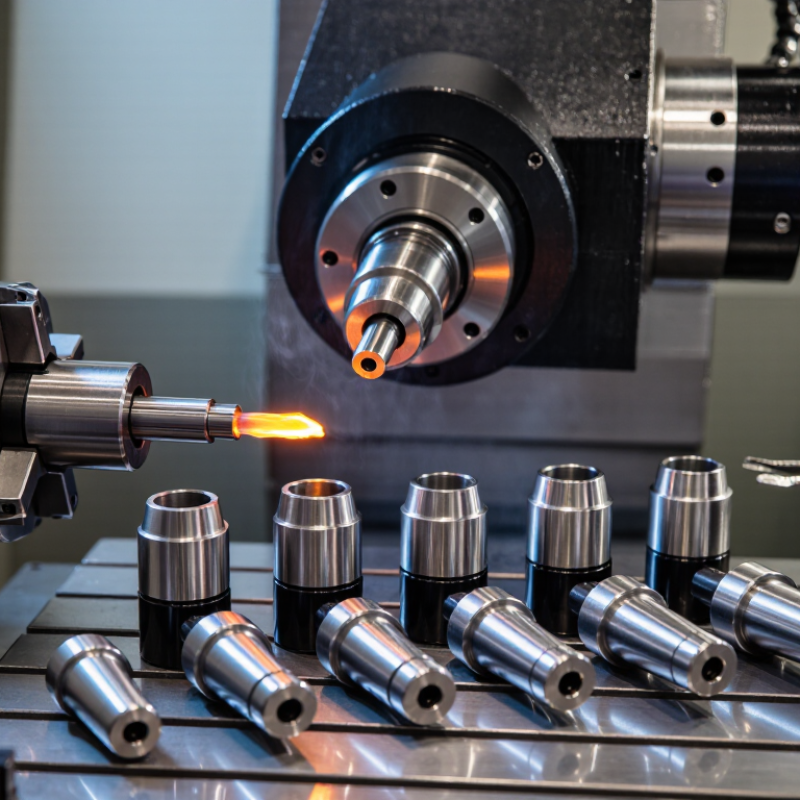
7 Best Shrink Fit Tool Holders for CNC Machining

What Are Shrink Fit Tool Holders and How Do They Work?

Shrink fit tool holders secure cutting tools through controlled thermal expansion. The holder bore expands when heated, allowing a clean, round shank to enter. As the holder cools, the bore contracts around the tool. This creates strong, even gripping pressure without set screws or collets.

In a CNC shop, an induction heater usually provides the most repeatable heating. The operator places the holder over the heating coil for a short cycle. Timing matters. Too little heat can prevent full insertion, while excessive heat may damage coatings or distort components. The tool shank must be clean, dry, and free from oil films. Even a small particle can increase runout.

After insertion, the assembly cools before machining begins. A properly fitted holder can improve rigidity, surface finish, and tool life during high-speed cutting. It also reduces interference around the tool, which helps chips move away from the cutting zone. Choose the holder by tool diameter, gauge length, balance rating, and coolant requirements. A long projection may still vibrate, even with an excellent grip.

Shrink fit systems are not maintenance-free. Repeated heating can gradually affect holder accuracy, especially when operators ignore recommended temperature limits. I have seen impressive setups fail because measurement was skipped after a tool change. Checking runout with a calibrated gauge remains worthwhile. The process is precise, but not magical.

7 Best Shrink Fit Tool Holders for CNC Machining - What Are Shrink Fit Tool Holders and How Do They Work?

Shrink fit tool holders use controlled thermal expansion to open the bore, allowing a cutting tool shank to be inserted. As the holder cools, the bore contracts around the shank, producing high concentricity, strong gripping force, and a slim tool assembly.

Rank Holder Type Typical Tool Shank Range Common Interface Typical Runout Recommended Cutting Applications Key Advantages Important Limitations
1 Standard Slim Shrink Fit Holder 6–20 mm cylindrical shanks BT, CAT, HSK, or other standard machine interfaces Typically ≤3 μm at 3×D when properly prepared General milling, finishing, drilling, and machining in narrow pockets Best overall choice
High rigidity, compact nose profile, excellent balance, and good access to confined features
Requires a heating and cooling process; not suitable for tools with flats unless the holder is designed for them
2 Long-Reach Shrink Fit Holder 6–20 mm cylindrical shanks BT, CAT, HSK, and comparable taper systems Typically ≤5 μm at the specified gauge length Deep cavities, long walls, mold and die work, and machining over obstructions Best for deep reach
Extends tool access while retaining better rigidity than many collet-based long-reach setups
Longer projection increases deflection and vibration; cutting parameters may need to be reduced
3 Heavy-Duty Shrink Fit Holder 8–32 mm cylindrical shanks Large BT, CAT, HSK, or equivalent interfaces Typically ≤3–5 μm at 3×D Roughing, high-feed milling, hard materials, and high material-removal-rate operations Best for high loads
Thick wall construction provides strong radial gripping force and increased torsional resistance
Heavier and less accessible than slim designs; requires adequate spindle capacity and balanced tooling
4 Mini-Nut or Compact-Nose Shrink Fit Holder 3–12 mm cylindrical shanks Small BT, CAT, HSK, and compact spindle interfaces Typically ≤3 μm at 3×D Small-part machining, miniature components, fine slots, and detailed 3D surfaces Best for small tools
Minimal interference with the workpiece and improved visibility around small cutting tools
Limited maximum tool diameter and lower load capacity than heavy-duty holders
5 Dampened Shrink Fit Holder 6–20 mm cylindrical shanks BT, CAT, HSK, or other precision taper interfaces Typically ≤5 μm, depending on design and projection Long-tool machining, titanium, nickel alloys, hardened steel, and vibration-sensitive operations Best for vibration control
Integrated damping features help reduce chatter and improve surface finish during difficult cuts
Usually costs more and may have a larger outside diameter or greater mass than a standard holder
6 Coolant-Through Shrink Fit Holder 6–20 mm cylindrical shanks BT, CAT, HSK, and similar coolant-capable interfaces Typically ≤3–5 μm at the specified gauge length Deep-hole drilling, high-speed milling, difficult-to-machine alloys, and automated production Best for chip evacuation
Directs coolant through internal passages toward the cutting edge when the tool and machine support through-tool coolant
Requires compatible tools, seals, machine coolant delivery, and clean internal passages
7 High-Speed Balanced Shrink Fit Holder 3–20 mm cylindrical shanks High-speed BT, CAT, HSK, or comparable interfaces Typically ≤3 μm at 3×D High-speed finishing, aluminum machining, aerospace components, and unattended production Best for high RPM
Reduced imbalance supports stable rotation, lower vibration, improved tool life, and consistent surface quality
Balance quality depends on the complete tool assembly; tool cleanliness and correct insertion depth are essential

Note: Runout values and shank ranges are typical industry specifications. Actual performance depends on holder design, tool tolerance, heating temperature, cooling method, spindle interface, tool projection, and maintenance.

Key Performance Factors for Evaluating Shrink Fit Tool Holders

Choosing among the seven best shrink fit tool holders requires more than comparing advertised clamping force. Runout is a practical starting point. A holder should maintain minimal radial error near the cutting edge, where small inaccuracies can mark a finished surface. Check measured runout at several distances, not only at the nose. Short tests can mislead.

Thermal consistency matters during repeated production cycles. A holder that heats unevenly may grip differently from one cycle to the next. Look for stable heating, controlled cooling, and clear temperature guidance. Balance quality is equally important at high spindle speeds. Poor balance can increase vibration, noise, and bearing stress. I have found that a smooth-running holder often protects tools better than a holder with impressive specifications alone.

Tool access also deserves attention. Slim profiles can reach deep pockets, but excessive thinness may reduce stiffness. Coolant delivery, corrosion resistance, and compatibility with common heating systems affect daily reliability. Inspect the bore finish and tool contact area regularly. Even small chips can damage repeatability. Service life is not always predictable. Operator habits matter. A careful setup can outperform a superior holder used carelessly. Cost should include heating equipment, maintenance, rejected parts, and tool consumption. The “best” choice depends on material, tool diameter, spindle speed, and production volume. Test it under real cutting conditions. Fancy numbers are not enough.

Seven Top Shrink Fit Tool Holder Options for CNC Machining

Seven Top Shrink Fit Tool Holder Options for CNC Machining

Seven top shrink fit tool holder options cover different machining demands. A standard steel holder suits general milling and routine production. A slim holder improves access inside narrow pockets. A heavy-duty holder supports aggressive cutting and larger tools. A coolant-through model helps clear chips near deep features. A high-speed balanced holder reduces vibration during fast spindle rotation. A modular holder offers useful length adjustments. An extended-reach holder reaches deep cavities, although it may sacrifice rigidity. These choices are not interchangeable.

In my machining experience, tool holder selection should begin with spindle speed, cutter diameter, projection length, and material hardness. Runout matters greatly. Even a small error can leave visible marks on a finished wall. Thermal expansion also deserves attention, especially during repeated heating cycles. I prefer checking tool seating, cleaning the bore, and measuring runout before cutting valuable parts. That routine sounds simple. It is easy to skip. I have found that slim designs improve clearance, but they can perform poorly when cutting forces rise. A stronger holder may be safer, even when access becomes less convenient.

Tips: Match the holder’s balance grade with the intended spindle speed. Keep tool projection as short as the workpiece allows. Use the correct heating and cooling procedure. Never force a cutter into a dirty bore. Check for fretting, discoloration, or uneven wear after machining. Record successful settings, but question them when material, tool geometry, or coolant conditions change.

Matching Holder Designs to CNC Materials and Machining Tasks

7 Best Shrink Fit Tool Holders for CNC Machining

Matching holder designs to the material matters more than choosing a popular geometry. For aluminum, I prefer a short, lightweight shrink fit holder with polished internal surfaces. It supports high spindle speeds and reduces vibration around thin walls. For hardened steel, a balanced holder with strong radial stiffness is safer. Keep the gauge length short. Small errors become visible on deep cavities.

A short gauge length helps reduce the impact of small errors in deep cavities.

Titanium needs a different compromise. A holder with reliable pull-out resistance and through-tool coolant helps manage heat during low-speed, high-load cutting. For finishing stainless steel, low runout is critical; a practical target is under 3 micrometers at the tool tip. That figure should be verified with calibrated equipment, not accepted from a sales sheet. Tool diameter, heating cycle, and cooling method all affect actual accuracy.

Industry investment data supports this attention to process control. Deloitte’s 2024 Smart Manufacturing and Operations Survey found that 86% of manufacturers view smart manufacturing as a major competitiveness driver within five years. The 2024 World Machine Tool Survey also valued global machine-tool consumption near 85 billion U.S. dollars in 2023.

More machines do not automatically produce better parts. In my experience, holder selection is often treated as a minor purchase, then blamed after chatter appears. I still question that habit. A seven-holder shortlist should include separate options for aluminum, hardened steel, titanium, finishing, roughing, long-reach work, and high-speed operations. Shrink fit is precise, but it is not forgiving. A dirty shank or uneven heating can ruin the expected result.

Installation, Maintenance, and Safety Best Practices

Shrink fit tool holders perform well only when installation is controlled. Before heating, inspect the bore, tool shank, and retention surface under bright light. Remove oil, chips, and oxidation with approved cleaning materials. Even a thin chip can create runout. Measure the shank diameter with a calibrated micrometer. Confirm the holder matches the cutter’s tolerance and recommended heating range. Use a controlled induction unit, not an improvised torch. Heat evenly, insert the tool smoothly, and keep hands clear. Do not force a cold tool into a warm bore. That shortcut can damage both surfaces. Allow the assembly to cool naturally before checking grip and runout. I once trusted a quick visual check and missed slight eccentricity. That mistake reminded me that speed is not quality.

Maintenance starts after every production run. Wipe the holder dry and inspect the bore for fretting, scoring, or dark heat marks. Check runout at a consistent gauge length with a calibrated indicator. Record the reading, tool diameter, cycle count, and heating method. Patterns matter. Rising runout often signals wear, contamination, or repeated overheating. Store holders vertically in a clean, dry cabinet. Protect the bore from dust, coolant residue, and accidental impacts. Avoid abrasive polishing unless a qualified technician approves it. The holder may look clean while its accuracy is already declining.

Safety depends on the equipment, but habits matter just as much. Train operators to use heat-resistant gloves, eye protection, and suitable guarding. Keep flammable materials away from the heating area. Verify the holder temperature using the specified procedure. Never touch the bore immediately after heating. Let it cool. Check that the cutter is fully seated before machining. Stop if vibration, unusual noise, or slipping appears. Recheck the setup after any crash, even when damage seems minor. I still find this step easy to skip under production pressure. That is where a written inspection routine earns its value.

Site Feedback
Close