Skip to content
Menu Close

10 Best Remote Control Actuator Manufacturers for Buyers

Selecting a Remote Control Actuator manufacturer involves more than comparing catalog prices. Buyers need to match actuator performance with the demands of the actual machine. Stroke length, operating force, supply voltage, duty cycle, and mounting dimensions can determine whether a unit fits safely and works reliably. Small details matter.

This guide introduces 10 manufacturers for buyers assessing products, technical support, and customization options. It considers practical questions: Are force and speed ratings clearly stated? Can the supplier explain wiring diagrams and control interfaces? Are environmental ratings, test documentation, and spare parts available? These checks help teams compare suppliers on evidence, rather than polished claims alone. A catalog can look complete and still leave important gaps.

No single manufacturer suits every application. An actuator used on a light access panel may have different requirements from one operating a valve or adjustable platform. Buyers should verify specifications against their own loads, movement frequency, installation space, and operating conditions. Ask about sample testing, production lead times, warranty coverage, and support after delivery. Get details in writing. This shortlist is a starting point, not a substitute for engineering review or direct supplier checks. Some comparisons will remain imperfect, especially when public product information is limited; that uncertainty deserves attention, not guesswork.
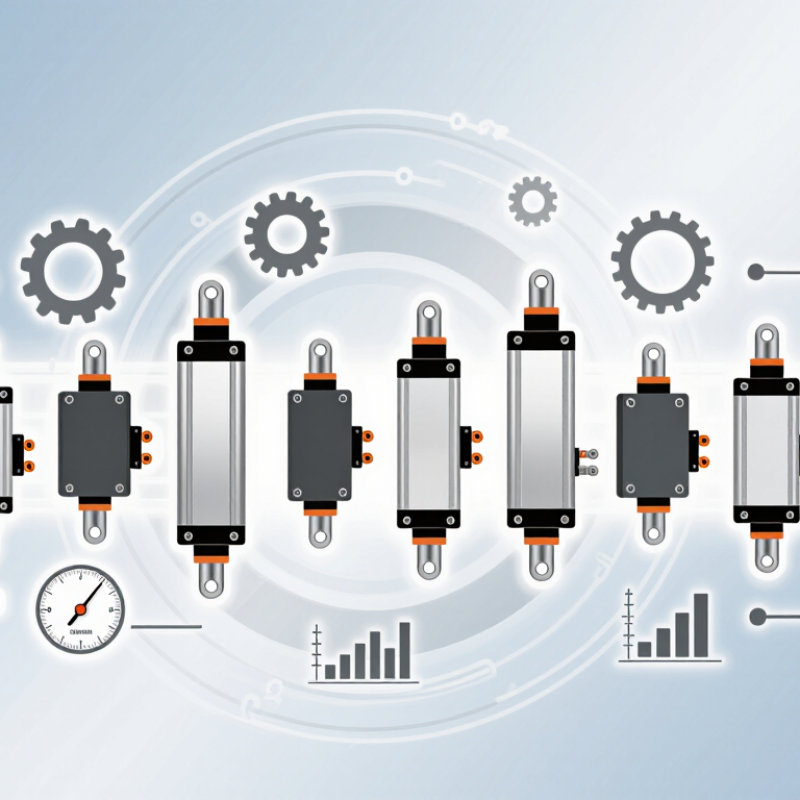
10 Best Remote Control Actuator Manufacturers for Buyers

Remote Control Actuators: Linear and Rotary Types, Including 12/24 VDC Models

Remote control actuators convert a low-voltage command into measured movement. Linear models push or pull; rotary models turn a valve, damper, or positioning arm. For buyers comparing manufacturers, the useful question is not simply “12 or 24 VDC?” It is whether the actuator’s force, stroke, speed, and duty cycle match the actual load.

The U.S. Department of Energy’s motor-systems sourcebook reports that motor-driven systems use about 54% of electricity in U.S. manufacturing. That figure is broader than actuators alone, but it underlines why running time and efficiency deserve attention. A 12 VDC unit may suit compact equipment with shorter cable runs, while 24 VDC can be practical for longer runs or higher-power applications. Check voltage drop, starting current, enclosure rating, feedback options, and what happens during power loss. Small loads matter.

For linear actuators, compare rated force under real mounting conditions, not just the largest number on a datasheet. For rotary types, verify torque across the operating range and confirm the required rotation angle.

The International Energy Agency’s 2023 energy-efficiency analysis describes electric motor systems as responsible for roughly half of global electricity use; it does not isolate actuator consumption, but it reinforces the value of sensible sizing. A little uncertainty remains: published duty-cycle figures may not reflect heat, vibration, or frequent starts at your site. Ask manufacturers for test conditions and sample performance data before selecting a model.

Key Ratings: Force, Stroke, Speed, Duty Cycle, and IEC 60529 IP Codes

10 Best Remote Control Actuator Manufacturers for Buyers

When comparing remote control actuator manufacturers, assess force, stroke, speed, duty cycle, and enclosure protection together. A high force rating alone may not suit a small hatch or adjustable platform. Check whether the stated force is dynamic or static, and compare it with the real load, including friction and starting resistance. Stroke must match the mechanism’s travel without pushing it against its end stops. Speed matters, too. A fast actuator can create abrupt movement where careful positioning is needed.

Tips: Check the load. Measure twice. Ask for test conditions behind each rating. A listed speed may change with load, voltage, or installation angle. Confirm the duty cycle, which describes permitted operating time and rest periods. Repeated starts can add heat.

For IEC 60529 IP codes, the first digit indicates protection against solid objects; the second indicates water protection. Match the code to the actual exposure, such as dust, splashes, or washdown. Do not assume a component rating automatically applies to the completed assembly. Request documentation for the installed configuration and cable entry points. Ratings are useful, but they do not replace a realistic test. A comparison table can look tidy and still miss the conditions that matter.

Mounting and Controls: ISO 5211 Interfaces, Feedback, and Wireless Compatibility

For remote control actuators, mounting compatibility starts at the valve, not the catalogue. ISO 5211 defines flange dimensions for part-turn actuator connections, but buyers must also verify shaft shape, stem height, bolt pattern, and available torque. A matching flange can still leave the coupling misaligned. Check the full assembly drawing before ordering. A few millimetres matter.

Controls deserve the same scrutiny. Specify whether the actuator needs open/close signals, 4–20 mA position feedback, or a digital protocol, then confirm how faults and loss of power are reported. Wireless can simplify monitoring where cable runs are difficult, but it should not be treated as a substitute for every wired control or safety function. McKinsey Global Institute’s 2021 Internet of Things report estimates potential value of US$5.5 trillion to US$12.6 trillion across IoT use cases by 2030; that broad estimate is not an actuator-specific forecast. It does show why data access matters. Ask manufacturers to demonstrate network integration, cybersecurity settings, and signal behavior during a dropped connection. Test it on the actual valve assembly. The details are easy to miss.

How to Compare 10 Manufacturers: Certifications, Product Range, and Support

When comparing ten remote control actuator manufacturers, use the same checklist for each supplier. Verify certificates by checking the issuing body, covered models, and validity dates. A logo alone is not enough. Compare product range against your actual operating conditions: load, stroke length, duty cycle, supply voltage, and exposure to dust or moisture. Ask for datasheets and confirm that quoted figures apply to the specific model, not just the product family. Small details matter.

Tips: Request one sample datasheet and one certificate before shortlisting. Note missing information, not just listed features.

Support deserves equal attention. Ask how quickly technical questions are answered, whether spare parts are available, and what commissioning guidance is included. A useful response should address your application, not simply repeat catalogue text. Check whether support continues after delivery and clarify service hours, warranty steps, and parts lead times in writing. No scorecard is perfect; supplier replies can sound clearer than the service itself. If possible, test response quality with a specific question about installation space or a wiring requirement. A short, practical answer is often more revealing than a polished sales promise.

Buyer Selection Criteria: Match Load, Environment, Controls, and Lifecycle Cost

A reliable actuator starts with the real load, not the largest number on a datasheet. Record static force, peak force, stroke, speed, and duty cycle; then allow for friction and start-up loads. A valve moving slowly in a clean room has different needs from a gate exposed to rain, dust, and vibration. Check temperature, ingress protection, corrosion resistance, and mounting space. Controls matter too: confirm voltage, signal type, feedback, and fail-safe position before comparing suppliers.

Lifecycle cost can outweigh purchase price. The U.S. Department of Energy’s 2014 motor-systems sourcebook estimates that motor systems use about 68% of electricity in U.S. manufacturing. That figure covers motor systems broadly, not actuators alone, but it highlights why operating efficiency deserves attention. Compare expected energy use, maintenance intervals, spare-part availability, and replacement time. Ask for test data under conditions close to your application. A clean spreadsheet can still miss real-world wear.

Tips: Give suppliers a short duty-cycle profile, including load, travel, daily cycles, and ambient conditions. Request a written selection rationale and clarify what the warranty excludes. Small details matter.

Site Feedback
Close