Skip to content
Menu Close

10 Best Fuel Pumps for Cars and Trucks?

A failed Fuel Pump can turn an ordinary drive into a roadside stop. Yet symptoms such as hard starting, hesitation, or stalling do not prove the pump is at fault. A weak battery, clogged filter, or wiring problem can create similar clues. Diagnosis matters.

AAA’s 2024 Your Driving Costs report estimated maintenance, repair, and tire expenses at about 9.83 cents per mile for a new vehicle. That figure covers many components, not fuel pumps alone, but it shows why durable parts and correct fitment deserve attention. Richard Reina, an automotive product-training specialist, offers a useful buying principle: verify vehicle application and specifications before comparing brands. A bargain that does not match the vehicle is no bargain.

This guide compares ten fuel pumps for cars and trucks, focusing on fit, construction, pressure requirements, warranty, and installation considerations. Check the exact year, make, model, and engine before ordering. Then compare the pump’s specifications with the vehicle maker’s requirements. Small details matter. A connector that looks right may still differ electrically. And sometimes, the pump is not the culprit. Use a qualified technician when diagnosis or installation exceeds your experience, and consult the owner’s manual and manufacturer guidance. These picks can narrow the search; they cannot replace a proper inspection.
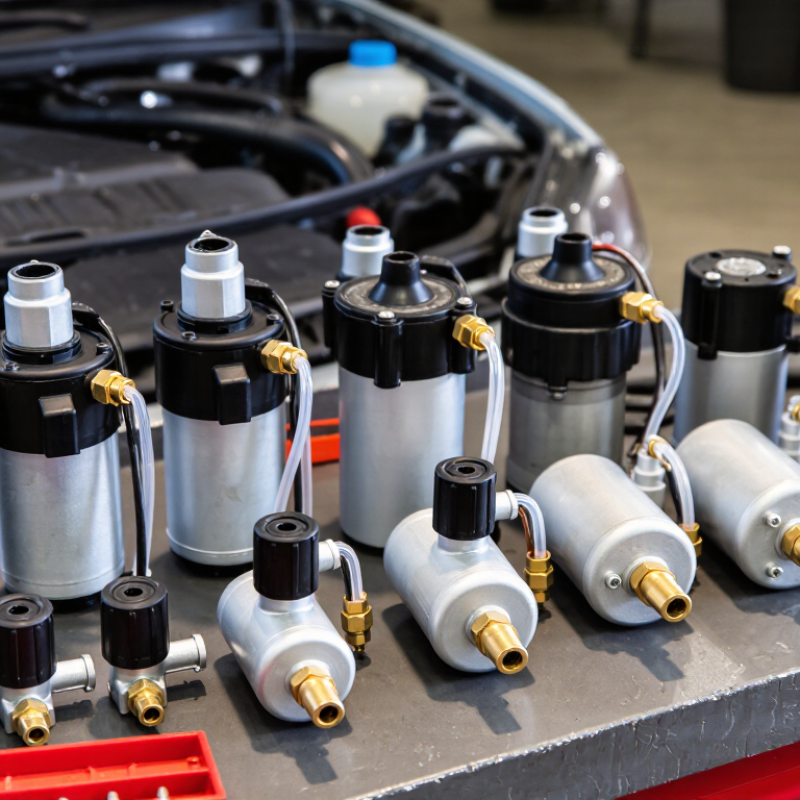
10 Best Fuel Pumps for Cars and Trucks?

Fuel Pump Types: Mechanical, In-Tank Electric, and Diesel High-Pressure Designs

Mechanical pumps suit older engines with simple layouts. Camshafts drive them, and their low-pressure delivery matches carbureted systems. They are easy to inspect, but flow can fall short as engine demand rises. A worn diaphragm may also cause hard starts. Small parts matter.

In-tank electric pumps push fuel toward modern gasoline engines and help maintain steady pressure during acceleration. The pump sits in the tank, where fuel also helps cool it.

Diesel systems are different: high-pressure pumps feed common rails and injectors, with SAE technical literature describing rail pressures above 2,000 bar in advanced designs. That pressure supports precise injection, but makes clean fuel and correct installation essential. A little contamination can become an expensive problem. The U.S. EPA’s heavy-duty diesel rule set a 0.01 g/bhp-hr particulate-matter standard and a 0.20 g/bhp-hr nitrogen-oxide standard for 2010 engines (EPA, 2000). Those limits show why diesel fuel delivery must be controlled carefully; the pump alone does not determine emissions. Real-world wear still varies with fuel quality, heat, and maintenance. That part is easy to overlook.

Key Specifications: Flow Rate, Pressure, Voltage, and Fuel Compatibility

Flow rate only matters when measured at the pressure your engine needs. A pump’s free-flow figure can look impressive, then fall sharply under load. Match delivery to engine demand and verify the specification at operating pressure. Leave a modest reserve, but avoid oversizing blindly; excessive flow can complicate pressure control. A gauge reading at idle is useful, not the whole story.

Pressure and voltage belong together. Check the vehicle’s required rail pressure, then measure voltage at the pump connector while it runs. Wiring resistance can lower voltage and reduce output, even when the pump itself is correctly rated. The U.S. Department of Energy’s Alternative Fuels Data Center lists ethanol at about 76,000 Btu per gallon, compared with roughly 112,000 for gasoline. That lower energy density can mean greater fuel-volume demand, so compatibility and capacity matter for ethanol blends.

Fuel compatibility is not just a label on a box. Confirm the pump’s approved fuels, seals, and wiring materials against the vehicle’s actual fuel. ASTM D4814 covers automotive gasoline specifications, while ASTM D5798 addresses ethanol fuel blends; these standards help define the fuels involved, but do not certify every pump for them. Details are easy to miss. I would recheck the application data before buying, especially on an older truck with modified wiring or a changed fuel system.

10 Best Fuel Pumps for Cars and Trucks? - Key Specifications: Flow Rate, Pressure, Voltage, and Fuel Compatibility

Pump Type Typical Flow Rate Typical Operating Pressure Voltage Typical Fuel Compatibility Common Application
Mechanical diaphragm pump 20–35 GPH (76–132 L/h) 4–6 psi (0.28–0.41 bar) Engine-driven; no electrical supply Gasoline; alcohol-blended fuels only when specified for the pump and vehicle Older carbureted cars and light trucks
Low-pressure electric pump for carburetors 25–40 GPH (95–151 L/h) 4–7 psi (0.28–0.48 bar) 12 V DC Gasoline; check the pump’s stated ethanol compatibility Carbureted cars, vans, and light trucks
In-tank electric pump for standard port fuel injection 25–45 GPH (95–170 L/h) 40–60 psi (2.8–4.1 bar) 12 V DC Gasoline; ethanol blend limits depend on the specific pump and vehicle Many gasoline cars and light trucks with port injection
In-tank pump for gasoline direct-injection low-pressure supply 25–50 GPH (95–189 L/h) Approximately 50–100 psi (3.4–6.9 bar), vehicle-dependent 12 V DC Gasoline; use only fuel grades and blends approved for the vehicle Gasoline direct-injection vehicles; supplies the high-pressure pump
Inline electric pump for port-injection systems 30–60 GPH (114–227 L/h) 40–60 psi (2.8–4.1 bar) 12 V DC Gasoline; ethanol compatibility must be confirmed for the pump Replacement or custom installations where an external pump is suitable
Higher-output in-tank gasoline pump 45–75 GPH (170–284 L/h) 40–60 psi (2.8–4.1 bar) 12 V DC Gasoline; some designs support specified ethanol blends Modified port-injected cars and light trucks needing increased flow
High-flow in-tank gasoline pump 75–120 GPH (284–454 L/h) 40–60 psi (2.8–4.1 bar) 12 V DC; some installations require upgraded wiring Gasoline; confirm compatibility with the intended ethanol content Performance gasoline vehicles with supporting fuel-system upgrades
Flex-fuel-compatible in-tank pump 40–80 GPH (151–303 L/h) 40–60 psi (2.8–4.1 bar) 12 V DC Gasoline and specified ethanol blends, potentially including E85 when explicitly rated Flex-fuel or converted vehicles with compatible lines, seals, and controls
Diesel low-pressure lift pump 30–50 GPH (114–189 L/h) 5–15 psi (0.34–1.03 bar) 12 V DC; some heavy-duty applications use 24 V Diesel fuel; biodiesel limits depend on the pump and vehicle specifications Diesel cars and light trucks; feeds the engine’s injection system
Diesel transfer pump for larger-volume systems 50–100 GPH (189–379 L/h) 10–30 psi (0.69–2.07 bar) 12 V or 24 V DC, depending on the vehicle and pump Diesel fuel; verify any approved biodiesel blend limit Diesel pickups and trucks requiring higher low-pressure fuel delivery

Figures are representative ranges for pump categories, not guaranteed specifications for a particular unit. Actual flow changes with operating pressure, voltage, fuel temperature, and installation. Confirm the vehicle’s required pressure, flow, electrical supply, and fuel rating before choosing a pump.

Gasoline EFI Pumps Often Operate at 40–60 psi; Check OEM Requirements

10 Best Fuel Pumps for Cars and Trucks?

Gasoline EFI pumps often operate around 40–60 psi, but that range is only a starting point. Your vehicle’s OEM specification is the better guide. Some systems require different pressure, and direct-injection engines use a separate high-pressure stage. Don’t guess. Check the service manual for the specified pressure and test conditions before choosing a replacement. A pump that flows well at one pressure may deliver less fuel at another.

Tips: Use a fuel-pressure gauge rated for the system, and follow the vehicle’s service procedure. Compare readings at key-on, idle, and under load when the manual calls for them. Check electrical connections, filters, and the regulator too; a weak reading does not automatically mean the pump has failed. Relieve pressure safely before opening fuel lines.

Match the pump’s flow capacity to the engine’s needs at the required pressure and voltage. A higher advertised flow number alone can mislead. I once treated a pressure reading as the whole story; it wasn’t. Wiring voltage drop or a restricted filter can imitate pump trouble. Record your measurements, because a small detail can change the diagnosis.

Gasoline EFI Fuel Pressure: A Common Reference Range

Many gasoline port-injection EFI systems operate around 40–60 psi. This is a general reference, not a universal specification—fuel pressure varies by vehicle and system. Always check the OEM service information before testing or replacing a pump.

Diesel Common-Rail Systems Can Exceed 2,000 bar (29,000 psi)

Diesel common-rail fuel pumps operate far beyond ordinary automotive pressures. DieselNet’s technical guide on common-rail injection describes systems reaching 2,500 bar, or about 36,000 psi. The subtitle’s 2,000-bar figure equals roughly 29,000 psi. At that pressure, tiny changes in fuel delivery matter. The pump must feed a shared rail steadily, while injectors meter fuel in tightly timed bursts. That is extreme.

Pressure alone does not make a pump suitable for every car or truck. SAE International technical literature on diesel injection links high-pressure control with fuel atomization and combustion performance. For a replacement, match the vehicle’s specified rail-pressure range, flow capacity, and electrical controls. A larger number on a box is not proof of compatibility. Check the filter, supply lines, and pressure sensor too; restricted fuel flow can imitate pump trouble. A scan tool and measured rail pressure offer better evidence than a guess based on noise. Repairs at these pressures require proper procedures, because a fine fuel jet can penetrate skin. I would not treat “more pressure” as an upgrade by itself. That assumption is easy to make, and sometimes wrong.

How to Rank 10 Pumps by Fitment, Performance, Durability, and Warranty

Ranking ten fuel pumps fairly starts with fitment, not advertised flow. Check the engine code, model year, tank layout, connector shape, and pressure requirements against reliable vehicle service information. A pump that nearly fits may waste an afternoon and still cause hard starts. Fit matters.

For performance, compare pressure and flow at the vehicle’s required operating range, not just a peak-flow figure. Note whether the pump maintains steady delivery under load, and consider noise and current draw. A louder pump is not automatically stronger. Testing methods vary, so avoid treating every specification as directly comparable.

Durability deserves attention to materials, filtration, heat tolerance, and reports of consistent operation over time. Warranty length matters, but read the exclusions: labor, installation errors, and contaminated fuel may not be covered. Score each pump across fitment, performance, durability, and warranty, using the same scale for all ten. A simple table helps expose trade-offs, though it can hide real-world differences between vehicles. I would leave room for uncertainty when evidence is thin, rather than award points based on polished claims alone.

Site Feedback
Close