Skip to content
Menu Close

What Is an Aluminum LED Strip and How Does It Work?

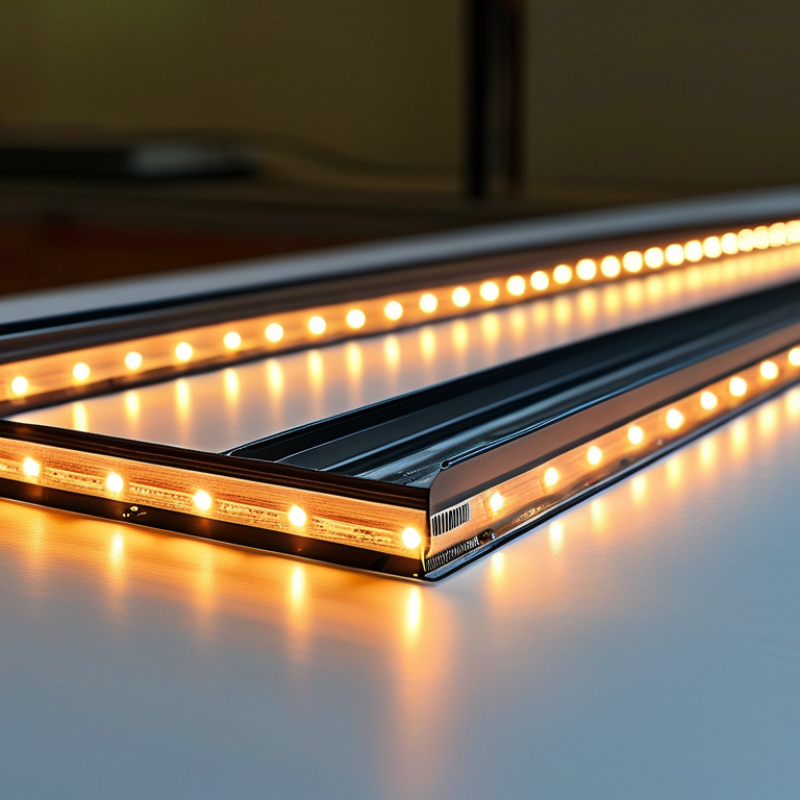
An Aluminum Led Strip is more than a flexible circuit carrying small light-emitting diodes. It usually combines an LED tape with an aluminum profile, diffuser, end caps, and mounting hardware. The profile works as a heat sink. It draws heat away from the LEDs, stabilizes brightness, and can slow lumen depreciation. Without adequate heat control, a strip may become visibly dimmer near the center or fail sooner than expected.

The U.S. Department of Energy’s Solid-State Lighting research reports identify thermal management as a major factor in LED performance and lifetime. Its energy forecasts also show that wider LED adoption could reduce national lighting electricity use substantially. The exact result depends on installation quality. Length, power density, ambient temperature, and ventilation all matter. A five-meter strip inside a sealed channel behaves differently from one mounted beneath an open cabinet.

Lighting researcher Nadarajah Narendran has emphasized a simple principle: “Heat is the enemy of LEDs.” That statement remains practical, even if it sounds too simple. Aluminum cannot repair poor wiring, an undersized power supply, or excessive voltage drop. It only provides a better thermal path.

This guide examines how an Aluminum LED Strip works, why aluminum profiles improve reliability, and which specifications deserve attention. It also questions common marketing claims. “Long life” is not a guarantee. Check operating temperature, LED density, color consistency, IP rating, and tested lumen data before choosing a system. Small details matter.
What Is an Aluminum LED Strip and How Does It Work?

What Is an Aluminum LED Strip?

An aluminum LED strip is usually a flexible LED tape installed inside an aluminum channel. The channel is not merely decorative. It supports the tape, spreads heat, and holds a diffuser over the diodes. The aluminum body works as a passive heat sink. This matters because excessive heat can reduce light output and shorten component life.

The U.S. Department of Energy’s Solid-State Lighting R&D Opportunities report notes that laboratory LED efficacy can exceed 200 lumens per watt. Real installations perform lower because drivers, optics, wiring, and temperature add losses. An aluminum profile helps control one of those losses.

A practical installation should leave the tape fully attached to the channel surface. Dust, gaps, and weak adhesive reduce heat transfer.

It also creates cleaner light. A frosted diffuser hides bright dots and softens reflections on cabinets or walls. Wider profiles generally spread heat more effectively.

However, aluminum is not a cure for poor design. A long strip may still show voltage drop, uneven brightness, or excessive heat near the power feed. In field work, checking current, profile temperature, and connector quality is more reliable than trusting appearance alone.

The International Energy Agency reports that lighting consumes roughly 8% of global electricity, so efficiency deserves attention. Yet the figure can feel abstract at room level. A warm, flickering strip wastes comfort before it wastes much electricity.

What Components Make Up an Aluminum LED Strip?

What Is an Aluminum LED Strip and How Does It Work?

An aluminum LED strip combines a flexible circuit board with a rigid aluminum profile. The profile usually includes LED chips, resistors, connectors, a diffuser, end caps, and mounting clips. A power supply sends controlled current through the circuit board. The LED chips then convert electrical energy into light. Resistors or control components help limit current and protect the diodes. The aluminum housing draws heat away from the board, improving stability and service life.

The profile also shapes the light. A clear diffuser creates stronger output, while a frosted diffuser produces softer, more even illumination. Heat transfer depends on the profile size, installation surface, and airflow. A narrow channel may look cleaner, but it can retain more heat. The weak point is often overlooked. Poor connections, incorrect voltage, or a dusty mounting surface can cause flickering and uneven brightness. In practical installations, measuring the power load before choosing the supply prevents many avoidable faults.

Tips: Check the strip voltage, wattage per meter, and total length before installation. Leave extra power capacity, but do not oversize the system without reason. Clean the aluminum surface before attaching the strip. Test the diffuser after installation, because it may reduce brightness more than expected. A tidy setup is not always the most efficient one.

How Does an Aluminum LED Strip Work?

An aluminum LED strip combines a flexible circuit board, light-emitting diodes, and an aluminum channel. The channel supports the strip and helps move heat away from its components. Each LED receives controlled electrical current from a low-voltage power supply. Its semiconductor releases photons when current crosses the junction. That process creates visible light with relatively little wasted energy.

The aluminum channel works like a passive heat sink. Heat spreads from the strip’s adhesive backing into the metal body. The metal then releases that heat into surrounding air. Lower operating temperatures can protect LED output, solder joints, and adhesive. A diffuser snaps over the channel and softens bright points. It also shields the strip from dust and accidental contact. The diffuser reduces some light, though. This trade-off is easy to overlook.

Installation quality affects performance as much as the electrical parts. The channel should sit on a clean, firm surface with room around it. A long run may show dimmer LEDs near its far end because of voltage drop. Installers often divide long sections and feed power from more than one point. They must also match the supply voltage and calculate total wattage. Cutting at the marked points matters. A careless cut can damage the circuit and waste a section. In practice, neat aluminum placement is not always enough; poor airflow or an undersized supply can still cause flicker, heat, or shortened service life.

How Does an Aluminum LED Strip Work?

This chart uses common constant-voltage LED strip ratings and calculates the current required for a 5-meter installation. Current is calculated as I = P ÷ V. LEDs convert electrical energy into light and heat, while the aluminum channel spreads heat away from the LED board and helps maintain more stable operating temperatures. At the same power, a 24 V strip requires half the current of a 12 V strip, which generally reduces cable losses and voltage drop.

Values shown are based on typical rated loads of 4.8, 9.6, 14.4, and 19.2 W/m over a 5-meter length; actual products may vary.

How Is an Aluminum LED Strip Installed?

An aluminum LED strip combines flexible LEDs, an aluminum channel, and a diffuser. The channel supports the strip and removes heat from its circuit board. According to U.S. Department of Energy Energy Saver data, LED lighting uses at least 75% less energy than incandescent lighting and can last up to 25 times longer. Good installation still matters. Heat, poor wiring, and dust can shorten that advantage.

Installation starts with accurate measurement. Mark the channel, then cut it only at the strip’s printed cut lines. Clean the mounting surface before applying adhesive backing. Press the strip firmly into the channel, without bending it sharply around corners. Connect the correct-voltage power supply, and calculate the total wattage before switching on. Leaving about 20% capacity helps reduce electrical stress. For longer runs, feed power from both ends or use separate sections, because voltage drop can cause uneven brightness. The exact limit depends on strip design and cable length.

Tips:

Use a level for straight channels. Keep connectors outside damp areas unless they have suitable protection. Test every section before sealing the diffuser. A neat channel can still hide a weak connection. I have seen installations look perfect, then flicker after several hours because heat was trapped. The DOE’s solid-state lighting research reports also emphasize thermal management as a key factor in LED performance. Do not assume aluminum solves everything. Airflow, load, and reliable connections still need checking.

What Are the Main Uses and Benefits of Aluminum LED Strips?

An aluminum LED strip usually combines a flexible LED circuit with an aluminum profile. The profile supports the strip and helps move heat away from the diodes. A diffuser can soften bright points and create a smoother line of light. This design works well when lighting must remain clean, slim, and visually controlled.

These strips are useful under kitchen cabinets, along staircases, inside wardrobes, and beneath shelves. They also suit retail displays, office counters, bathroom mirrors, and architectural edges. In kitchens, focused light can brighten work surfaces without creating heavy shadows. Along stairs, low-level illumination can improve visibility at night. In display areas, even lighting helps products look clearer and more consistent.

The aluminum body can extend LED life by reducing heat buildup, especially during long operating hours. It also protects the strip from dust, light impacts, and accidental bending. However, aluminum alone does not make a system waterproof. Wet locations still require suitable sealing, connectors, and an appropriate protection rating. A common mistake is choosing brightness before checking heat management. That choice can cause glare, uneven color, or early failure. Installers should measure the channel, power load, ventilation, and mounting surface carefully. Small planning errors matter. A diffuser may reduce brightness slightly, so the required output should be tested before permanent installation.

What Is an Aluminum LED Strip and How Does It Work? – Main Uses and Benefits

Data Dimension Typical Information How It Works or Why It Matters
Definition An LED strip installed inside or on an aluminum profile, usually with a diffuser and end caps. The aluminum profile provides a clean mounting channel, protects the strip, and helps move heat away from the LEDs.
Main Components Flexible LED circuit board, light-emitting diodes, resistors, adhesive backing, aluminum channel, diffuser, and power supply. The circuit board distributes electrical current to the LEDs, while the profile supports installation and thermal management.
Electrical Input Common low-voltage systems use 12 V DC or 24 V DC; 24 V systems generally allow longer continuous runs with less voltage drop. A compatible constant-voltage driver converts mains electricity to the low-voltage DC required by the strip.
Heat Dissipation Aluminum profiles act as passive heat sinks. Larger profiles generally provide more surface area for cooling. Lower operating temperatures can help maintain light output, color stability, and LED service life.
Light Distribution A frosted or opal diffuser softens individual LED points and produces a more uniform line of light. The diffuser reduces glare and improves visual comfort, especially in task areas and decorative installations.
Typical Color Options Warm white, neutral white, cool white, single-color options, and tunable-white or color-changing versions. Color temperature and control type can be selected to suit ambience, visibility, or architectural requirements.
Brightness Control Dimming may be provided through a compatible PWM dimmer, controller, or smart-lighting system. Adjustable brightness can reduce energy use and adapt the lighting level to different activities.
Protection Rating Indoor dry locations commonly use non-waterproof strips; damp or outdoor applications require a suitably rated sealed strip and connection system. The required ingress protection depends on exposure to dust, moisture, cleaning, and weather.
Energy Performance LED strips generally consume less electricity than many traditional linear lighting sources for comparable applications, but efficiency varies by LED type, power density, and optical design. Actual energy savings depend on operating hours, brightness settings, driver efficiency, and the lighting system being replaced.
Common Uses Cabinet lighting, shelves, coves, ceilings, stairways, display cases, wardrobes, workspaces, signage, and architectural accents. The slim profile and flexible strip allow continuous or concealed illumination in areas where conventional fixtures may not fit.
Installation Benefits Profiles can be surface-mounted, recessed, corner-mounted, or suspended, depending on the design. Different mounting formats support flexible layouts while helping create a neat, finished appearance.
Maintenance Considerations Keep connections protected, avoid exceeding the recommended run length, and use a power supply with suitable capacity and ventilation. Correct installation reduces overheating, uneven brightness, flicker, and premature component failure.
Primary Benefits Improved heat management, better appearance, reduced glare, mechanical protection, flexible installation, and longer-lasting performance when correctly specified. The aluminum profile turns a flexible LED strip into a more durable, visually consistent, and professionally finished linear lighting solution.

Note: Specifications vary by LED strip, aluminum profile, diffuser, driver, installation method, and environmental conditions. Always verify the product datasheet before installation.

Site Feedback
Close