Skip to content
Menu Close

7 Tips for Choosing a Substation With Transformer

Selecting a Substation With Transformer is becoming a strategic decision, not merely an equipment purchase. Global electricity demand is projected to grow by 3.3% in 2025 and 3.7% in 2026, according to the International Energy Agency’s Electricity 2025 report. More demand places greater pressure on voltage stability, transformer capacity, protection systems, and future expansion.

The North American Electric Reliability Corporation’s 2024 Long-Term Reliability Assessment forecasts significant peak-demand growth over the coming decade. This trend affects industrial facilities, renewable projects, data centers, and public infrastructure. A poorly selected substation can create overheating, voltage drops, unnecessary losses, or difficult maintenance access. Small design errors become expensive problems.

This guide presents seven practical tips for choosing a Substation With Transformer. It considers load calculations, transformer ratings, cooling methods, fault levels, site conditions, safety clearances, and lifecycle costs. Engineers should also verify applicable IEC 60076 and IEEE C57 requirements, alongside local grid codes. The U.S. Department of Energy has reported continuing supply pressure and extended lead times for distribution transformers. That makes early technical planning increasingly valuable.

No checklist replaces a site walk.

Inspect cable routes, drainage, noise exposure, and access for cranes or replacement equipment. Consider tomorrow’s load, not only today’s meter reading. However, forecasting is imperfect. Renewable output changes, demand profiles shift, and budget assumptions may fail. A reliable decision therefore combines measured data, independent engineering review, manufacturer documentation, and realistic maintenance planning.
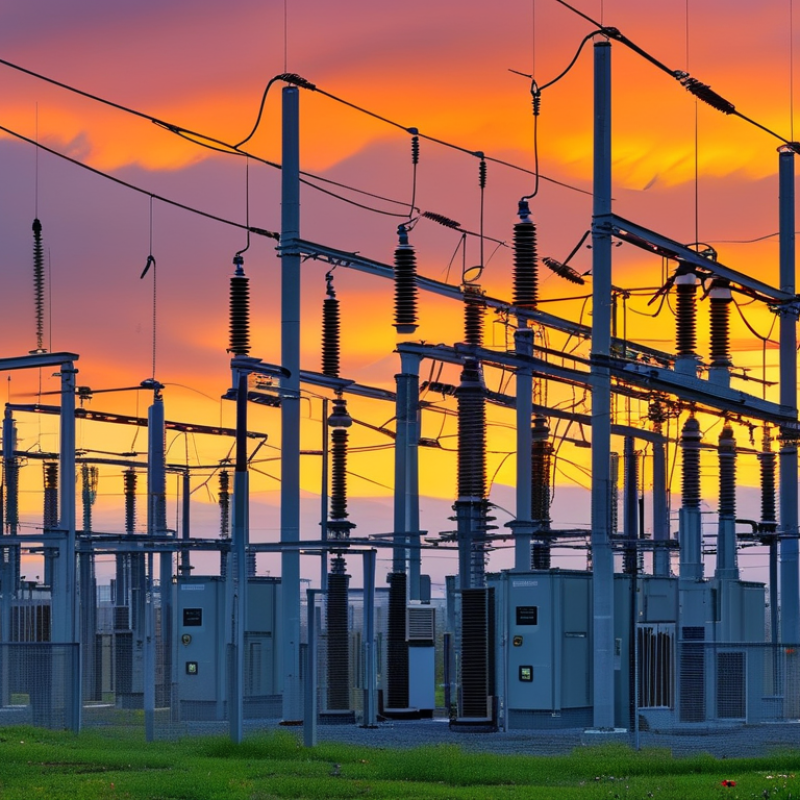
7 Tips for Choosing a Substation With Transformer

Define the Substation’s Power and Transformer Requirements

Choosing a substation with a transformer starts with a measured power requirement, not a catalogue rating. Record present demand, motor starting currents, harmonics, and seasonal peaks. A 500 kW site may briefly demand far more when pumps and compressors start together. That short event matters. Review at least twelve months of meter data when available. If data is missing, use conservative estimates and label every assumption clearly. This is less elegant, but safer.

Define the transformer’s required capacity in kVA or MVA, then check primary and secondary voltages, frequency, impedance, and connection arrangement. Do not size only for today’s average load. Allow for planned equipment, production changes, and acceptable overload limits. Yet excessive spare capacity can increase cost and reduce efficiency at light load. Compare normal load, emergency load, and future load separately. A qualified electrical engineer should verify fault levels, protection settings, earthing, and coordination.

Site conditions can change the selection. Heat, dust, salt air, flooding, and limited ventilation affect transformer performance and enclosure design. Leave room for cable bending, inspection, lifting, and safe isolation. During one project review, the electrical calculation was correct, but maintenance access was not. That mistake was preventable. Recheck the single-line diagram against actual equipment locations before procurement, because drawings often hide inconvenient distances.

Assess Site Conditions, Safety, and Environmental Constraints

A substation with transformer must fit its surroundings, not just its electrical design. A practical site assessment should examine soil, drainage, access, nearby buildings, and future expansion. Small details matter. Standing water near cable trenches can create expensive problems later.

Tip 1: Check flood history, groundwater levels, and stormwater routes. Visit during wet weather if possible. A dry-season inspection can mislead you.

Tip 2: Test soil resistivity and bearing capacity before finalizing the layout. These results influence grounding, foundations, and equipment stability. Do not rely on visual soil judgments.

Tip 3: Review clearances from roads, homes, pipelines, and public areas. Confirm that fire access remains open for emergency vehicles. Mark these distances on the site plan.

Noise, heat, oil containment, and electromagnetic exposure also require careful review. Transformers may produce a constant hum, especially near quiet residential areas. Consider acoustic barriers, ventilation paths, and sealed drainage systems. Environmental permits and local electrical codes should guide the design, with qualified engineers checking the calculations.

Tip 4: Provide bunded containment for insulating fluid and prevent discharge into soil or waterways.

Tip 5: Study wind, dust, salt air, and extreme temperatures. These conditions can shorten equipment life.

Tip 6: Design safe maintenance routes with lighting, fencing, lockable gates, and visible warning signs. Safety should remain practical during rain and darkness.

Tip 7: Confirm access for delivery cranes and replacement equipment. A narrow gate can defeat an otherwise excellent design.

It is easy to overvalue purchase cost. I would question any layout that saves money by reducing drainage, clearance, or inspection access. Good decisions leave room for uncertainty.

Compare Transformer Types, Ratings, and Efficiency

7 Tips for Choosing a Substation With Transformer

Compare Transformer Types, Ratings, and Efficiency

Tip 1: Match the transformer type to the site. Dry-type transformers suit indoor areas where fire safety and clean operation matter. Oil-immersed units often support higher capacities and outdoor installations. However, oil containment, inspection access, and ventilation require careful planning.

Tip 2: Check ratings against real demand. Compare voltage, kVA or MVA capacity, frequency, impedance, and short-circuit withstand strength. Do not size only for today’s load. Motors, charging equipment, and future expansion can quickly change demand.

Leave headroom.

Tip 3: Study efficiency across the actual load profile. A transformer may show excellent peak efficiency but waste more energy during light loading. Review no-load losses, load losses, and expected annual operating hours. Request test data from qualified suppliers and verify it against applicable standards.

Tip 4: Consider cooling and the installation environment. Dust, humidity, heat, altitude, and limited airflow can reduce performance. A practical site review should record ambient temperature, enclosure conditions, cable routes, and maintenance clearance. Small details matter.

Tip 5: Compare total ownership cost, not purchase price alone. Lower losses can reduce electricity expenses for years, while poor access can increase service costs. Yet efficiency claims sometimes depend on ideal conditions. Ask how measurements were made.

Tip 6: Review reliability features. Check temperature monitoring, surge protection, grounding arrangements, tap settings, and emergency isolation. These features should match the substation’s operating risks and maintenance skills.

Tip 7: Document assumptions. Load forecasts are imperfect, and engineers can miss unusual operating cycles. Recheck the design with measured data before approval. A careful comparison often reveals that the cheapest transformer is not the least expensive choice.

7 Tips for Choosing a Substation With Transformer - Compare Transformer Types, Ratings, and Efficiency

Tip Selection Dimension Comparison and Typical Data Practical Recommendation
1 Match the Transformer Type to the Site Oil-immersed: commonly used outdoors and for medium- to high-capacity substations; efficient heat dissipation but requires oil containment and fire-risk controls.
Dry-type: suitable for indoor installations and locations where fluid management is undesirable; generally requires more ventilation space.
Cast-resin: a dry-type design with improved moisture resistance and reduced maintenance needs, often selected for demanding indoor environments.
Use oil-immersed equipment when high capacity, outdoor installation, or lower total cost is important. Consider dry-type or cast-resin equipment for buildings, tunnels, hospitals, and environmentally sensitive areas.
2 Calculate the Required Capacity Transformer capacity is normally specified in kVA or MVA. A basic estimate is:
Required kVA = Maximum Demand kW ÷ Power Factor × (1 + Design Margin)
A design margin of approximately 10%–25% is commonly evaluated, depending on load growth, duty cycle, and project policy.
Avoid selecting a transformer solely from connected load. Use measured or calculated maximum demand, motor-starting requirements, harmonics, ambient temperature, and future expansion plans.
3 Verify Voltage and Connection Requirements Common system combinations include medium-voltage primary systems such as 6.6 kV, 11 kV, 13.8 kV, 22 kV, or 33 kV and low-voltage secondary systems such as 400 V or 415 V at 50 Hz, or 480 V at 60 Hz.
Important specifications include vector group, phase arrangement, neutral availability, tap range, impedance, and short-circuit withstand capability.
Confirm the utility interface, operating frequency, grounding method, allowable voltage variation, and downstream protection requirements before finalizing the transformer ratio.
4 Compare Efficiency at the Real Load Profile Distribution transformers commonly achieve approximately 98%–99.7% efficiency, depending on rating, design, and operating load. No-load losses remain present whenever the transformer is energized, while load losses increase approximately with the square of current.
Maximum efficiency often occurs near the load at which variable load loss is approximately equal to fixed no-load loss.
Compare no-load loss, load loss, and total ownership cost—not only the nameplate efficiency. A slightly higher purchase price may be justified where the transformer operates continuously or at a high average load.
5 Check Thermal Performance and Cooling Cooling classifications may include ONAN for oil-immersed natural cooling and AN for dry-type natural-air cooling. Larger units may use assisted cooling such as forced air or forced oil systems.
Temperature rise, ambient temperature, altitude, enclosure ventilation, and harmonic current all affect usable capacity.
Apply the manufacturer’s derating data for high-altitude or high-ambient sites. Provide adequate ventilation and avoid relying on short-term overload capability as a substitute for correct continuous sizing.
6 Evaluate Safety, Protection, and Environmental Conditions Key considerations include fire separation, oil containment, pressure relief, surge arresters, temperature monitoring, overcurrent protection, differential protection for larger units, and suitable enclosure ratings.
Dry-type units eliminate liquid leakage concerns, while oil-immersed units require appropriate spill-control and fire-protection measures.
Select equipment and protection in accordance with applicable local electrical, fire, environmental, and utility requirements. Consider dust, humidity, salt exposure, vibration, and corrosive atmospheres.
7 Confirm Standards, Testing, and Lifecycle Cost Common reference standards include IEC 60076 for power transformers, IEC 60076-11 for dry-type transformers, and applicable IEEE C57 standards. Routine tests generally include winding resistance, ratio verification, insulation tests, and no-load and load-loss measurements. Request certified test results, guaranteed losses, impedance data, sound levels, maintenance requirements, spare-parts information, expected service life, and warranty conditions. Compare purchase price, energy losses, maintenance, downtime, and disposal costs.

Note: Values shown are typical engineering ranges or examples for preliminary comparison. Final transformer selection must be based on the project load study, utility requirements, applicable standards, site conditions, and verified manufacturer data.

Verify Protection, Control, and Grid Integration Features

Choosing a substation with a transformer requires more than checking voltage and capacity. Protection, control, and grid integration determine how safely the equipment performs under stress.

Tip 1: Confirm the protection scheme matches the transformer rating, fault level, and grounding method. Ask for relay settings, coordination studies, and trip-time records.

Tip 2: Inspect current and voltage transformer accuracy. Poor measurements can delay fault clearance.

Tip 3: Check backup protection. One failed relay should not disable the entire substation. I once saw a design rely too heavily on a single communication path. That was uncomfortable.

Tip 4: Review control functions at the local panel and remote control center. Operators should clearly see breaker status, alarms, transformer temperature, and tap position.

Tip 5: Verify communication compatibility with the grid operator’s system. Test protocols, time synchronization, and cybersecurity controls before delivery.

Tip 6: Request factory and site acceptance tests, including simulated faults and loss-of-communication scenarios. Test the ugly cases.

Tip 7: Examine grid integration studies for voltage regulation, reactive power, harmonics, and inrush current. These details affect neighboring feeders, not just your transformer.

A practical review should include wiring diagrams, event logs, maintenance access, and operator training. Some projects underestimate training. That mistake can remain invisible until an outage begins.

Evaluate Maintenance Needs, Costs, and Future Expansion

7 Tips for Choosing a Substation With Transformer

Evaluate Maintenance Needs, Costs, and Future Expansion

Choosing a substation with a transformer requires more than comparing purchase prices. Maintenance access should shape the layout from the beginning. Technicians need safe working clearances, lifting paths, drainage, and reliable lighting. Doors must open fully beside radiators and cable compartments. Small design oversights become expensive during outages.

During site reviews, I examine inspection intervals, spare-part availability, oil sampling points, cooling equipment, and protection testing requirements. A transformer that is easy to isolate can reduce downtime and labor costs. Remote temperature and load monitoring may reveal abnormal heating before damage occurs. Yet monitoring cannot replace scheduled inspections. That assumption needs challenging.

Calculate lifecycle cost using energy losses, servicing, replacement components, emergency response, and disposal obligations. A cheaper unit can consume more power for decades. Warranty language also deserves careful review. It should define response times, testing evidence, and covered failures.

Future expansion should include physical space and electrical capacity. Reserve a transformer bay, cable routes, foundation strength, and suitable switchgear ratings where practical. Check whether protection settings can support added feeders without reducing coordination. A credible load forecast matters, but forecasts are imperfect. Some projects reserve capacity that never arrives while ignoring limited access for later construction. Flexible planning may cost more today, yet it can prevent major civil work tomorrow. Record assumptions, review them annually, and keep the design adaptable.

Site Feedback
Close