Choosing the right windshield wiper is not a cosmetic decision. It affects visibility during rain, road spray, winter grime, and sudden temperature changes.
This guide examines seven Silicone Windshield Wipers for different driving needs, vehicle sizes, and weather conditions. Industry reports from Grand View Research and Fortune Business Insights identify durability, noise reduction, material performance, and replacement demand as important wiper-market factors. However, market growth does not automatically prove that every silicone blade performs well on every windshield. That distinction matters.
Silicone can leave a water-repellent film behind the blade. This may help rain bead and clear faster, especially on smooth glass. The effect can feel obvious under streetlights at night. Still, installation quality, windshield contamination, blade pressure, and temperature remain important. A premium material cannot correct a bent arm or badly pitted glass.
Richard Reina, an automotive technical expert and product-training director, has advised drivers to inspect wipers when they begin “streaking, skipping, or squeaking.” That practical warning remains more useful than advertising claims. Exact performance data also varies between laboratories, climates, and vehicle models. Some comparisons are imperfect.
The selections below consider wiping consistency, connector fit, durability, noise, value, and real-world maintenance. They also acknowledge a common weakness: a blade that excels in heavy rain may not be ideal in freezing weather. Read the recommendations carefully, then match the design to your car, local climate, and driving habits.
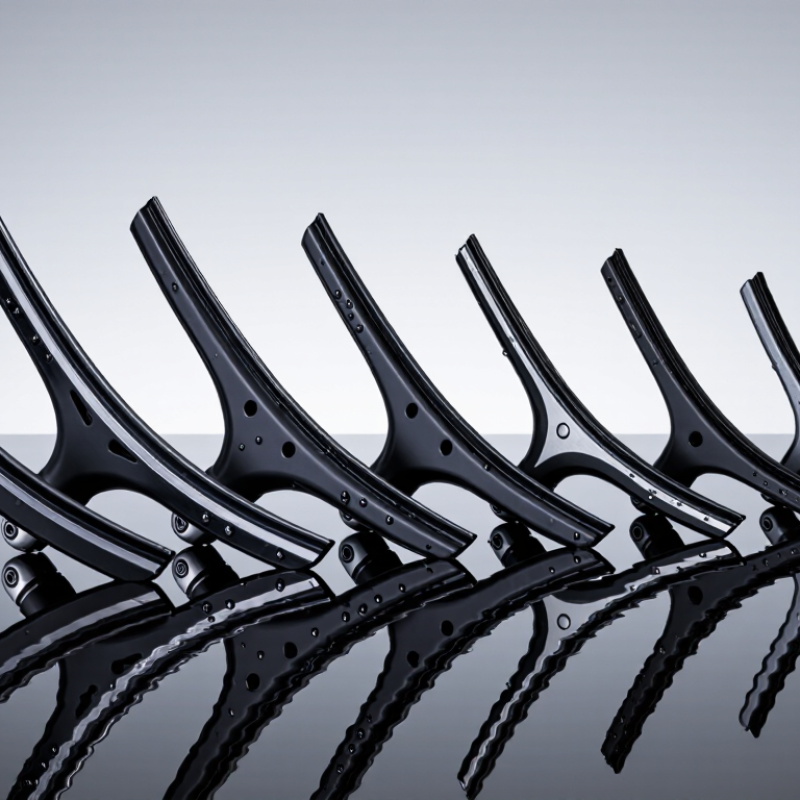
Silicone windshield wipers use flexible silicone rubber instead of conventional natural or synthetic rubber. Their main job is simple: maintain steady contact with the windshield and move water away. The blade’s curved edge follows the glass as the wiper arm sweeps across it.
During use, silicone can leave a thin, water-repellent layer on the windshield. Rain may form smaller beads and clear more quickly at driving speed. The effect is gradual, not dramatic. In my own garage checks, the glass looked clearer after several wet cycles, but results depended heavily on surface cleanliness.
Dirt changes everything. Dust, road film, and dried insects can make any wiper drag or chatter. Clean the windshield before installation, then inspect the blade for uneven edges. A silicone blade may remain flexible longer in strong sunlight, although heat, ice, and chemical cleaners can still cause damage. It is not maintenance-free.
Fit also matters. The connector must match the vehicle’s wiper arm, and the blade should press evenly from end to end. A poorly fitted silicone wiper can leave narrow arcs untouched. That detail is easy to miss.
Cold weather deserves caution. Never force a frozen blade across the glass. Lift it carefully, remove loose ice, and use the vehicle’s defroster. I expected silicone to solve every streaking problem, but it did not. Worn wiper arms, scratched glass, or weak washer fluid can remain the real cause.
| Option | Wiper Design | Silicone Construction | Common Length Range | Typical Connector | Best Use | Main Advantages | Important Consideration |
|---|---|---|---|---|---|---|---|
| 1. Premium Beam Silicone Wiper | One-piece aerodynamic frame with no exposed metal pivots | Silicone wiping edge with a water-repellent transfer layer | 16–28 inches | Usually supplied with several adapters for hook, push-button, and side-pin arms | Modern vehicles with curved windshields | Even pressure across the blade, low wind lift, and good performance in heavy rain | Higher purchase cost; the vehicle-specific adapter must lock securely |
| 2. Hybrid Silicone Wiper | Flexible beam structure combined with a protective outer shell | Silicone rubber edge supported by a reinforced internal spine | 18–28 inches | Commonly available for standard hook and push-button arms | Daily driving in mixed weather | Combines aerodynamic stability with protection from ice, dust, and road debris | The outer shell can collect packed snow if temperatures are very low |
| 3. Winter Silicone Wiper | Enclosed flexible frame designed to resist snow and ice buildup | Cold-resistant silicone wiping edge with a weather-sealed cover | 16–28 inches | Usually uses a hook-style or push-button adapter | Snowy, icy, and freezing climates | Reduced ice accumulation and flexible wiping performance at low temperatures | A bulkier profile may create more wind noise than a low-profile beam design |
| 4. All-Season Silicone Wiper | Standard flexible frame suitable for year-round use | Silicone edge formulated for rain, sunlight, and moderate cold | 14–28 inches | Often includes adapters for the most common arm types | Temperate climates and general replacement | Balanced price, durability, and wet-weather performance | May not be ideal for severe ice or very hot, dry conditions |
| 5. Low-Profile Silicone Wiper | Thin beam design with a compact aerodynamic spoiler | Soft silicone wiping edge with a narrow, flexible support structure | 18–26 inches | Most often offered with push-button, top-lock, or hook adapters | Cars with low windshield clearance or high-speed driving | Quiet operation, low air resistance, and a clean appearance | Less frame coverage can make adapter compatibility especially important |
| 6. Heavy-Duty Silicone Wiper | Reinforced beam or hybrid frame with a sturdier spoiler | Thicker silicone wiping edge designed for frequent use | 20–30 inches | Commonly available for hook, side-pin, and push-button arms | Large sedans, crossovers, vans, and high-mileage vehicles | Strong contact pressure and good resistance to repeated wiping cycles | May be heavier than a standard blade and should match the arm’s load capacity |
| 7. Rear-Window Silicone Wiper | Compact rear blade shaped for shorter, more curved glass | Silicone wiping edge matched to a short rear-wiper frame | 10–16 inches | Vehicle-specific rear connectors are common | Hatchbacks, SUVs, wagons, and vehicles with rear wipers | Maintains flexibility on small rear windows and helps remove road film | Rear-arm fittings vary widely; measure the original blade before ordering |
| Feature | How It Works | Practical Benefit |
|---|---|---|
| Silicone wiping edge | A flexible silicone rubber edge bends to follow the windshield while removing water and surface film. | Consistent contact across curved glass and reduced streaking when the blade is correctly fitted. |
| Water-repellent transfer | Some silicone blades leave a very thin hydrophobic residue during early wiping cycles. | Water can bead and move more easily across the glass, although the effect depends on glass cleanliness and weather. |
| Flexible support structure | Beam or hybrid supports distribute pressure along the blade instead of relying on several exposed pivots. | More uniform wiping on curved windshields and fewer pressure gaps. |
| UV and temperature resistance | Silicone generally tolerates sunlight and temperature changes better than many basic rubber compounds. | Potentially longer service life, though contamination, abrasion, and improper cleaning can still damage the edge. |
| Adapter system | An adapter connects the blade to the vehicle’s wiper arm, such as a hook, push-button, side-pin, or top-lock fitting. | A secure, correctly matched connector prevents looseness, detachment, and uneven wiping. |
Selection note: Always confirm the front and rear blade lengths and the arm connector specified for the vehicle. Blade length, connector design, windshield curvature, and local climate affect compatibility more than the silicone material alone.