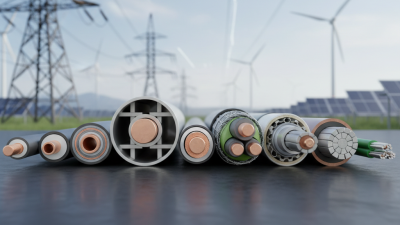
The 2026 high voltage wire market will be shaped by grid expansion, renewable generation, and stricter reliability expectations. Buyers now need more than attractive pricing. They need traceable materials, stable production, verified testing, and dependable delivery across regions.
The International Energy Agency’s Electricity Grids and Secure Energy Transitions report estimates that annual grid investment must increase from about $400 billion to $600 billion by 2030. This pressure will expand demand for high voltage wire in transmission lines, substations, offshore wind farms, and industrial power systems. DNV’s Energy Transition Outlook also highlights the growing importance of electricity networks as energy systems become more electrified. The cable is no longer a quiet component.
Siemens Energy CEO Christian Bruch has described the challenge simply: “The energy transition is also a grid transition.” That observation matters for global sourcing. Leading suppliers must combine conductor quality, insulation performance, heat resistance, and disciplined logistics. Factory audits matter. So do type tests, certification records, and field experience.
This guide evaluates the 2026 top high voltage wire suppliers through those practical lenses. It considers manufacturing scale, product scope, technical support, regional coverage, and documented quality systems. No ranking is perfect. Supplier performance can vary by project, voltage class, and delivery location. Buyers should still verify current certifications and production capacity before signing contracts. A polished brochure is not proof. A tested cable, delivered on schedule, is much closer.

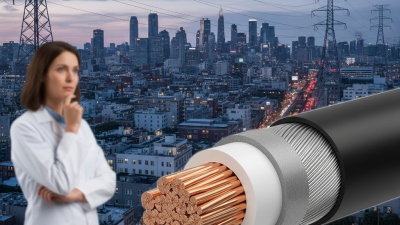
High voltage wires are insulated conductors designed to carry electrical energy at elevated voltages. Their exact classification differs across national standards and grid practices. In practical systems, the term may describe specialized wires or cables used above ordinary building-level distribution voltages. Copper or aluminum carries the current, while insulation, shielding, and protective jackets control electrical stress. Cross-linked polyethylene insulation is common in many modern cable systems.
Their role is larger than simply moving electricity. High voltage conductors connect generating stations, substations, renewable energy fields, industrial facilities, and regional grids. Higher voltage allows power to travel long distances with lower current and reduced transmission losses. At a substation, cable screens help manage electric fields, while metallic layers provide grounding paths during faults. A damaged outer sheath can allow moisture inside. That small defect may become a costly failure.
For global buyers, supplier assessment should include conductor resistance, insulation thickness, rated temperature, short-circuit performance, and test evidence. Factory acceptance testing may include high-voltage withstand, partial-discharge, and dimensional checks. Traceability matters too. Each production batch should link to material records and test results. A polished datasheet is not enough. In field reviews, installation errors often matter as much as cable quality. Bend radius, pulling tension, joint preparation, and storage conditions can change service life. Standards are important, but site conditions deserve equal attention. Mistakes happen. Good engineering leaves room to detect them early.
Supplier selection should begin with voltage class, installation environment, and test evidence. IEC 60502-2 covers medium-voltage cables up to 30 kV, while IEC 60840 addresses cables above 30 kV and up to 150 kV. For systems exceeding 150 kV, IEC 62067 becomes essential.
Buyers should request conductor resistance, insulation thickness, partial-discharge, impulse, and sheath-test records. A certificate alone is not proof. Batch traceability matters.
Global grid investment is raising quality pressure. The IEA Electricity 2024 report projects global electricity demand to grow by about 3.4% annually through 2026. IRENA’s Renewable Capacity Statistics 2025 recorded 585 GW of new renewable capacity during 2024. These projects require cables that tolerate heat, moisture, mechanical stress, and unstable loading. Suppliers should explain conductor material, insulation compound, screen design, bending radius, and emergency-rating limits in plain language.
Laboratory competence deserves equal attention. Look for ISO 9001 production controls and testing performed under ISO/IEC 17025 principles. Ask for type-test dates, routine-test sampling rules, and failure-response procedures.
CIGRE technical guidance also emphasizes system-level testing, not only factory inspection. This is often overlooked. I would not accept a polished brochure without raw test data, independent verification, and installation references. One practical weakness remains: many buyers compare price before comparing lifetime losses, repair access, and thermal performance.
In 2026, high-voltage wire suppliers increasingly fall into four practical categories: utility cable makers, renewable-grid specialists, industrial wire producers, and project-focused custom manufacturers. The IEA Electricity 2024 report forecasts global electricity demand growth of about 3.4% annually through 2026. Meanwhile, IRENA Renewable Capacity Statistics 2025 recorded 585 GW of new renewable capacity in 2024. These figures strengthen demand for reliable transmission and interconnection products.
Manufacturing capability separates serious suppliers from simple traders. Strong producers typically offer copper or aluminum stranding, XLPE insulation, metallic screening, controlled extrusion, and factory routine testing. They should also support IEC 60840 or IEC 62067 applications, depending on voltage class and installation conditions. Partial-discharge testing, conductor resistance checks, dimensional inspection, and batch traceability deserve close review. A useful warning: published production capacity can mislead. Ask for recent test records, sample inspection data, and evidence of stable material sourcing. Some suppliers are excellent at long utility cables but weak at short, complex industrial assemblies. Others provide flexible customization but lack large-scale type-test experience. That distinction is easy to miss. Procurement teams should compare thermal ratings, bending limits, sheath performance, delivery controls, and technical support before judging price. Mistakes still happen, especially when buyers treat “high voltage” as one uniform product category.
Global buyers should treat high-voltage wire as a risk-controlled system, not a catalogue item. The IEA’s Electricity Grids and Secure Energy Transitions report says annual grid investment must rise from about USD 300 billion to over USD 600 billion by 2030. That pressure makes supplier capacity important, but capacity alone proves little. Ask for conductor resistance, insulation thickness, partial-discharge results, and complete type-test reports. Match certificates to IEC 60840 or IEC 62067, depending on voltage class. Factory acceptance tests should include witnessed sampling, sealed drums, and traceable batch numbers. Small paperwork gaps become expensive on site.
Quality must survive compliance review. Confirm local approvals, RoHS or REACH obligations where applicable, fire performance, and export documentation before placing a deposit. A test report without the tested construction is weak evidence. It happens often enough to deserve suspicion. Require independent laboratory verification for critical projects, especially when samples differ from production.
Pricing should be compared as landed cost, including copper adjustment, tooling, insurance, duties, port handling, and delay exposure. The World Bank’s Logistics Performance Index 2023 used 4,090 assessments from logistics professionals across 139 economies, highlighting uneven customs, infrastructure, and delivery performance. Request moisture-barrier packaging, drum dimensions, loading photos, and a realistic transit buffer. The cheapest quotation may be the least economical. Procurement reviews often underweight failed inspections and idle installation crews. That calculation deserves another look. Split orders only when qualification, continuity, and warranty responsibilities remain clear.
2026 Top High Voltage Wire Suppliers for Global Buyers
Buyer Checklist for Evaluating High Voltage Wire Manufacturers
Buying high voltage wire requires more than comparing price per meter. A useful checklist begins with the operating profile. Record system voltage, conductor material, installation temperature, bending radius, and expected load cycles. Ask the manufacturer for a clear construction drawing. It should identify conductor class, insulation compound, shielding, jacket, and dimensional tolerances. Small omissions become expensive during installation. Keep that lesson visible.
Request recent test reports, not only a certificate cover page. Check whether tests match the proposed wire size and voltage class. Review insulation resistance, partial-discharge results, spark testing, thermal aging, and flame performance where applicable. A credible supplier explains test methods, sample preparation, and acceptance limits. Traceability matters too. Each reel should link to a production batch, inspection record, and packing date. During factory evaluation, inspect calibration labels and retained sample procedures. These details indicate whether quality survives beyond a sales presentation.
Evaluate delivery reliability through evidence. Ask for lead-time history, capacity plans, storage conditions, and corrective-action records. Confirm that packaging protects against moisture, crushing, and sharp reel edges. Technical support should provide installation guidance, bend limits, jointing recommendations, and response times. Do not accept vague claims. Yet perfect documentation does not guarantee perfect production. I would compare two recent batches before approving a long-term order. That extra check may slow procurement, but it can expose variation early.
The chart shows standardized nominal voltage designations commonly used for medium- and high-voltage cable procurement under IEC 60502-2. Buyers should confirm that a manufacturer can supply the required U0/U rating and provide valid type-test and routine-test documentation.
Reference: IEC 60502-2 standardized U0/U voltage designations. Voltage selection must be confirmed against the applicable national grid, installation, and safety requirements.