2026 Top Power Cable Trends and Innovations to Watch Out For?
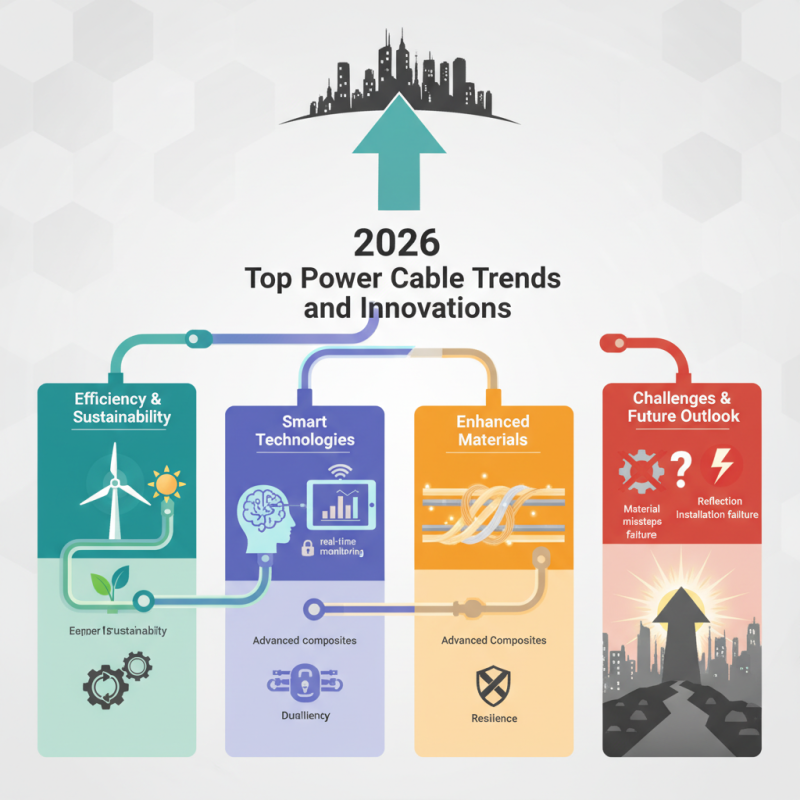
As we look toward 2026, the power cable industry is poised for exciting changes. Innovations in technology are driving the demand for more efficient and sustainable power cables. These cables are essential for our energy infrastructure, connecting generation sources to consumers.
In upcoming years, trends such as smart technologies and enhanced materials will reshape this sector. Power cables must now deliver not only electricity but also data and real-time monitoring capabilities. This shift complicates design processes but opens new doors for creativity.
However, challenges remain. Not all innovations will succeed. There will be missteps in material selection and installation techniques. Industry players need to reflect on past failures. By focusing on sustainable practices, we can move toward a brighter future in power cable development.
Trends in Power Cable Materials for Enhanced Performance in 2026
The power cable industry is witnessing significant trends in materials that promise enhanced performance in 2026. Innovations in insulation are pivotal. For instance, cross-linked polyethylene (XLPE) has become a staple due to its superior thermal resistance. According to a recent market report, the global XLPE market is expected to grow by over 15% CAGR by 2026. This material reduces energy loss, demonstrating efficiency that traditional materials cannot match.
Another trend involves the use of composite materials. Manufacturers are experimenting with hybrid structures that combine polymers and metals. This approach improves durability while maintaining flexibility. Reports show that cables made with composite materials exhibit considerably lower failure rates. Despite these advances, some industry experts express concern over production costs. It raises questions about accessibility for smaller companies.
Finally, as environmental concerns mount, biodegradable materials are garnering interest. Research indicates a growing demand for eco-friendly solutions, with a projected increase of 20% in the next few years. However, the challenge remains: balancing performance with sustainability. Industry players must navigate these complexities to meet evolving standards and customer expectations. This evolving landscape presents both opportunities and hurdles, requiring careful consideration and innovative solutions.
Advancements in Smart Power Cable Technologies and Their Applications
The landscape of power cable technology is evolving rapidly.
Smart power cable innovations hold great promise for diverse applications. These cables are not just wires; they are integrated systems.
They can monitor their own condition and communicate data in real time. Embedded sensors enable early detection of faults. This could significantly reduce downtime and maintenance costs.
In urban environments, smart power cables can improve energy efficiency. They adapt to load demands, ensuring optimal power distribution. This has implications for renewable energy integration.
As solar and wind become more prevalent, smart cables can manage fluctuating inputs effectively. However, the technology is still developing.
Challenges remain in standardization and interoperability across systems.
Moreover, enhancing cybersecurity in smart power cables is crucial.
As these cables connect to networks, they become potential targets for cyber threats.
Addressing security concerns is imperative for widespread adoption. Greater awareness and proactive measures can foster a safer environment for smart power solutions.
Overall, the advancements in smart power cables are exciting, yet they invite careful consideration and ongoing improvement.
Sustainable Practices in Power Cable Manufacturing for the Future
The shift toward sustainable practices in power cable manufacturing is gaining momentum. According to recent industry reports, around 70% of manufacturers are now aiming to reduce their carbon footprints. This commitment is evident in the adoption of eco-friendly materials. For instance, many are shifting from traditional copper to recycled aluminum, which significantly lowers environmental impact.
Manufacturers are facing challenges as they balance innovation and sustainability. Some materials can improve performance but are not environmentally friendly. Studies show that companies must rethink their sourcing strategies. Transparency in the supply chain is crucial. A striking 65% of respondents in a recent survey indicated that they seek more sustainable alternatives, yet over half feel stuck due to higher costs.
Performance and sustainability seem at odds sometimes. While innovative processes are essential, they often come with environmental trade-offs. For example, insulating materials are evolving, yet many alternatives lack the durability of their predecessors. The industry is caught in the middle, trying to meet demand while cutting emissions. Future innovations need to address both performance and environmental impact more effectively.
Impact of Renewables on Power Cable Design and Innovation Trends
The rise of renewable energy is
reshaping the power cable landscape. As more countries commit to green energy,
cable design must adapt. Lightweight materials are becoming essential. These materials offer better flexibility
and can withstand harsh environments. This adaptation is crucial for offshore wind farms
and solar plants.
Innovations also focus on enhancing efficiency. Higher current capacities
are now a priority. Enhanced insulation materials help reduce energy losses. However, challenges remain.
New materials can be expensive to produce. Manufacturers must
balance cost with performance.
Sustainability plays a significant role in
innovation. Cables that incorporate
recycled materials are gaining traction.
Manufacturers are exploring eco-friendly options. This shift is important for long-term environmental health.
Yet, finding the right balance between sustainability and functionality is still a work in progress.
The path forward requires collaboration and ongoing research.
Trends in Power Cable Safety Standards and Compliance for 2026
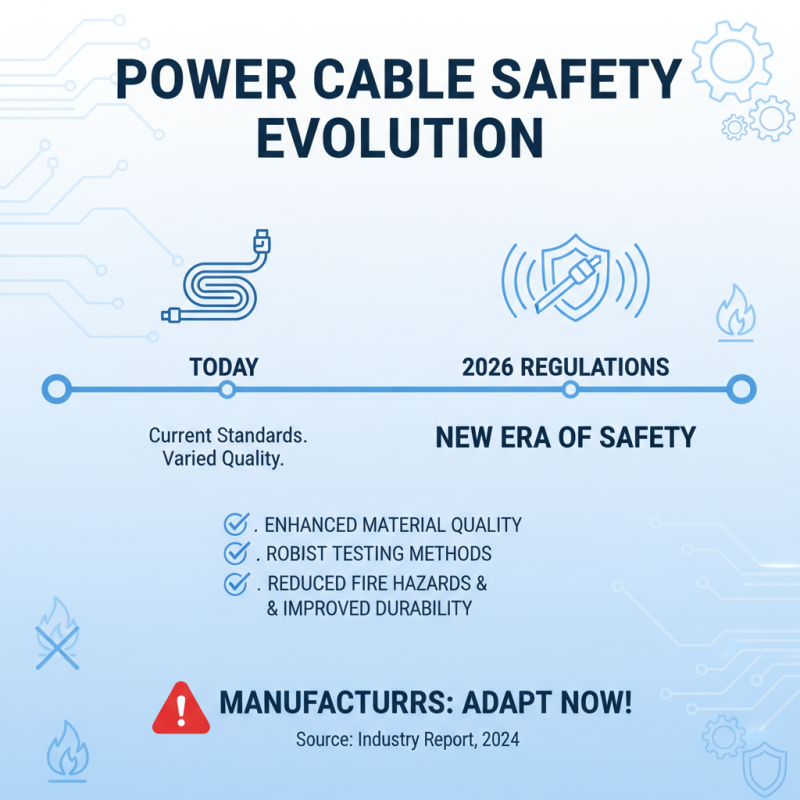
The power cable industry is witnessing significant shifts in safety standards and compliance. In 2026, new regulations will likely emphasize enhanced material quality and robust testing methods. These regulations aim to reduce fire hazards and ensure long-term durability. Manufacturers must adapt to these changes swiftly.
Innovations in insulation materials are emerging too. Flexible, durable solutions are becoming standard. Companies might face challenges in sourcing sustainable materials that meet safety requirements. It’s an ongoing learning curve for many players in the field. Understanding these standards can be daunting, yet it's crucial for compliance and safety.
Furthermore, training for installation and maintenance personnel is vital. Inadequate training can lead to failures and increased risks. Continuous education may be overlooked, but it is essential for maintaining safety. Striking a balance between innovation and compliance reflects the industry's growing commitment to safety amidst evolving trends.