Skip to content
Menu Close

2026 Best TCU Temperature Controller Machine Supplier?

Choosing the 2026 best TCU Temperature Controller Machine supplier requires more than comparing prices or stainless-steel finishes. A reliable supplier must understand real thermal processes. That includes mold temperature control, reactor heating, extrusion cooling, and rapid load changes. The machine should maintain stable temperatures while pumps, heaters, valves, and safety circuits work together.

Dr. Thomas E. Edgar, a respected process-control expert, states, “Process control is the technology that enables a process to be operated safely and profitably.” This principle remains highly relevant when evaluating a TCU Temperature Controller Machine. A capable supplier should provide accurate control, suitable heating and cooling capacity, clear alarm functions, and documented performance data. Response time matters. So does service.

Look beyond the brochure.

The strongest suppliers explain how their systems perform under actual production conditions. They can discuss heat-transfer fluids, operating pressure, flow rate, material compatibility, and maintenance access without hiding behind vague promises. Factory testing, traceable components, and responsive technical support also strengthen reliability. Ask for application references.

Still, no supplier is perfect. A low-cost model may offer attractive specifications but limited after-sales support. A premium unit may include features your process never uses. Even published temperature accuracy can change with installation, fluid condition, and sensor placement. That limitation deserves attention.

This guide compares leading suppliers through practical criteria, including engineering experience, customization, safety design, energy efficiency, delivery capability, and long-term support. The final choice should fit the process, not merely the purchasing budget. Where information is incomplete, careful verification remains necessary.

2026 Best TCU Temperature Controller Machine Supplier?

What Is a TCU Temperature Controller Machine?

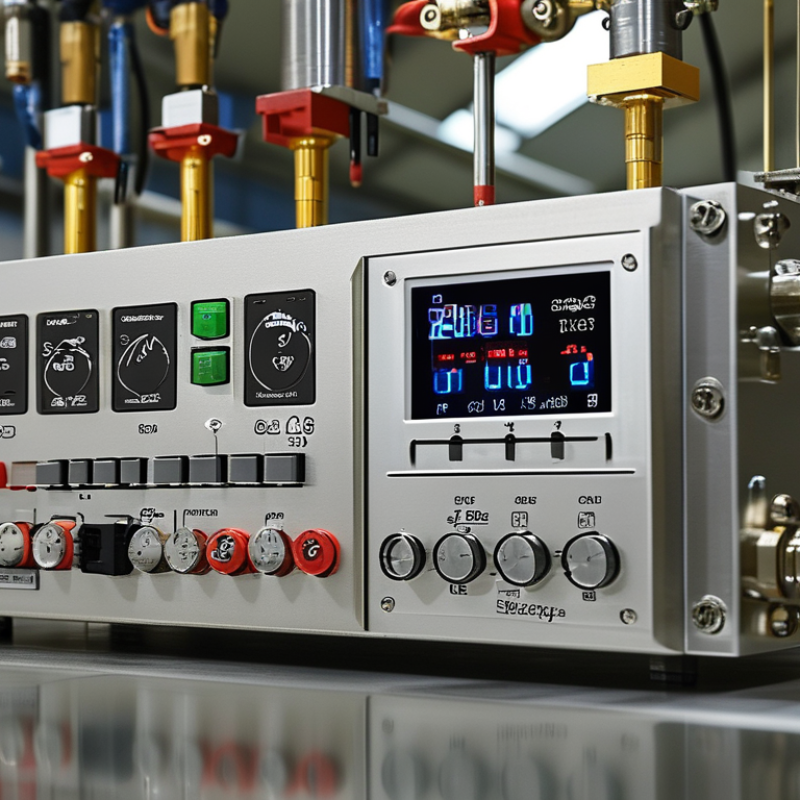
A TCU temperature controller machine is an industrial system that manages process temperature through controlled heating and cooling. It usually includes a circulation pump, heater, heat exchanger, temperature sensor, and digital controller. The unit sends thermal fluid through a mold, roller, tank, or production line. It removes excess heat or adds energy when the process changes.

In practical operation, the controller reads the material temperature continuously. It then adjusts the heater or cooling valve to maintain the selected setting. For example, a molding process may require water at 80°C, while an oil-based system may operate at a much higher temperature. Stable circulation helps reduce warping, uneven surfaces, and rejected parts. The correct fluid, flow rate, pressure range, and connection size must match the equipment.

A reliable TCU should provide accurate sensors, clear alarms, strong insulation, and accessible maintenance points. Operators should check filter condition, pump noise, fluid level, and temperature calibration regularly. Small errors matter. A display can show 80°C while the mold surface remains cooler because of poor flow or blocked channels. That is easy to overlook. In my experience, supplier selection should include testing records, spare-parts support, safety documentation, and practical commissioning guidance. A machine can appear powerful, yet perform poorly when its control response is too slow.

How Does a TCU Temperature Controller Work?

How Does a TCU Temperature Controller Work?

A TCU temperature controller manages heat transfer through a circulating fluid. In molding and other processing equipment, it keeps the tool or product near a selected temperature. The unit typically includes a pump, heater, cooling valve, temperature sensor, and control panel.

The pump moves water or thermal oil through hoses and the connected process circuit. A sensor measures the fluid temperature near the outlet or process side. The controller compares that reading with the setpoint. If the temperature falls, the heater adds energy. If it rises, a cooling valve opens, allowing cooler water to remove excess heat. This cycle repeats continuously.

In practical operation, stable flow matters as much as heater capacity. A blocked filter, trapped air, or undersized hose can create uneven temperatures. I have seen a display show the correct value while the far end of a mold remained noticeably cooler. That mistake is easy to miss. Sensor placement, insulation, and regular flow checks deserve attention.

Modern TCUs may use proportional control instead of simple on-and-off switching. This reduces temperature swings and protects sensitive materials. Operators should also verify pressure, fluid quality, and alarm settings before production. Small deviations can affect surface finish, cycle time, and dimensional accuracy. The system is dependable, but not self-correcting when installation details are ignored.

2026 Best TCU Temperature Controller Machine Supplier? - How Does a TCU Temperature Controller Work?

A TCU regulates process temperature by heating or cooling a circulating medium and continuously adjusting the flow according to the setpoint. The temperature ranges below represent common engineering ranges for different TCU heat-transfer media; actual limits depend on system pressure, materials, and equipment design.

Pressurized water is commonly used for moderate-temperature control, while thermal oil is selected for higher-temperature applications. Cooling and heating are controlled through sensors, pumps, valves, and a heat exchanger.

Which Features Define a High-Quality TCU Supplier?

A high-quality TCU supplier should offer more than a Temperature Control Unit. The supplier must understand real production conditions, including fluctuating cooling loads and restricted installation space. Experienced engineers check heating power, cooling capacity, flow rate, and temperature stability before recommending equipment. Clear technical data matters. Vague promises do not.

Reliable suppliers provide accurate sensors, durable pumps, corrosion-resistant piping, and responsive control systems. A well-designed TCU should maintain stable temperatures during long production cycles. It should also include alarms for overheating, low flow, pressure changes, and sensor faults. Ask for factory test records, calibration details, and traceable component information. These documents reveal professional discipline.

After-sales support is equally important. Operators may need remote guidance, spare parts, maintenance schedules, and practical training. A supplier with application knowledge can adjust the system for different molds, materials, and operating temperatures. Energy efficiency should also be measured, not merely advertised. Some suppliers focus heavily on purchase price. That can be a mistake. Lower initial costs may create higher energy and maintenance expenses later.

No supplier gets every decision right. Even a capable team may underestimate seasonal cooling demand or operator habits. Open communication helps expose these weaknesses early. Request reference applications, installation timelines, warranty conditions, and service response standards. A trustworthy TCU supplier welcomes detailed questions and supports claims with evidence.

How to Compare TCU Temperature Controller Machine Suppliers in 2026?

How to Compare TCU Temperature Controller Machine Suppliers in 2026?

Choosing the best TCU temperature controller machine supplier requires more than comparing prices. Start with the machine’s operating range, temperature stability, heating capacity, cooling response, and pump flow. A reliable supplier should provide clear technical data, not vague performance claims. Ask for test records using fluids, molds, and production conditions similar to yours. Small details matter. A stable reading within ±0.5°C can protect product quality during long production cycles.

Supplier experience is equally important. Review installation examples, maintenance procedures, spare-parts availability, and response times. Speak with current users if possible. Their comments may reveal noise, difficult cleaning, or delayed technical support. Check whether the supplier offers sensor calibration, operator training, and documented safety features. Certifications should match your operating market and equipment requirements.

I once focused too heavily on purchase cost and underestimated installation work. That comparison was incomplete. A lower-priced unit may require extra piping, frequent filter changes, or costly downtime. Compare total ownership cost over three to five years. Request a written quotation with energy use, warranty limits, delivery terms, and service responsibilities. Suppliers that answer technical questions directly are usually easier to trust. Still, do not assume polished documents guarantee perfect performance. A factory trial remains valuable, especially when your process needs fast temperature recovery or continuous operation.

How to Select the Best TCU Supplier for Your Application?

Selecting the best TCU supplier starts with your process, not a catalog. Define the working temperature, heating capacity, cooling method, fluid type, flow rate, and control accuracy. A unit for injection molding may need different performance from one used in laboratory testing. Small differences matter.

Ask the supplier for technical drawings, operating limits, test records, and clear warranty terms. Experienced suppliers should explain how their TCU handles pressure changes, sensor errors, and continuous operation. Request a sample control interface or a live demonstration. Watch the temperature display while the load changes. Does it recover smoothly? Does the supplier explain the result clearly? That interaction reveals practical knowledge. A lower price can look attractive, but weak documentation may create expensive delays. I have seen specifications appear complete while important details were missing. That deserves careful questioning.

Tips: Compare suppliers using the same technical checklist. Confirm spare-part availability, response time, installation support, and operator training. Check whether the controller can connect with your existing system. Ask for references from similar applications, not only general customer reviews. Review energy consumption and maintenance access before purchasing. If the supplier avoids discussing failure scenarios, pause. Reliability is not only a strong machine; it is also stable communication, traceable testing, and support after delivery. Your application may change later, so leave reasonable capacity for future requirements. But avoid oversizing without evidence. Oversized equipment can increase cost and reduce control efficiency.

2026 Best TCU Temperature Controller Machine Supplier? - How to Select the Best TCU Supplier for Your Application?

Evaluation Dimension Typical / Reference Data What to Check in a TCU Supplier Application Impact Recommended Evidence
Temperature Operating Range Water-based units commonly cover approximately 5–95 °C. Oil-based units are commonly selected for temperatures above the practical limit of water systems, often up to approximately 200–350 °C, depending on the heat-transfer fluid. Confirm the guaranteed operating range, fluid type, maximum allowable temperature, and system pressure at the required temperature. The selected fluid and temperature range determine heater design, pump selection, seals, piping, safety controls, and maintenance requirements. Technical datasheet, operating-limit chart, fluid compatibility statement, and application-specific quotation.
Temperature Control Accuracy A practical specification is often stated as approximately ±0.1 to ±0.5 °C at steady state, but actual performance depends on sensor location, heat load, flow, and process dynamics. Ask whether accuracy means controller display accuracy, steady-state control stability, or total process temperature deviation. Tighter control is important for molding, testing, crystallization, viscosity control, and processes sensitive to thermal variation. Factory test report, calibration certificate, control trend data, and defined test conditions.
Heating Capacity TCU heater ratings are commonly selected from several kilowatts to tens or hundreds of kilowatts. Required power depends on mass, specific heat, startup time, temperature rise, heat loss, and continuous process load. Require a heat-load calculation rather than selecting only by nominal heater size. Insufficient heating power causes slow startup and temperature recovery; excessive power can increase cost and control overshoot. Heat-balance calculation showing startup time, process load, ambient losses, and recommended safety margin.
Cooling Method and Capacity Cooling may use plant water, a closed-loop cooling circuit, air cooling, or a refrigeration system. Cooling capacity is normally specified in kW or kcal/h at a stated inlet temperature and flow rate. Check cooling-water temperature, minimum and maximum flow, allowable pressure, heat rejection, and whether a separate chiller is required. Cooling performance controls cycle time, ramp-down speed, process stability, and energy consumption. Cooling-capacity curve, utility requirement sheet, piping diagram, and site-condition calculation.
Pump Flow and Pressure Flow and pressure must be evaluated at the process connection, not only at the pump outlet. Actual requirements depend on channel size, hose length, fittings, viscosity, and elevation. Request pump curves showing flow versus pressure and confirm the operating point at process temperature. Adequate flow improves heat transfer and temperature uniformity; inadequate pressure can create hot spots and slow response. Pump curve, calculated system resistance, connection-size drawing, and measured flow-test data.
Process Temperature Uniformity Uniformity is application-specific and should be defined as a maximum temperature difference across the tool, mold, tank, or test fixture under actual operating conditions. Confirm sensor arrangement, circuit design, flow distribution, and whether multi-zone temperature control is available. Poor uniformity can cause dimensional variation, inconsistent material properties, product defects, or inaccurate test results. Application test report, thermal mapping results, piping schematic, and recommended sensor locations.
Fluid Compatibility Common heat-transfer fluids include treated water, demineralized water, thermal oils, and specialty fluids. Compatibility depends on temperature, pressure, materials, additives, and oxidation conditions. Verify compatibility of fluid with pump seals, hoses, valves, heaters, sensors, gaskets, and tanks. Incorrect fluid selection can cause corrosion, seal failure, deposits, reduced heat transfer, or fluid degradation. Material list, fluid compatibility table, recommended fluid specification, and maintenance instructions.
Control Interface and Integration Common industrial interfaces include digital inputs and outputs, alarm contacts, analog signals such as 4–20 mA or 0–10 V, and communication protocols such as Modbus RTU or Ethernet-based communication. Confirm electrical drawings, communication protocol, data points, remote setpoint functions, alarm handling, and PLC compatibility. Reliable integration supports automated recipes, remote monitoring, traceability, and coordinated machine operation. I/O list, communication manual, sample register map, wiring diagram, and integration test procedure.
Safety Protection Typical protections include over-temperature shutdown, low-fluid-level protection, pump overload protection, over-pressure protection, phase-loss protection, leakage detection, and emergency stop integration. Check whether each protection is monitored, latched, resettable, and documented in the risk assessment and electrical design. Safety functions reduce equipment damage, fluid leakage, process interruption, and operator risk. Risk assessment, safety-circuit diagram, alarm list, functional test record, and operating manual.
Electrical Configuration Industrial TCU systems may use single-phase or three-phase power, commonly at regional supply voltages such as 200–240 V or 380–480 V, subject to local electrical standards. Confirm voltage, frequency, total connected load, short-circuit rating, breaker requirements, grounding, and cabinet dimensions. Correct electrical matching prevents installation delays, nuisance trips, overheating, and non-compliance. Electrical load list, single-line diagram, terminal schedule, nameplate data, and compliance documentation.
Energy Efficiency Energy use is influenced by insulation, pump efficiency, heater control method, cooling strategy, standby operation, heat recovery, and the actual process duty cycle. Compare measured or calculated energy consumption at the same temperature, load, cycle time, and utility conditions. Lower energy demand reduces operating cost and cooling-water consumption over the equipment lifecycle. Energy test report, heater duty profile, pump motor data, insulation specification, and annual operating-cost estimate.
Maintenance and Serviceability Routine service commonly includes fluid inspection, filter or strainer cleaning, leak checks, sensor verification, electrical inspection, and periodic replacement of wear components. Evaluate access to filters, pumps, heaters, valves, sensors, drain points, and electrical components. Accessible components reduce planned downtime and simplify troubleshooting. Preventive-maintenance schedule, spare-parts list, exploded drawings, troubleshooting guide, and service response procedure.
Documentation and Compliance Documentation should reflect the destination market and may include declaration documents, electrical test records, pressure-related documentation where applicable, manuals, and material information. Confirm applicable legal requirements, language requirements, labeling, technical-file availability, and document revision control. Complete documentation supports installation approval, audits, operator training, and future maintenance. Compliance checklist, risk assessment, user manual, electrical drawings, inspection records, and certificates where applicable.
Factory Acceptance Testing A meaningful FAT should test temperature rise, temperature stability, cooling response, alarms, interlocks, pump performance, leakage, electrical safety, and communication functions. Require agreed acceptance criteria, test instruments, test conditions, responsibilities, and procedures for handling deviations. Testing before shipment reduces commissioning risk and identifies performance gaps while corrections are still practical. Approved FAT protocol, calibrated instrument list, signed test report, inspection photographs, and punch-list closure record.
Total Cost of Ownership Total cost includes purchase price, installation, utilities, fluid, filters, spare parts, maintenance labor, downtime, and end-of-life disposal—not only the initial equipment price. Compare suppliers using the same duty cycle, operating hours, energy prices, service assumptions, and warranty terms. A lower purchase price may result in higher operating cost if efficiency, reliability, or service support is inadequate. Five-year or ten-year lifecycle-cost model, utility assumptions, warranty terms, spare-parts pricing, and service rates.
Selection Note: Compare suppliers only after defining the required fluid, temperature range, heat load, cooling conditions, process flow, pressure drop, utilities, control interface, safety requirements, and acceptance criteria. Typical values are reference ranges and must be confirmed for the specific application.
Site Feedback
Close