Skip to content
Menu Close

2026 Best Solid State Diode Laser for Buyers

A 2026 Solid State Diode Laser purchase starts with a clear definition. The term can describe different architectures, including direct-diode systems and diode-pumped solid-state lasers. Their output, beam quality, cooling needs, and service requirements are not interchangeable. Buyers should match the laser to the actual task: material, working distance, duty cycle, and required spot size. Small details matter. A beam that looks stable on a showroom sample may behave differently after hours of production use.

Industry reports offer useful context, but they cannot choose a machine for you. Grand View Research’s Laser Technology Market report tracks demand across industrial and other application segments. SPIE’s annual industry reports examine laser-market conditions and technology trends. These sources help explain why buyers compare efficiency, reliability, and application fit, rather than headline power alone. Check report dates and definitions; market categories may group unlike laser types together. That matters. Ask suppliers for measured output specifications, operating-temperature limits, warranty terms, and documented test conditions. Where possible, request a sample run using your material and production settings. No report replaces that test. A careful comparison should also record what remains uncertain, such as long-term maintenance cost or performance under your exact duty cycle. Those gaps are worth admitting before purchase.
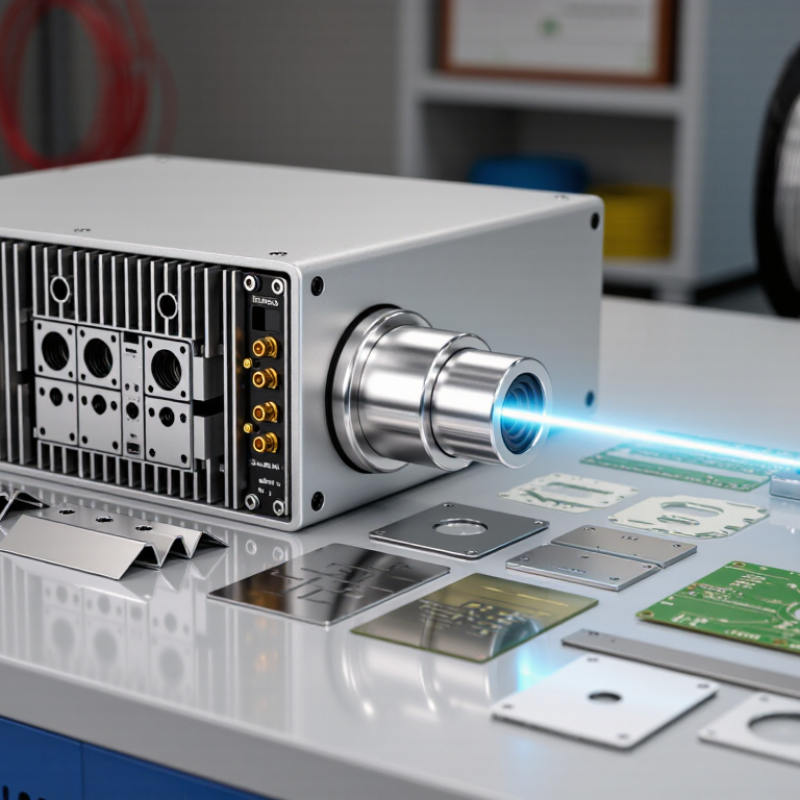
2026 Best Solid State Diode Laser for Buyers

What Is a Solid-State Diode Laser?

A solid-state diode laser is a laser system that uses solid materials to generate or amplify light, with a semiconductor diode often supplying the pumping energy. The term can be confusing: a bare diode laser creates light inside a semiconductor, while a diode-pumped solid-state laser uses a separate crystal or glass gain medium. That distinction matters. Buyers should check the product’s stated architecture, not rely on the label alone.

In a diode-pumped design, the diode excites the solid gain medium, which then produces the output beam. This arrangement can offer stable operation and a compact footprint, but performance depends on wavelength, output power, beam quality, cooling, and duty cycle. A small metal housing may still become warm during sustained use. Specifications also vary by measurement conditions, so compare like with like.

Tips: Match the wavelength and power to the material and task. Check the heat path, ventilation needs, and operating limits in the manufacturer’s technical documentation. Ask how output is measured and whether the figures describe continuous or pulsed operation. It is easy to focus on peak power and overlook beam quality; I would pause there, too.

How Solid-State Diode Lasers Work

How Solid-State Diode Lasers Work

The term “solid-state diode laser” can describe more than one design. In many systems, a semiconductor diode supplies pump light to a solid gain medium, such as a crystal or glass. The diode’s electrical current creates photons inside a tiny semiconductor junction. These photons then excite atoms or ions in the gain medium. A little terminology ambiguity remains, so buyers should check how a product’s laser source is actually built.

Inside the laser cavity, two mirrors guide light back and forth through the energized material. This repeated travel encourages stimulated emission, producing more photons with matching properties. One mirror lets some light pass, forming the output beam. That beam may be focused onto a small spot, where even slight movement can change the mark or cut. Heat matters. A diode and gain medium both warm during operation, so cooling and alignment affect stability. In practical use, compare the specified wavelength, output power, beam quality, and duty cycle with the intended material. A shiny metal surface may reflect energy, while a dark surface absorbs more. Specifications help, but real samples can behave differently. A small test piece is often more informative than a perfect-looking product chart.

2026 Best Solid State Diode Laser for Buyers — How Solid-State Diode Lasers Work

Common Solid-State Laser Output Wavelengths

In a diode-pumped solid-state laser, a semiconductor diode supplies pump light that excites ions in a solid gain medium. The resulting population inversion enables stimulated emission inside an optical resonator. The chart compares representative output lines; photon energies are calculated from E = hc/λ, and actual output depends on the laser design.

Which Laser Specifications Matter Most to Buyers?

For buyers comparing solid state diode lasers, output power is only one part of the specification. Check whether the stated value is continuous-wave or peak power, and under what operating conditions it was measured. A high number can look impressive on a sheet. It may not describe typical performance. Wavelength matters too: confirm it matches the material, process, and compatible optics you plan to use. Ask for tolerance data, not just a nominal wavelength.

Beam quality affects how reliably energy reaches a small spot. Look for beam dimensions, divergence, and a clearly defined beam-quality value, such as M², when relevant to your application. Stability deserves attention as well. Review output variation over time and across the stated temperature range. Numbers need context. A specification without its test conditions is hard to compare fairly.

Consider duty cycle, cooling requirements, electrical input, and control options before purchase. A compact unit may still need substantial heat removal. Check whether the manual explains installation, maintenance intervals, and fault indicators in plain terms. Safety features matter in routine operation: verify that the system provides suitable shielding, interlocks, and clear operating instructions for its intended use. If key details are missing, request written clarification. It is easy to focus on power and overlook the less exciting specifications; that can be an expensive assumption.

2026 Best Solid State Diode Laser for Buyers — Which Laser Specifications Matter Most to Buyers?

Specification Common Options or Reference Points Why It Matters What Buyers Should Check
Laser type Direct-diode laser; diode-pumped solid-state (DPSS) laser These are different architectures. A direct-diode laser emits light from a semiconductor diode; a DPSS laser uses a diode to pump a separate solid-state gain medium. Confirm the laser architecture and whether the quoted output is the diode’s output or the final system output.
Wavelength Visible examples include approximately 405 nm, 450 nm, 520 nm, and 635–660 nm. Near-infrared diode options commonly include approximately 780–980 nm. Wavelength affects material absorption, visibility, optical-component compatibility, and eye-safety requirements. Match the specified wavelength and tolerance to the application and verify it under the stated operating conditions.
Optical output power Specified in milliwatts (mW) or watts (W); available power depends on wavelength, package, beam format, and laser architecture. Power affects processing or illumination capability, but higher power can also increase thermal-management and safety requirements. Compare rated optical output—not electrical input—and check whether the value is continuous-wave or pulsed peak power.
Operating mode Continuous wave (CW), pulsed, or modulated output The operating mode determines how energy is delivered and whether the laser can meet timing or peak-intensity requirements. For pulsed systems, check pulse width, repetition rate, duty cycle, and pulse energy where applicable. For modulation, check response time and modulation bandwidth.
Beam quality and profile Round or elliptical beam; collimated or focused output; beam quality may be reported using M² where applicable. Beam shape and quality affect focus size, working distance, uniformity, and coupling efficiency. Request beam dimensions, divergence, profile, and measurement conditions. Check whether the stated M² value applies to the delivered beam.
Spectral width and wavelength stability Reported as spectral linewidth or wavelength drift; values depend on laser design, temperature, and drive conditions. Spectral performance matters for spectroscopy, sensing, pumping, and applications that require a stable wavelength. Check the measurement method, operating-temperature range, and whether wavelength stability is specified over time or temperature.
Power stability and noise May be specified as percentage variation over a stated time or as relative intensity noise. Fluctuating output can affect measurement repeatability, process consistency, and system calibration. Compare stability over the same time interval and operating conditions; ask whether the figure is measured at the laser or at the work plane.
Electrical input and efficiency Electrical power, drive current, forward voltage, and optical-to-electrical efficiency may be listed. These values determine power-supply requirements, energy consumption, and heat generated within the system. Confirm required driver specifications, startup behavior, and whether efficiency figures include the complete laser system.
Cooling and operating temperature Conduction-cooled, fan-cooled, or liquid-cooled designs; allowable temperature ranges vary by model. Temperature control influences reliability, wavelength, and output stability—especially at higher power. Check heat load, cooling method, ambient-temperature limits, and any required temperature-control hardware.
Optical delivery and interface Free-space output or fiber-coupled output; connectors, fiber core size, and numerical aperture vary. The delivery format determines how easily the laser integrates with existing optics or equipment. Verify connector type, fiber specifications, output aperture, mounting dimensions, and compatibility with the intended optical path.
Lifetime and reliability Often expressed as an estimated operating life or maintenance interval; performance depends on use and environment. Reliability affects downtime, replacement planning, and total cost of ownership. Ask how lifetime is defined, which operating conditions apply, and what warranty and service support are provided.
Safety and compliance Laser classification and required controls depend on accessible emission, wavelength, and product configuration. Safe installation and operation require appropriate controls for the actual laser and application. Review the product’s classification, safety documentation, interlock provisions, and applicable local requirements.

Buyer note: The values above are general reference points, not guarantees for a particular product. Compare specifications measured under equivalent conditions and request a current datasheet for the exact configuration.

How Laser Types Match Different Applications

2026 Best Solid State Diode Laser for Buyers

Matching a laser to its application begins with the material, target area, and required finish. Buyers may use “solid-state diode laser” to describe different designs, so verify the laser medium and output wavelength in the specifications. A diode-pumped solid-state laser can suit precise marking or engraving, where a focused beam and consistent pulse control matter. Direct-diode systems may be a practical fit for heating, curing, or processing materials that absorb their wavelength efficiently. Check samples, not just brochures. A dark mark on one metal may appear faint on another alloy.

Operating mode matters just as much. Short pulses can limit heat spread around a small engraving, while continuous output can support steady heating across a wider area. There is no perfect match. Consider beam quality, spot size, duty cycle, cooling, and the workpiece’s sensitivity to heat. For example, a fine detail on a coated component may need different settings from a broad mark on bare metal. Ask for measured output at the work surface, since losses through optics can change results. Real-world tests are worth the extra time; specifications alone do not settle every choice.

How to Compare Models and Choose a Laser in 2026

In 2026, compare diode-based solid-state lasers by the job they must perform, not by headline wattage. Confirm whether a model is direct-diode or diode-pumped solid-state; these designs are not interchangeable. Grand View Research’s Laser Technology Market report valued the overall market at about US$20.2 billion in 2023 and forecast 6.5% annual growth from 2024 to 2030. This covers multiple laser types, so treat it as market context, not a product-quality measure.

Match wavelength, continuous or pulsed output, and pulse duration to your material and process. Then compare beam quality, power stability, modulation response, and stated operating life under the same test conditions. Numbers can mislead. Ask for test data at your intended duty cycle, not only at a brief laboratory setting. A small sample run can expose heat buildup, uneven edges, or unstable output before purchase.

Check cooling needs, electrical input, enclosure, service intervals, and safety interlocks. Confirm that the quoted output is optical power at the workpiece, rather than electrical input or a peak value. Request a written warranty and spare-parts lead times. A quiet unit may still need substantial ventilation. I would also verify calibration procedures; this detail is easy to overlook, and supplier descriptions do not always make comparison simple.

Site Feedback
Close