Skip to content
Menu Close

2026 Best Cardboard Balers for Global Buyers?

The search for the 2026 best Cardboard Balers begins with a practical question: what must each machine handle every day? Warehouses, retailers, printing plants, and recycling centers face different cardboard volumes, moisture levels, and labor conditions. A small vertical baler may suit a supermarket producing 300 kilograms daily. A high-capacity horizontal baler fits distribution sites processing several tonnes per shift.

Industry data supports this demand. The U.S. Environmental Protection Agency identifies paper and paperboard as one of the largest municipal waste categories. The American Forest & Paper Association also reports strong recovery rates for paper packaging in the United States. In Europe, the European Paper Recycling Council continues to report paper packaging recycling above 80 percent. These figures show a valuable material stream. They also reveal a challenge: recovered cardboard must be compacted, stored, and transported efficiently.

The best global choice depends on more than motor power. Buyers should compare bale weight, chamber size, cycle time, feeding method, safety systems, power requirements, and after-sales support. A wet carton can behave very differently from a clean, dry box. A machine rated for 500 kilograms per hour may perform poorly with irregular loading. Small details matter, including wire access, door clearance, spare-part availability, and container dimensions. No ranking is perfect. Supplier claims still require testing. This guide evaluates leading Cardboard Balers through operating experience, manufacturer specifications, recycling data, and total ownership costs. It also considers an uncomfortable point: the cheapest machine may become expensive when downtime, shipping delays, and unsuitable electrical systems are included.

2026 Best Cardboard Balers for Global Buyers?

What a Cardboard Baler Is and How It Works

What a Cardboard Baler Is and How It Works

A cardboard baler compresses loose corrugated boxes into dense, manageable bales. Its chamber receives flattened cardboard, while a hydraulic ram applies controlled pressure. Operators then secure the bale with wire, strapping, or suitable tying materials. The finished unit is easier to store, weigh, and transport. It also reduces scattered material around loading areas.

The need is substantial. UNEP’s Global Waste Management Outlook 2024 estimates that municipal solid waste could rise from about 2.1 billion tonnes in 2023 to 3.8 billion tonnes by 2050. Paper recovery remains important. The Confederation of European Paper Industries reported a paper recycling rate of 79.3% in Europe for 2023. However, a baler cannot correct poor sorting. Wet cardboard, plastic film, and excessive contamination reduce bale quality. Small details matter.

A vertical baler often suits shops and compact facilities. Horizontal systems generally support higher volumes and continuous handling. Bale density depends on cardboard grade, moisture, chamber size, and hydraulic pressure. More pressure is not always better. Over-compression can slow tying and create unsafe handling conditions. Operators should check the bale’s weight, dimensions, and stability against local recycler requirements. There is no universal setting. Real-world testing is still necessary.

2026 Best Cardboard Balers for Global Buyers? – What a Cardboard Baler Is and How It Works
Baler Type How It Works Typical Bale Weight Typical Throughput Drive and Power Range Approximate Bale Size Best-Fit Buyer or Application Key Advantages
Vertical Manual-Tie Baler Cardboard is loaded into a vertical chamber. A hydraulic platen compresses the material, and the finished bale is tied manually with wire or plastic strapping. 30–100 kg 1–5 tonnes per hour Approximately 4–15 kW; single- or three-phase electric motor About 700 × 500 × 800 mm to 1,100 × 700 × 1,100 mm Retail stores, small warehouses, supermarkets, offices, and limited-volume recycling points Low installation cost, compact footprint, simple operation, and relatively low maintenance requirements
Vertical Automatic-Tie Baler Hydraulic compression forms the bale, while an integrated tying unit automatically applies wire or strapping before ejection. 80–250 kg 3–10 tonnes per hour Approximately 11–30 kW; usually three-phase electric power About 1,100 × 700 × 1,100 mm to 1,200 × 1,100 × 1,200 mm Distribution centers and medium-volume facilities seeking reduced manual tying work Higher labor efficiency, consistent bale formation, and improved operating continuity
Horizontal Semi-Automatic Baler Cardboard enters a horizontal compression chamber. The operator usually starts the cycle and manually ties the compacted bale after pressing. 200–500 kg 5–15 tonnes per hour Approximately 18.5–45 kW; three-phase electric power About 1,100 × 700 × 1,100 mm to 1,200 × 1,100 × 1,200 mm Recycling stations, warehouses, printers, and medium-to-high-volume material recovery operations Higher bale density and throughput than most vertical models, with moderate automation
Horizontal Fully Automatic Baler A conveyor or feeding system supplies cardboard continuously. The machine compresses, measures bale length, ties, cuts, and ejects bales automatically. 350–700 kg 10–30 tonnes per hour Approximately 30–90 kW; three-phase electric power About 1,100 × 750 × 1,100 mm to 1,200 × 1,100 × 1,200 mm Large distribution centers, paper mills, material recovery facilities, and high-volume recycling plants Continuous operation, reduced labor demand, high productivity, and uniform bale dimensions
Two-Ram Baler One ram compresses the material while a second ram controls bale formation and discharge. The design is suitable for varied feedstock and continuous loading. 350–800 kg 15–40 tonnes per hour Approximately 45–110 kW; three-phase electric power Commonly around 1,100 × 750 × 1,100 mm to 1,200 × 1,100 × 1,200 mm Large recycling facilities handling cardboard mixed with paper, plastic film, or other dry recyclables Flexible feeding, high compaction force, high throughput, and good performance with variable materials
Channel Baler Material is continuously compressed through a long channel. Automatic tying and adjustable compression settings produce consistent bales for storage or transport. 400–700 kg 20–60 tonnes per hour Approximately 55–160 kW; three-phase electric power Commonly around 1,100 × 750 × 1,100 mm to 1,200 × 1,100 × 1,200 mm High-capacity material recovery facilities, paper processing plants, and large export-oriented recycling operations Very high throughput, stable bale quality, and suitability for automated conveyor systems

Note: The figures are typical industry ranges for cardboard balers and can vary according to cardboard moisture, feedstock composition, bulk density, bale-density settings, feeding method, and local electrical standards. A cardboard baler generally works by feeding loose material into a chamber, applying hydraulic compression, securing the compacted bale with wire or strapping, and ejecting it for storage or transport.

Key Baler Types for Different Cardboard Recycling Needs

2026 Best Cardboard Balers for Global Buyers?

Cardboard recycling needs vary by volume, space, and labor availability. A vertical baler suits small warehouses, retail stores, and offices. It uses limited floor space and usually handles flattened cartons in manageable batches. Operators can load material through a front chamber, tie the finished bale, and move it with a pallet truck. This option is practical, but slower during peak shipping periods.

Horizontal balers fit distribution centers with continuous cardboard streams. They accept larger feed volumes and can connect with conveyors or sorting lines. Two-ram balers offer stronger control over dense, uniform bales. They may suit recycling facilities handling mixed grades. Automatic wire tying reduces manual contact, although maintenance becomes more demanding. The U.S. EPA reported that corrugated containers reached a 96.5% recycling rate in 2018, with more than 32 million tons generated. That volume shows why throughput matters.

Bale density also affects transport costs. The Association of American Forest & Paper Industries reported 53.5 million tons of paper recovered in 2023. Buyers should check chamber size, pressing force, bale weight, power supply, and safety interlocks. Measure your cardboard first. Moisture, tape, and plastic straps can change performance. A compact baler may appear economical, yet cause queues beside a busy loading dock. My practical view is less comfortable: the highest-rated machine is not always the best fit. Local repair access and operator training often matter more than impressive specifications.

2026 Best Cardboard Balers for Global Buyers

Key baler types matched to typical cardboard recycling throughput requirements

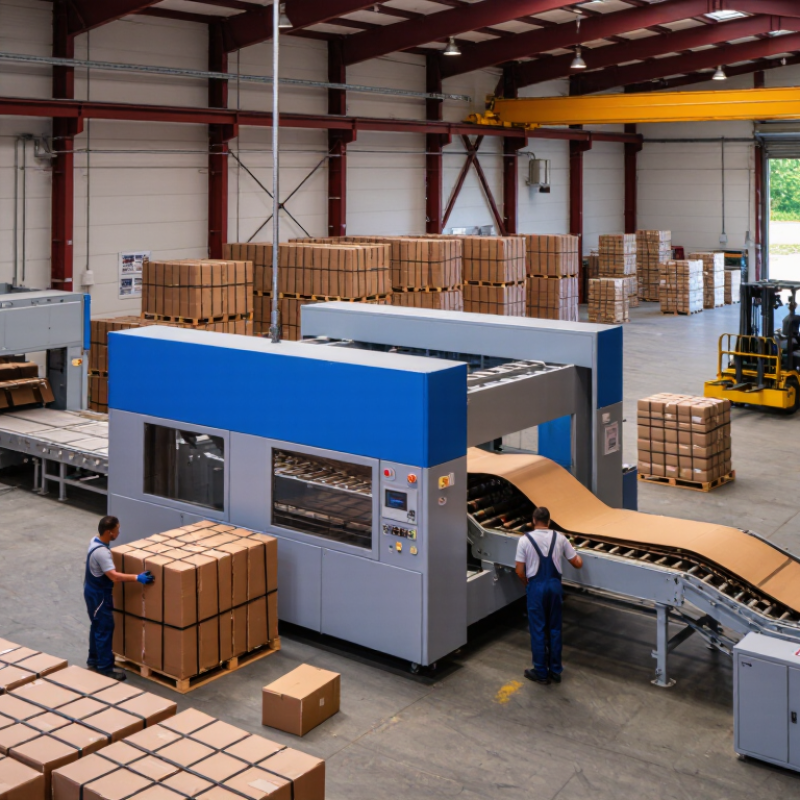
Vertical balers are generally suited to small shops and low-volume collection points, while semi-automatic horizontal balers fit warehouses and medium-sized recycling operations. Fully automatic horizontal and two-ram balers are designed for continuous, high-volume material streams. The throughput figures shown are representative industry ranges converted to practical midpoint values; actual performance depends on cardboard quality, moisture, feeding method, bale specifications, and operating conditions.

How to Compare Baler Capacity, Power, Safety, and Automation

2026 Best Cardboard Balers for Global Buyers?

Capacity should be judged by actual cardboard density, not the headline tonnes-per-hour figure. The U.S. EPA’s paper and paperboard dataset recorded 46.5 million tons recycled in 2018, with a 68.2% recycling rate. That volume shows why reliable throughput matters. In warehouse tests, flattened cartons often feed smoothly, while wet or loosely packed boxes reduce output sharply. Ask for tested kilograms per hour, bale weight, chamber size, and recovery time between cycles. Bigger is not always better.

Power selection must match daily workload and local electricity conditions. A high-powered motor may shorten cycles, but it can increase demand charges and maintenance costs. Check starting current, voltage options, hydraulic efficiency, and noise levels. Safety deserves equal weight. Look for guarded moving parts, emergency stops, interlocked doors, clear bale-ejection zones, and documented lockout procedures. ISO 12100 and ISO 13849 provide useful safety references, but compliance claims should be verified through technical files and independent inspection.

Automation can reduce repetitive handling. Sensors can detect chamber fullness, door position, and abnormal pressure. Remote alerts are useful for multi-site operations. However, automation is not magic. Poorly calibrated sensors may stop production unnecessarily. CEPI’s 2023 statistics placed Europe’s paper recycling rate near 82%, reinforcing the value of dependable recovery equipment. My early comparisons focused too much on motor size. That was a mistake. Total ownership cost, operator training, spare-part access, and service response often decide whether a baler performs well after the first year.

Global Buying Factors: Standards, Shipping, Installation, and Support

Choosing a cardboard baler in 2026 requires more than comparing pressure and price. Global buyers should verify safety standards, electrical requirements, and conformity documents before placing an order. Voltage, frequency, plug design, and emergency-stop systems may differ between markets. Ask for test reports, wiring diagrams, and a clear machine specification. Missing documents can delay customs clearance or create installation problems.

Shipping details deserve equal attention. Measure the packed baler, not only the working unit. Confirm container space, moisture protection, lifting points, and insurance responsibility. Request a packing list with accurate weight and dimensions. A small measurement error can affect warehouse handling costs. Installation also needs planning. Check floor strength, door width, ventilation, and power capacity before delivery. Operators need practical training, especially for feeding material evenly and recognizing abnormal noise. A perfect plan rarely exists. Recheck it.

Tips: Ask for spare-part prices and delivery times before purchase. Require a remote commissioning plan, installation videos, and a readable maintenance schedule. Support should include a defined response time, troubleshooting procedures, and local technician options where possible. Keep records of serial numbers, service dates, and replaced components. Some buyers focus heavily on initial cost and overlook downtime. That choice can become expensive. Reliable support is not a slogan; it should appear in written service terms.

Best Cardboard Baler Applications by Business Size and Waste Volume

2026 Best Cardboard Balers for Global Buyers?

Small retailers, offices, and cafés usually create modest cardboard volumes. If waste stays below two cubic meters weekly, a compact vertical baler often suits the application. It needs limited floor space and can produce manageable bales for scheduled collection. Keep it near unpacking areas. This reduces loose cartons across aisles. However, labor remains important. A cheap machine can become expensive when staff repeatedly stop production to tie bales.

Mid-sized warehouses and supermarkets often generate five to twenty cubic meters weekly. They usually need stronger compaction, larger chambers, and faster cycling. A semi-automatic vertical baler may work well where operators load cartons throughout the day. Moisture and plastic contamination should be checked before selecting pressure and bale size. In distribution centers, horizontal balers are more practical because conveyors can feed continuous cardboard flows. They also reduce manual handling during peak receiving periods.

Industry data supports this focus on recovery. The U.S. EPA reported 67.4 million tons of paper and paperboard generated in 2018, with 46.4 million tons recycled. Eurostat reported an 81.5% paper and cardboard packaging recycling rate across the European Union in 2022. These figures show value, but they do not guarantee local profitability. Collection fees, electricity, labor, and transport differ sharply between regions. Volume estimates are often optimistic. Real conditions matter more. A short waste audit, including bale weights and daily cardboard volume, can prevent an oversized purchase.

Site Feedback
Close